


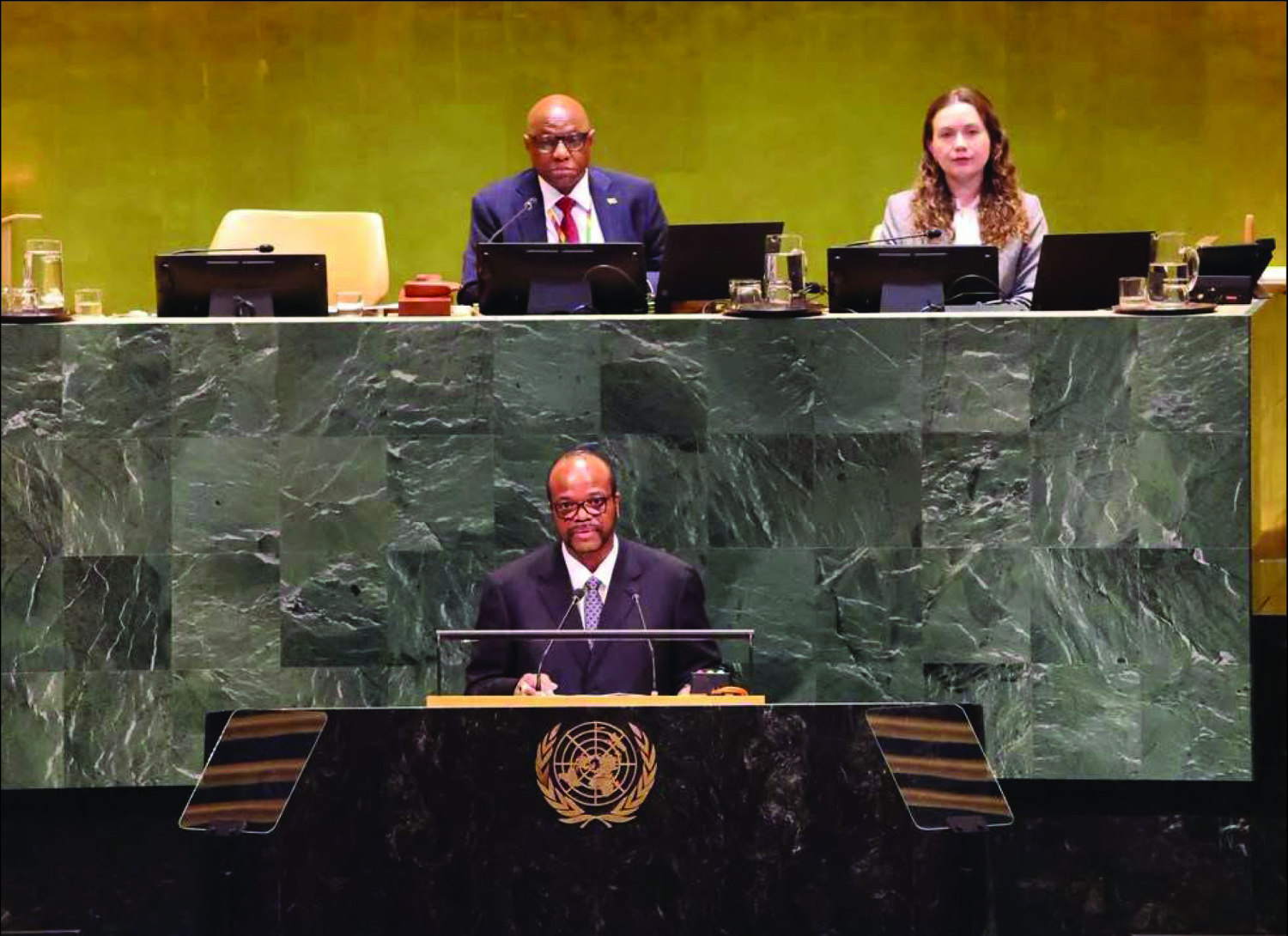
AS the 2026/27 El Niño rapidly intensifies, posing a severe dual threat of drought in Southern Africa and heavy flooding in parts of Eastern Africa through early 2027, His Majesty King Mswati III has urged the international community to deliver on its climate finance commitments as the region confronts one of the most severe El Niño-induced droughts on record.
Addressing the 81st UN General Assembly, His Majesty emphasised that developing nations produce minimal global emissions yet shoulder the worst impacts of extreme weather events, changing climate patterns, and crop failures.
He called for greater climate justice, including predictable funding and technology transfers to help vulnerable nations adapt.
He also informed the assembly of food security initiatives in Eswatini, which include expanded State subsidies for subsistence farmers, increased investments in research and accelerated major dam construction projects to expand irrigation networks in the Lowveld region.
“Our national objective is to ensure that every family has access to sufficient, safe and nutritious food. This is a matter of basic human dignity,” he added.
On another note, His Majesty urged the UN to enforce binding compliance on signed international peace agreements.
He warned that broken promises continue to pull vulnerable populations back into conflict.
The monarch expressed concern over unconstitutional changes of government across Africa, which undermine the rule of law and democratic institutions.
“The United Nations should provide oversight to ensure follow-ups and monitor compliance on these agreements to last forever,” the king stated, pointing out that military expenditure continues to divert essential funds away from economic development.
He said the African Union’s Agenda 2063 and its aspiration to ‘silence the guns’ reflect the continent’s resolve to end conflict and create the stable conditions required for sustainable growth.
His Majesty’s address coincides with Eswatini assuming the chairmanship of the Southern African Development Community (SADC) Organ on Politics, Defence and Security Cooperation (Troika) following the 46th SADC Summit.
He assured the assembly that Eswatini would use its Troika leadership to champion preventive diplomacy and mediation to secure long-term stability across the continent.
The regional organ, established to manage conflicts and maintain regional stability across Southern Africa, delegates oversight of diplomatic interventions and crisis resolution to its rotating leadership.
During the handover in August, the outgoing chairperson from Malawi expressed confidence in Eswatini’s leadership after the kingdom had already stepped in to support electoral observation missions.
The king said Eswatini would work with Member States to strengthen preventive diplomacy, dialogue and mediation in support of SADC Vision 2050 for a peaceful, competitive and industrialised region.
Africa has faced repeated unconstitutional changes in recent years, including military takeovers in Guinea-Bissau in late 2025 and earlier cases in the Sahel and Madagascar.
The African Union maintains a zero-tolerance policy under the African Charter on Democracy, Elections and Governance and has suspended affected States, though implementation has sometimes been inconsistent.
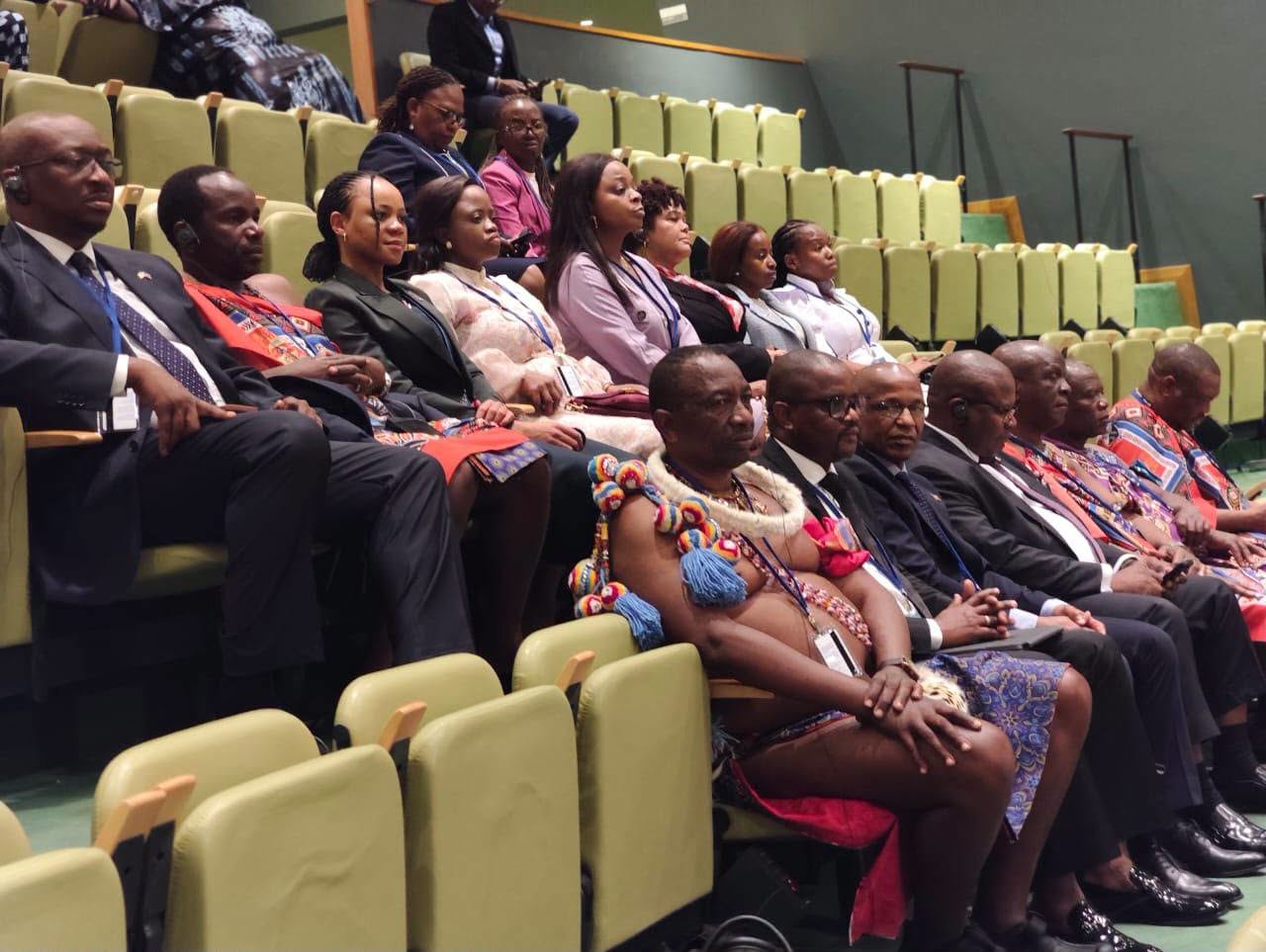
The king is attending the UNGA accompanied by Inkhosikati LaNgangaza. Among his delegation are Foreign Affairs and International Cooperation Minister, Pholile Shakantu and Eswatini Ambassador to the UN, Thanie Dlamini.
Ministers present during his address included Commerce, Trade and Industry Manqoba Khumalo and Justice and Constitutional Affairs Prince Simelane.
UN support urged for African pharmaceutical bulk buying
THE king has appealed for support to help African countries develop capacity to manufacture essential pharmaceuticals and health products and to back regional bulk purchasing arrangements.
Directing the call to the United Nations and the World Health Organization (WHO), the king noted how the COVID-19 pandemic showed that no country could protect itself from a global health emergency alone.
He cited the recent resurgences of mpox, recurring Ebola outbreaks and other emerging diseases underlined the need for vigilant and resilient health systems.
“Persistent inequalities in access to vaccines, medicines and medical technologies must be addressed. African countries need robust local and regional manufacturing capacity,” he said.
The king highlighted a recent meeting of the East, Central and Southern Africa Health Community held in Eswatini, where member countries resolved to act as a single bloc when purchasing essential drugs and medical supplies as this would reduce costs and ensure supply-chain stability.
The king asked the UN, through the WHO, to support the initiative.
Africa still imports a large majority of its medicines.
Efforts to expand local production have gained momentum since the pandemic, with initiatives under the African Medicines Agency, the African Continental Free Trade Area and WHO-backed roadmaps aiming to strengthen manufacturing, pooled procurement and more resilient supply chains.
Eswatini assumed the chair of the ECSA Health Community earlier this year after hosting its 76th health ministers’ conference, where ministers endorsed exploring pooled procurement and promoting local manufacturing.
‘Taiwan’s UN inclusion can benefit the globe’
HIS Majesty King Mswati III has reiterated a call on the United Nations to grant Taiwan participation in its meetings and specialised agencies.
He said the island had a critical role to play in global trade and technological innovation.
In his address to the General Assembly, the king stressed that the international community cannot afford to exclude key global contributors from international forums aimed at achieving sustainable global growth.
“Taiwan plays a vital role in global supply chains. It has much to contribute to the international community and can play a highly meaningful role in building a sustainable future for humanity,” the king noted.
He appealed to UN leadership to find realistic mechanisms to integrate Taiwan into existing multilateral systems, enabling it to share expertise in agriculture, technology and public health.
Eswatini remains Taiwan’s sole diplomatic ally on the African continent, having maintained bilateral relations that were established by King Sobhuza II from the year the country gained independence in 1968.
UN Assembly cannot be just a talk shop, warns king
THE United Nations (UN) must shift from being a debate chamber to a body that delivers concrete outcomes for ordinary people.
This is the response of His Majesty King Mswati III to the 81st UN General Assembly theme; ‘Restoring Trust, Managing Transformation: A United Nations that Delivers for All.’
The king posed two questions about the credibility of the international multilateral framework.
He questioned whether global institutions possess the genuine will to restore trust among nations.
He also asked if the great transformations of the time can be managed so that no country and no person is left behind.
Pointing to widening financial inequalities, His Majesty highlighted that developing nations face trillions of dollars in investment shortfalls to achieve basic development goals while spending more on servicing public debt than on healthcare or education.
He noted that the true test of success for the UN lies in whether a child in a war zone can live without fear and whether families can afford basic necessities.
Furthermore, he reiterated Africa’s demand for a permanent representation on the UN Security Council, citing the Ezulwini Consensus adopted by African nations two decades ago.
The king asked; “how many more years should African leaders travel to New York and stand before this assembly and call for fair representation in the UN Security Council. Mr President, we are being deprived of the opportunity to contribute to global security issues.”