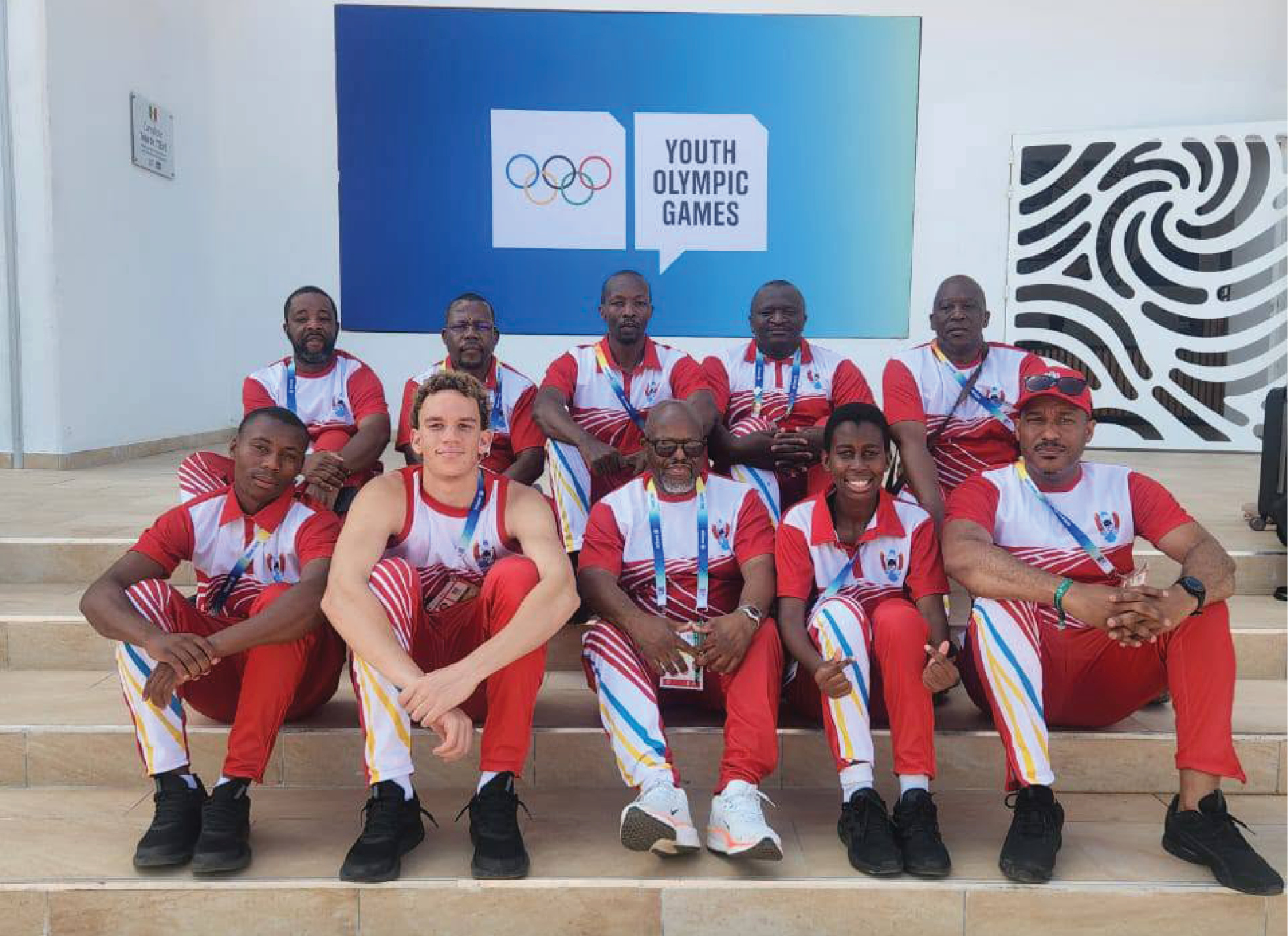
As the curtain falls on the Dakar 2026 Youth Olympic Games, Eswatini is once again nursing the familiar hangover of another empty-handed international outing.
In truth, a growing section of the local sporting fraternity has lost track of what actually happens to contingents dispatched to global competitions, largely because the build-up to every Games edition offers little more than hollow optimism.
Beneath the surface of preferential treatment, administrative opacity and chronic technical unreadiness lies a hard reality: Eswatini has perfected the art of being a ‘Games participant of note.’ Unfortunately, the International Olympic Committee does not mint medals for showing up. Contrast this stagnation with the sporting revolution unfolding just across the border in Botswana.
The blueprint of a sporting ecosystem
Earlier this week, I came across a commemorative plaque honoring Letsile Tebogo, Botswana’s Paris 2024 Olympic gold medalist, receiving formal State recognition. The celebrations surrounding this young sprinter—who has carried the Pula nation on his shoulders and in his heart—go far beyond routine national pride.
Alongside his relay teammates and technical staff, Tebogo has fundamentally rewritten Botswana’s sporting philosophy and transformed its entire athletic ecosystem. Most critically, he has achieved what policy papers rarely do: he has convinced the primary stakeholder in sports development—the household—that athletics is a lucrative, viable career.
When Tebogo first emerged on the circuit under the unassuming moniker “School Boy,” rivals underestimated his lethal potential. They quickly learned otherwise, left stunned by his explosive pace and composure as he anchored Botswana’s relays into global prominence.
Within a remarkably short window, Athletics Botswana has turned ordinary township and village youths into bonafide millionaires. Tebogo’s Paris 2024 prize earnings alone are estimated at roughly US$250 000—a sum that, once combined with national incentive schemes and corporate endorsements, reads like a fairy tale in Southern African sport.
When Botswana’s athletes broke through, both the state and corporate sector came to the party, locking these athletes into the nation’s sporting history.
Political will and legacy infrastructure
To those of us entrenched in the regional sports development space, Botswana’s rise is neither a fluke nor an accident of genetics.
It is the deliberate dividend of a blueprint rolled out in the late 2000s: the Botswana National Sports Council (BNSC) Strategic Plan (2009–2012 Cycle).
When I first encountered that document in 2012, its ambition was immediately striking. When I asked a senior administrator how they planned to fund and execute such a grand vision, the response was unambiguous: “This one has the full support and backing from Number One.” That political will was not confined to boardrooms.
When Botswana’s athletes qualified for the Olympics, the fanfare brought Gaborone to a standstill. At a packed national stadium, then-president Ian Khama arrived unannounced and without the suffocating pomp of state protocol—deliberately refusing to steal the limelight from the athletes. That day, middle-distance star Nijel Amos delivered an impassioned plea for sustained state investment, world-class medical and technical support and high-performance infrastructure, laying bare the brutal realities faced by athletes from developing economies.
Gaborone listened.
Ahead of the 2014 African Youth Games, the government delivered quality, fit-for-purpose facilities. Today’s global podium finishes are living proof that Games legacy infrastructure—when properly utilised and professionally managed—is a decisive catalyst in high-performance sport.
Swallowing our pride to shiyelana lugwayi
What, then, is Eswatini’s excuse? We can no longer afford to fold our arms and accept mediocrity when a blueprint for success sits right next door.
Rather than retreating into defensive insularity, Eswatini’s sports leadership must swallow its pride and dispatch a technical delegation to Botswana to Shiyelana lugwayi—to exchange wisdom, interrogate their governance models, study their administrative structures, and absorb their high-performance philosophies.
Crucially, Botswana’s coaching ranks are populated by young, technically sound tacticians with decades of elite delivery ahead of them. Botswana is not leaving the regional, continental or global podium anytime soon.
In an era demanding urgent economic diversification, modern sport is no longer a peripheral recreational expense; it is a high-yield industry capable of expanding national GDP and absorbing youth unemployment.
If Botswana can mint 10 sports millionaires in under a decade, Eswatini’s continued inaction represents a missed socioeconomic intervention of the highest order.
Eswatini possesses the raw talent to produce its sports millionaires.
What remains painfully absent is institutional commitment, transparent governance and genuine political willpower.
Botswana has proven the model works. It is time we humbled ourselves, learned from our brothers and sisters and traded participation trophies for podium glory.