CIVIL society organisations have welcomed government’s move towards implementing the long-awaited National Register for Sex Offenders.
Swatini Action Group Against Abuse (SWAGAA) Director Nonhlanhla Dlamini said the development was long overdue, considering that the Sexual Offences and Domestic Violence (SODV) Act was enacted in 2018.
The reaction follows government’s move towards operationalising the National Register for Sex Offenders by advertising the post of Registrar of the National Register for Sex Offenders. The post was advertised by the Civil Service Commission (CS). The recruitment marks a step towards putting the register into operation, following years in which provisions of the SODV Act had yet to be fully implemented.
The need for the register is contained under Part IX, Sections 56 to 59 of the Sexual Offences and Domestic Violence (SODV) Act, 2018.
The register is intended to support the implementation of the law by providing a mechanism for recording sex offenders in accordance with the applicable legal requirements, strengthening efforts. She said the organisation was hopeful that the register would achieve its intended purpose of protecting children, women and other vulnerable groups from repeat offenders.
“We are happy that finally government is working on operationalising the National Register for Sex Offenders,” said Dlamini. She explained that, without an operational register, convicted sex offenders have been able to secure employment in environments where children were present, exposing minors to the risk of sexual abuse.
Dlamini said some offenders deliberately sought employment in places that brought them into close contact with children, making it necessary to have a system that would prevent repeat offenders from accessing such opportunities.
She said the register could also discourage would-be offenders from committing sexual offences because convictions could jeopardise their employment prospects, particularly in environments involving children and women. Furthermore, she noted that while some offenders were rehabilitated in correctional facilities, others repeatedly returned to prison for SODV offences.
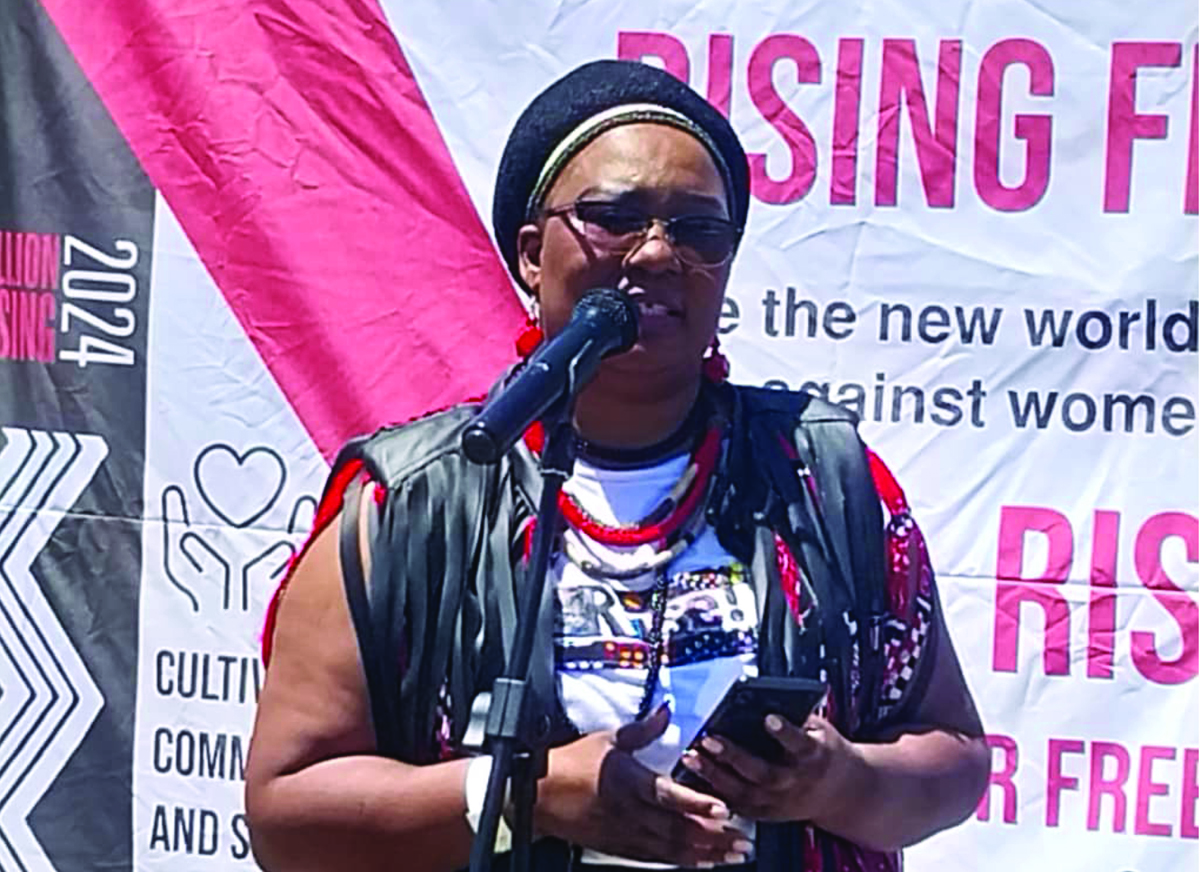
“This shows that some people never get rehabilitated in correctional facilities,” she said. Meanwhile, One Billion Rising Eswatini Coordinator Colani Hlatjwako also welcomed government’s move, saying operationalising the register would advance the full implementation of the SODV Act. Hlatjwako said the absence of an operational national register had created opportunities for convicted sex offenders to be re-employed in environments where children were present, sometimes because employers were unaware of their criminal histories. She recalled a case in which a man convicted of raping a child reportedly had his sentence suspended on the basis that he needed to work.
“I recall a case where a man was convicted for raping a child, but the court suspended his sentence on the basis that he needs to go to work. Where was he supposed to work without risking the lives of the children and women?” she asked.
Hlatjwako said the register could help prevent similar situations by ensuring that relevant information about convicted sex offenders was available to support appropriate employment decisions and protect vulnerable groups. However, she stressed that the effectiveness of the register would depend on the capacity of law enforcement agencies, courts and other relevant stakeholders to implement the law properly. She said these institutions needed to be capacitated on the SODV Act and understand their respective responsibilities in relation to the register.
Hlatjwako cautioned against selective implementation, saying all convicted offenders who qualified for registration under the law should be treated equally. “We have seen that in this country some people are sometimes exempted from the law. We don’t want cases where a convicted person, for some reason, is not registered as per the law,” she said. She emphasised that the law should be implemented without fear or favour at every stage of the justice system.
Hlatjwako added that operationalising the register would demonstrate the country’s commitment to protecting the rights of women and children. “We have a good law in the SODV Act, but the intended results are not fully realised because some aspects of the Act have still not been operationalised,” she said.

WHO WILL BE INCLUDED IN NATIONAL REGISTER FOR SEX OFFENDERS?
People convicted of sexual offences, but had suspended sentences will also be registered in the National Register for Sex Offenders.
According to Section 59 of the Sexual Offences and Domestic Violence Act, the register will also include people who were previously convicted of sexual offences, even if they did not serve a prison sentence. These include those who had received wholly suspended sentences, meaning they did not serve jail time, but warned against committing similar offences the period of their sentence. The National Register for Sex Offenders will include people convicted of sexual offences, those who have previously been convicted of such crimes and certain people accused of sexual offences where a court has made the required finding and issued an order.
Also, those convicted of similar offences in foreign countries or whose names appear on official sex offender registers abroad will be featured in the register. The following persons will be included in the register:
-
People convicted of sexual offences in Eswatini.
-
People accused of sexual offences where a court has made the required finding and issued an order under the Criminal Procedure and Evidence Act.
-
People currently serving prison sentences for sexual offences.
-
People who have completed prison sentences for sexual offences.
-
People previously convicted of sexual offences, even if they did not serve a prison sentence.
-
People convicted of offences equivalent to sexual offences in foreign countries.
-
People dealt with by foreign courts in a manner similar to the court orders or sentences provided for under Eswatini law.
-
People whose names appear on official sex offender registers in foreign countries following a sexual offence conviction or an equivalent court order.