


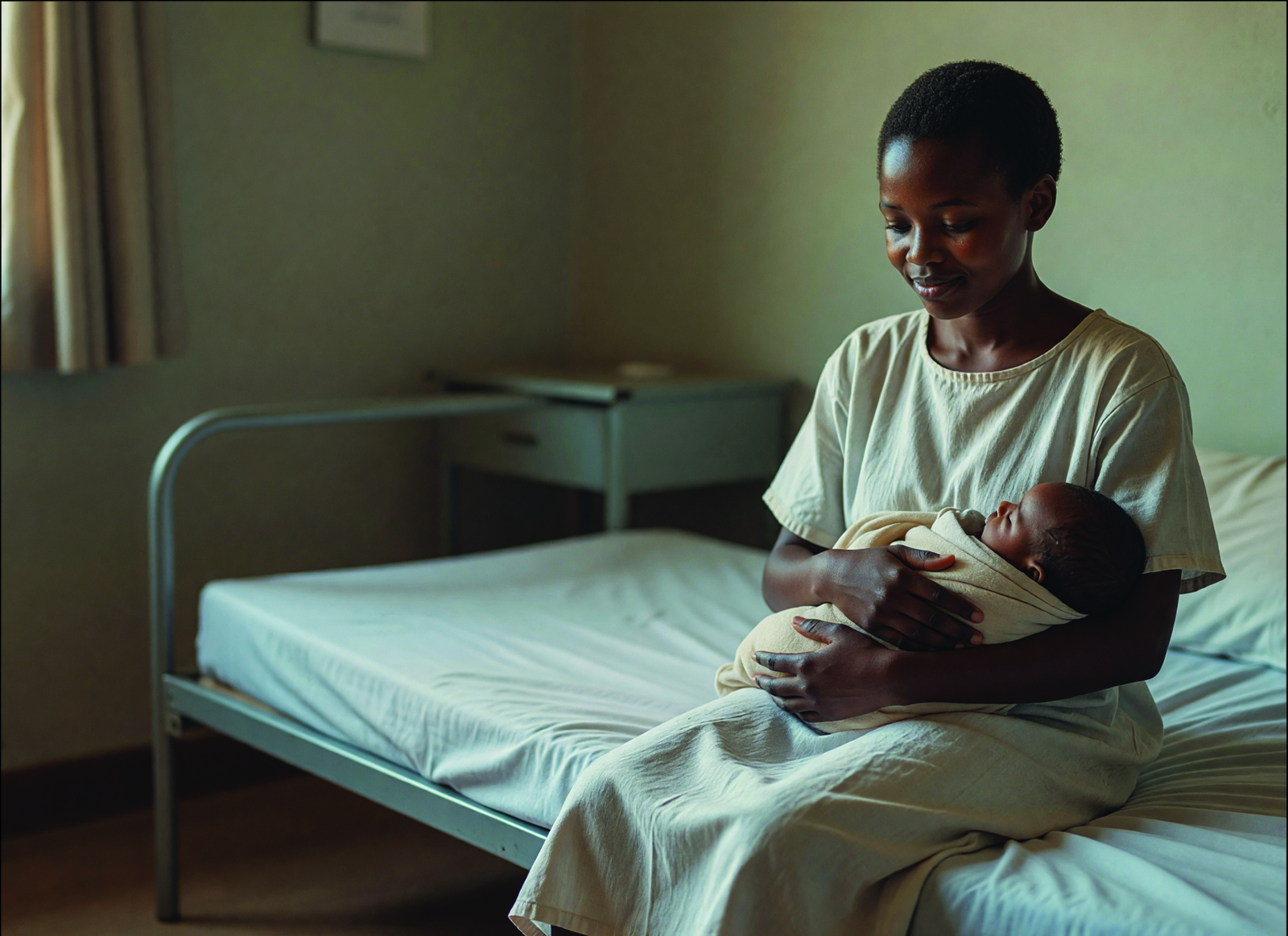
A Grade VII pupil aged 14 has prematurely given birth to a baby girl weighing just above a kilogram, and five men who could be the father of her newborn baby have been lined up for DNA testing.
Among them are two pupils from a high school located next to the primary school that *Mphile attended in the Lubombo region.
Currently, the newborn baby has not been given her father’s surname because it is not known.
Mphile’s mother, *Betty, said her daughter was not sure who could have impregnated her as she had encounters with several males.
“At the police station she was ordered to list all the males she had encounters with so that they could be taken for DNA testing when the baby was born,” she said.
Betty confirmed that two of the males were attending a nearby high school and they were known to her. She added that two of the three were said to be adults, while the third one was young but not attending school.
Betty said the police indicated they would only be in a position to take all the men for DNA testing once the baby was three months old.
“We are just waiting for the baby to be discharged from hospital and turn three months so that we can inform the police to facilitate the DNA testing,” she said.
Speaking generally, Deputy Director of Social Welfare Simey Neves said they usually worked hand-in-hand with the police on such matters.
“We do have a number of such cases and we always rope in the police so that they could work on the investigation and criminal aspect while we handle the support and psychosocial aspect,” she said.
Neves said in some instances, they would conference the case so that each one of them would be assigned specific tasks.
Meanwhile, Mphile was doing Grade VII at a primary school located in the Lubombo region when she fell pregnant. She was later moved to join another school in the Manzini region where she could not resume lessons as she delivered prematurely a week ago.
The minor was reported to be the youngest mother at the hospital where she will also be spending the next three months nursing the premature newborn.
Sources within the hospital narrated how Mphile became the source of concern to all the mothers she shared a ward with as she was even scared of her newborn baby.
“She is just too young to bear a child and we were not surprised when she did not want anything to do with the baby,” said another new mother.
She said Mphile’s newborn suddenly became the responsibility of the other mothers as they would take turns to take care of it.
“When I was discharged from the hospital, Mphile was even reluctant to breastfeed the baby or to change its nappy. One morning the nurses asked her to pump breastmilk so that she could feed the baby using a tube and she disappeared into the bathrooms. We searched for her and found her crying, saying she was failing to pump milk,” she said.
The woman said Mphile appeared to be concerned by the fact that she would not be able to sit for her exams because of the baby.
“One moment she is bubbly and borrowing our phones to call her father and the next moment she is just sitting quietly and minding her business. She does talk about school and she is aware that she will not be writing her exams because she has to stay in hospital with the baby for three months,” said a ward mate.
Mphile’s mother said she noticed that her daughter was pregnant around May this year.
“She came over to stay with me about two years ago. Before then she used to live with her father around Lobamba. Before she came here I was told that she was wayward,” she said.
Betty said as a mother, she could tell that there was a deeper issue into her daughter’s behaviour.
She said last year Mphile started developing a habit of disappearing from home, something that prompted her to interrogate her and further seek interventions from the social welfare department and the police.
“I would sometimes seek the assistance of soldiers from a nearby army base and they would accompany me to search for her,” she said.
She said she made unsuccessful attempts to investigate what could be the cause of the behaviour, but her daughter would not cooperate.
“There was a time when I asked a relative of mine, who is a career guidance expert, to talk to her and she told her briefly about being abused by some people where she once lived at Lobamba,” she said.
Betty revealed that her daughter also told the relative that she did not want to stay with her because she was strict, yet she was used to the freedom she allegedly enjoyed while staying at Lobamba.
She said when she discovered that her daughter was pregnant, she reported the matter to the Siteki police, who said they would launch an investigation to identify the father once the baby was born.
Mphile’s former headteacher said she only learnt about her pregnancy from the police.
“Her parents did not say anything, but instead, I got a call from the police, who explained the situation to me. The police officer also promised to come over to the school for further discussions,” she said.
When asked if they had observed anything that required them to support Mphile, the headteacher said, “Her mother came to the school to report that she had gone missing and that is all. Early this month she came to report that Mphile was moving to another school because she was failing to cope due to the pregnancy,” she said.
Acting Chief Police Information and Communications Officer Inspector Mazwi Ndzimandze could not confirm the matter.
Pupil has history of sexual abuse
The effects of childhood sexual violence can continue into adolescence and adulthood if the survivor was not getting proper support.
This observation was made by SWAGAA Communications and Advocacy Officer Lwandisile Maseko.
Maseko said childhood sexual violence can have profound and long-lasting effects on a child’s emotional, psychological, social and developmental wellbeing.
“When a child experiences abuse at a young age, particularly sexual abuse, it can disrupt their sense of safety, trust, boundaries and understanding of relationships. The impact may extend into adolescence and adulthood if the child does not receive appropriate support and trauma-informed care.”
Maseko listed a number of experiences like anxiety, shame, fear, low self-esteem, difficulties with relationships, challenges establishing healthy boundaries, or trauma-related sexualised behaviours, which survivors may go through.
She said in some cases, a child who has experienced sexual abuse may later seek attention, affection, validation or relationships with men as they try to process the experience, fulfil unmet emotional needs, make sense of intimacy and relationships.
“What we do know is that early sexual violence can interfere with a child’s development, sense of safety, self-worth, understanding of boundaries and ability to form healthy relationships,” she said.