


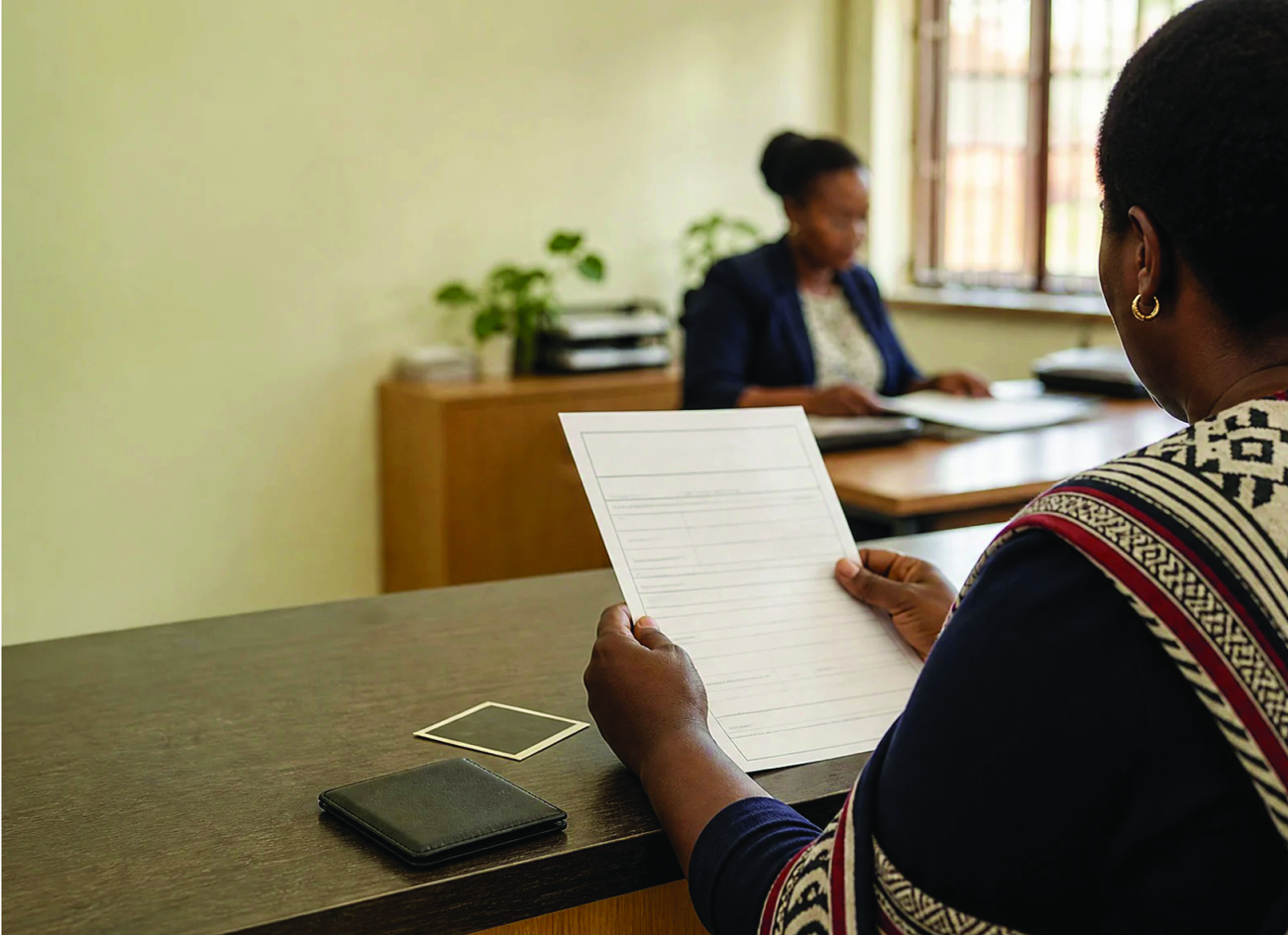
Behind some of the surname changes processed at the civil registry each year are stories of truth, pain and acceptance.
Many people learn who they really are when their mothers decide to tell them.
This has been the case for many people who apply to the Ministry of Home Affairs principal secretary to change their surnames.
According to some applicants, as published in the Government Gazette, most decide to change their surnames because they have discovered their biological surnames.
Some applicants, however, have different reasons, as they want to change their surnames because they have no relations with their paternal relatives, having been raised by their mothers.
Between March and June, the Ministry of Home Affairs approved and gazetted 29 applications for name changes.
In the last quarter, 35 applications were received by the ministry in terms of the Change of Surname Act No. 67 of 1962. The notice is usually published for four consecutive weeks.
Those who wish to object to the surname changes are also given a chance to lodge their complaints in writing with the affected individuals and the regional secretary of the area where the applicant comes from.
Ministry of Home Affairs Communications Officer Mlandvo Dlamini said the ministry was tasked with maintaining the population register, which needed to be accurate.
He said the population register became accurate when parents or children were registered correctly.
Dlamini said the ministry welcomed and allowed people to change particulars in their documents.
He said some people had incorrect dates of birth in their documents, which they were encouraged to correct. He said the ministry needed the population register to contain the correct information.
“People do visit the ministry and ask to change surnames, and in most cases it is because their parents have told them their correct surnames. In some cases, parents convey the message to their children regarding their identity, which is important. This helps the child to get their true identity,” he said.
Dlamini added that most of the money spent went towards the advertisements issued when changing a surname.
He said at the ministry, those changing their surnames paid E300 when they wanted to change their father’s particulars. Those who were older paid an additional E300 for a new identity card.
‘APPLICATIONS HIGHLIGHT NEED FOR STRONGER ID VERIFICATION SYSTEMS’
Mhlambanyatsi MP Dr Bonginkhosi Dlamini says while surname changes may be legitimate in certain circumstances, the number of such applications highlights the need for a stronger system of identity verification from birth.
This was shared by the MP following the failure of his motion with Mahlangatsha MP Mgucisi Dlamini on compulsory DNA testing.
Dr Dlamini said he was concerned about the issue and that his concerns were reinforced by recent government gazette notices indicating that more than 50 people were seeking to change their surnames.
He said once incorrect or disputed information was entered into the civil registration system, correcting it later became difficult, costly and, in some cases, impossible to verify.
Dr Dlamini said this could result in inconsistencies that followed individuals throughout their lives.
He said his proposal sought to address these risks at the earliest possible stage of identity registration.
“The proposed DNA requirement was also informed by its potential value to the criminal justice system. DNA remains one of the most reliable forensic tools available to modern law enforcement,” he said.
Dlamini added that a properly regulated national framework, supported by appropriate legislation and safeguards, could assist in identifying victims, confirming biological relationships and solving complex crimes where traditional investigative methods were insufficient.
He said Eswatini should therefore consider the broader benefits of integrating reliable biological data into its identity and justice systems as part of ongoing efforts to modernise crime prevention and detection.
He said every child had a right to an accurate and secure identity.
The MP said no child should face uncertainty or disputes regarding biological parentage later in life.
“Early verification through proper legal and scientific processes can help prevent such challenges and protect the dignity and rights of children,” he said.
He said the issue should not be reduced to a simple debate for or against DNA testing.
He said, rather, the key question should be how Eswatini could build a civil registration system that was accurate, secure, modern and capable of protecting the identity of all Emaswati.
COMPULSORY DNA TESTING WILL DO A LOT OF GOOD – CANGO
Coordinating Assembly of Non-Governmental Organisations (CANGO) Executive Director Thembinkhosi Dlamini says it would do a lot of good if the country introduced compulsory DNA profiling of young people so that they could be matched with their biological parents as early as possible.
This was shared by the director following an increase in the number of people applying to the Ministry of Home Affairs for surname changes.
Dlamini said every child had a right to know their true identity.
He said the costs were borne mostly by the individuals concerned. He said while some might want to deny it, it was true that some people who experienced such situations faced many problems while growing up.
“Things like bed-wetting, misbehaviour and running into trouble with the law. These challenges often come to an end when someone mentions that there might be a mix-up with respect to their identity,” he said.
He said many people found this to be true.
He said by the time the individual incurred the costs that everyone saw, including government, the person had already suffered considerably as a result of the mix-up.
Dlamini further stated that when people reached adulthood, they sometimes suffered more, as some entered into relationships with people to whom they were related.
He said some even had children with their relatives, which could have serious consequences.
“Imagine having a child with the surname Dlamini because you were told that you are a Lukhele. Having to change back to Dlamini because it is your biological surname may further complicate matters in terms of incest that may result from such, and inbreeding within the population,” he said.