


THE financial standing of the Eswatini Electricity Company (EEC) has been cited as one of the factors behind a possible electricity tariff hike next year.
The company disclosed that it would make a tariff application for the 2027 financial year in October, ahead of the November 1, 2026 application period.
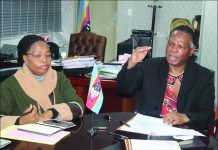
This was said by EEC General Manager Customer Service James Mabundza when responding to questions during a meeting between the company’s management and editors from various media houses yesterday.
Rubicon Media Group’s Lwazi Dlamini had asked what specific internal cost-control measures EEC had taken to reduce overheads before applying for a tariff adjustment.
Mabundza said, based on the company’s current financial position, it was apparent that there would likely be a tariff increase, although the exact extent had not yet been determined.
He said the figures would become clearer between mid-October and November once the financial analysis had been completed.
However, he stressed that making a tariff application did not automatically translate into an immediate increase in the amount consumers would pay for electricity.
He explained that the tariff methodology required the company to submit an application to the regulator, which would then determine the revenue EEC would be allowed to recover.
“Based on the company’s current financials, it was apparent that there would likely be a tariff increase, although the exact extent had not yet been determined,” he said.
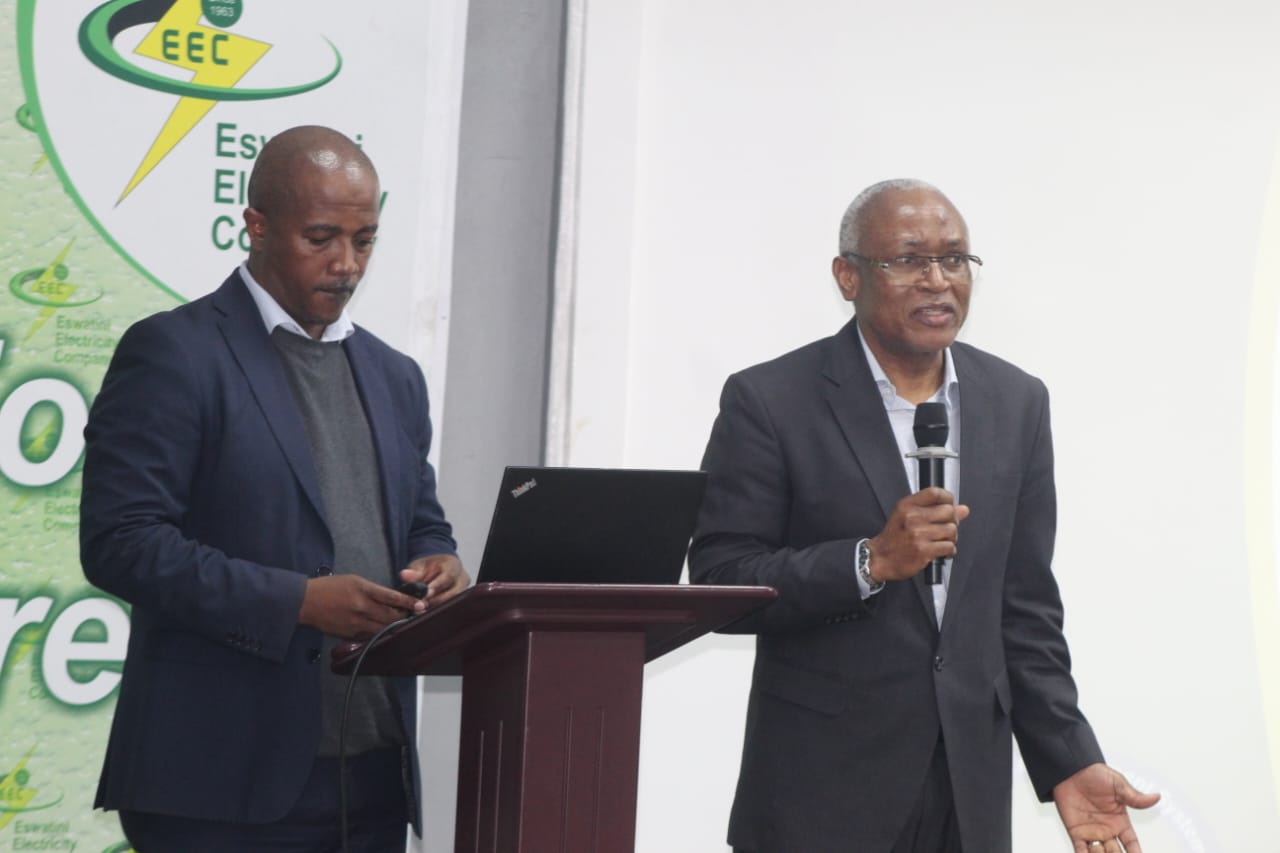
Meanwhile, EEC Acting Managing Director Mphumuzi Maziya said the company had been operating under austerity measures for several years in an effort to contain internal costs.
He said the company had been scrutinising even relatively small expenditures, including staff training.
“We have been operating on austerity mode for the past few years, whereby we take note of small things like training. We only do them when they are sponsored so as not to reduce the morale,” Maziya said.
He said EEC had also purchased company vehicles as a cost-containment measure, allowing employees to use official vehicles instead of claiming costs associated with using their personal cars.
Other measures included holding most meetings virtually, changing procurement procedures to a just-in-time approach to avoid purchasing materials that would not immediately be required, and monitoring operating hours and vehicle movements.
Furthermore, EEC Legal Counsel and Company Secretary Thabiso Masina said the biggest driver of any new tariff would not necessarily be the company’s internal costs, but the cost of purchasing electricity from outside the country.
He said EEC’s salary-to-revenue ratio was currently about 10%, compared with a benchmark of between 10% and 20% for utilities.
This, he suggested, indicated that salaries were not the major pressure behind the anticipated tariff adjustment.
DO NOT INSTALL SOLAR BEFORE REGISTRATION – EEC
Homeowners installing solar power systems have been urged to register their installations with the Eswatini Electricity Company before connecting them to the national electricity grid.
The emphasis was made by EEC Acting Managing Director Mphumuzi Maziya, who reiterated that consumers must notify and register their solar installations with the company, even when the electricity generated would be used entirely by the homeowner and not sold back to EEC.
Maziya was responding to a question from The Nation Magazine Editor Bheki Makhubu during a meeting with editors at Sibane Sami Hotel in Ezulwini.
He shared his experience after an electric gate at his home began giving electric shocks. Upon contacting EEC, its personnel investigated the problem, which took considerable time to establish. The problem was eventually linked to a neighbour’s solar installation, which had been connected to EEC infrastructure.
Makhubu also asked what value was added by the tax charged by EEC when customers purchased electricity units and whether the company acted as a collection agent for the Eswatini Revenue Service (ERS).
In response, Maziya said incidents such as the one cited by Makhubu underscored the importance of ensuring that solar installations connected to the national grid were known to EEC.
He said it was for this reason that the company had trained its teams, including the Phehla Sikwati teams, to ensure that solar power plants were properly registered before they started generating electricity.
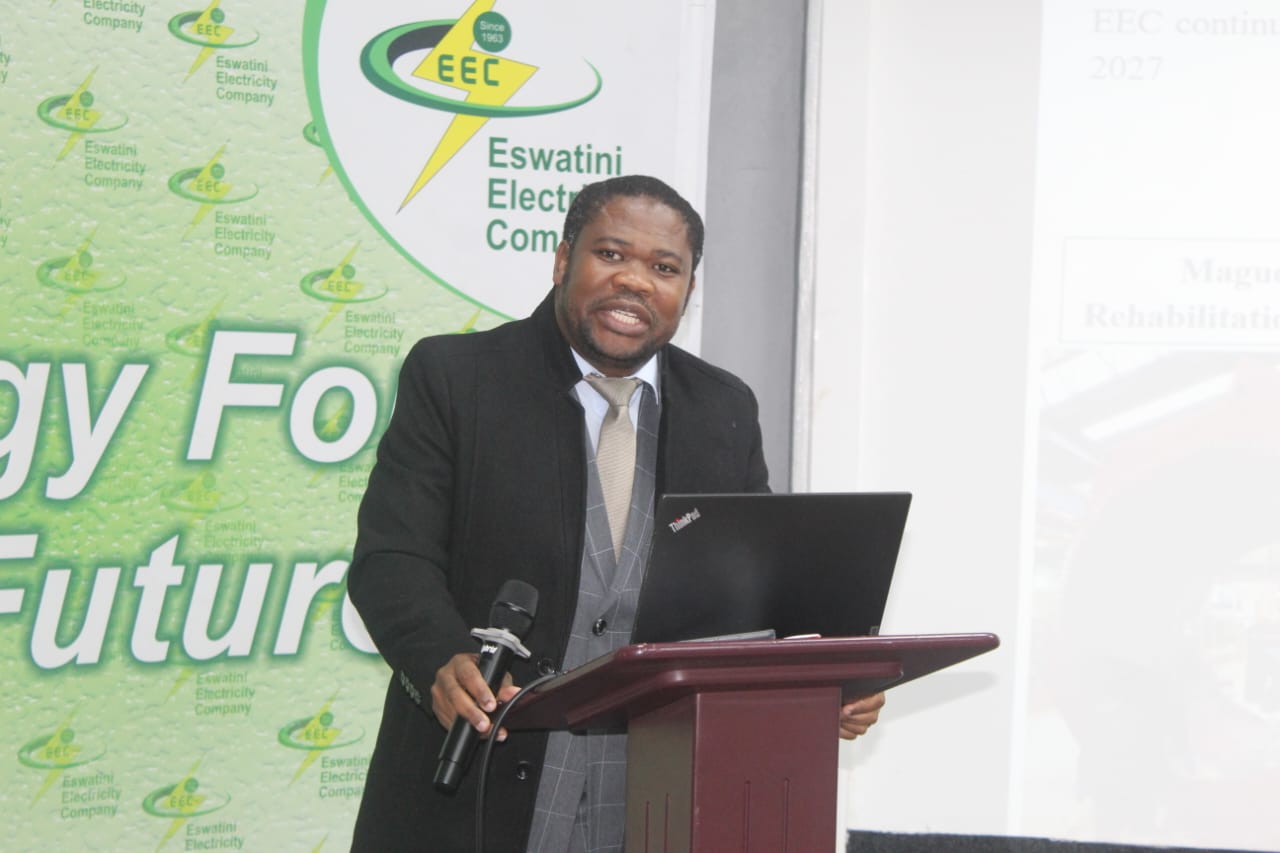
Maziya said the levy charged to consumers was intended to support rural electrification through the Rural Electrification Access Fund (REAF), which seeks to expand access to electricity, particularly for domestic consumers in underserved areas.
EEC General Manager Customer Service James Mabundza stressed that the current levy should not be confused with the E55 facility charge that consumers were previously required to pay.
He said the levy was collected to support rural electrification and ultimately benefit domestic consumers through increased access to electricity.
Mabundza further stated that the tax applied to customers in tariff categories other than domestic consumers.
The manager said EEC did not fully recover value-added tax on domestic customers, while recovery was possible in other tariff categories in line with the categories prescribed by the ERS.
Mabundza explained that EEC effectively acted as an agent for the ERS in collecting VAT.
“We are an agent of ERS just like any other business,” he said.
He added that when EEC imported electricity, it was itself charged VAT but did not claim the tax back.
Maziya said only about 67% was recoverable, further illustrating the complexities surrounding the tax component of electricity costs.
Additionally, Masina said the company collected approximately E60 million annually through levies, compared with about E3 billion from customers. This meant the levy made up a relatively small portion of the company’s overall revenue.
Therefore, Mabundza said increased domestic electricity generation could help the country reduce its reliance on imported power and manage the cost of sales.