



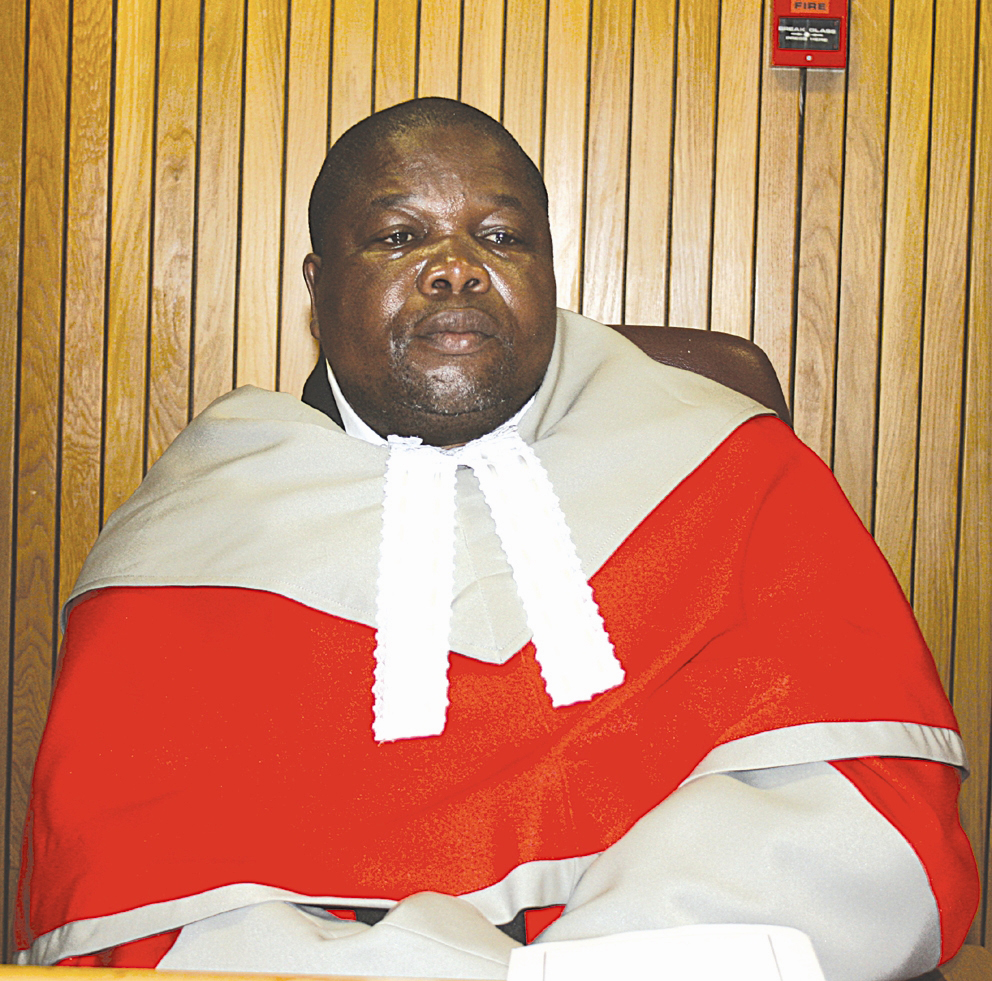
PROMINENT lawyer Zwelethu Jele says the late Chief Justice (CJ) Bheki Maphalala transformed the Judiciary through its expansion and strengthening.
The CJ passed on last Thursday while receiving medical care at a hospital in South Africa.
Since the news of his death, tributes have been pouring in from local and beyond the borders from other chief justices and messages of condolence from the public and those that he has worked closely with.
Jele, who took to his social media, stated that during Maphalala’s tenure, no fewer than 12 judges were appointed to the High Court, although one was subsequently removed following an impeachment process.
He said these appointments brought much-needed capacity to the court and marked a significant improvement in the functioning of the judicial system.
He said the courts were, quite simply, functioning as matters were being enrolled, heard and determined.
Adding, Jele said Maphalala also presided over the substantial strengthening of the Industrial Court, with no fewer than six judges appointed to that court.
He said this had a tangible impact on its ability to manage its workload and the longstanding backlog, which had become a constant feature of the Industrial Court.
Jele added that the Supreme Court was likewise strengthened through the appointment of local judges.
He said in his view, Maphalala was unfairly criticised for the number of acting appointments made to that court.
He said his decision not to continue with those acting appointments has, however, prejudiced litigants, as the Supreme Court has recently been unable to constitute a quorum to hear matters on review.
“His tenure also saw the establishment of a permanent Industrial Court of Appeal and importantly, the creation of the Commercial Court. Both were significant developments in the administration of justice and addressed important gaps in the country’s judicial architecture,” he said.
Jele said the establishment of the Small Claims Court has also played a significant role in improving access to justice for ordinary people in the country.
He said these interventions should not be understated.
He said whatever shortcomings may have characterised his tenure, Maphalala presided over a period in which the Judiciary was considerably expanded and capacitated.
He said courts were established, judges were appointed, backlogs were reduced, and the machinery for the efficient administration of justice was strengthened.
The lawyer stated that Maphalala’s leadership was rarely perfect and those who occupy positions of authority will inevitably leave behind both admirers and critics.
He said Maphalala was no exception.
He said his tenure had its difficulties and controversies, but it also produced achievements that deserve to be remembered.
“His tenure was by no means without controversy. He had his critics, some of whom were justified in their criticism, and several allegations were levelled against him during his time in office. These included a resolution by the Law Society to initiate proceedings for his removal, although a similar resolution had previously been adopted against his predecessor, Ramodibedi.
MCB was not without fault and, like many people in positions of leadership, was subjected to intense scrutiny and criticism,” he said.
He said for those who practise law in Eswatini and have witnessed the evolution of the courts, Maphalala’s tenure left the Judiciary with greater capacity, broader institutional reach and improved access to justice.
He said the courts were strengthened, new specialised divisions were established, and more litigants were able to have their matters heard and determined.
“In June 2015, Maphalala assumed the role of acting chief justice during a particularly difficult and turbulent period in the history of the Judiciary.
“The then chief justice, Michael Ramodibedi, had become unavailable to perform his duties following a stand-off with law-enforcement officers who sought to apprehend him pursuant to a warrant of arrest,” he said.
He added that the impasse eventually ended when Ramodibedi agreed, albeit reluctantly, to appear before the Judicial Service Commission to face impeachment proceedings.
He said Maphalala chaired those proceedings, which culminated in a recommendation for Ramodibedi’s removal from office.
He said Ramodibedi subsequently returned to his home country without facing the criminal charges that had been instituted against him.
He said following a short period as acting chief justice, Maphalala was appointed substantive Chief Justice by the appointing authority in November, 2015, becoming the first substantive Chief Justice who was a Liswati.
Meanwhile, the public reacted to Jele’s post and stated that he had shared a mature tribute on the CJ.
Others stated that they could not have said it better.
One of the Facebook users stated that this was an accurate reflection of who Maphalala was and the impact he made on the Judiciary.
“For us laymen and senior citizens of this country we saw some improvement in the administration of justice in the country, for example the appointment of more judges and acting justices.
“Rapid secondment of private senior lawyers to become acting justices. WaMaphalala usebentile siyabonga sisive,” said the public.
One of the users stated that they met the CJ when they were 18 years old behind the Kowloon Restaurant.
“The user stated that they were with Adam Sheik who had gone to consult with the CJ who, after that meeting, came to greet him as an upcoming businessman, stating that they eventually became neighbours at Fairview North.