



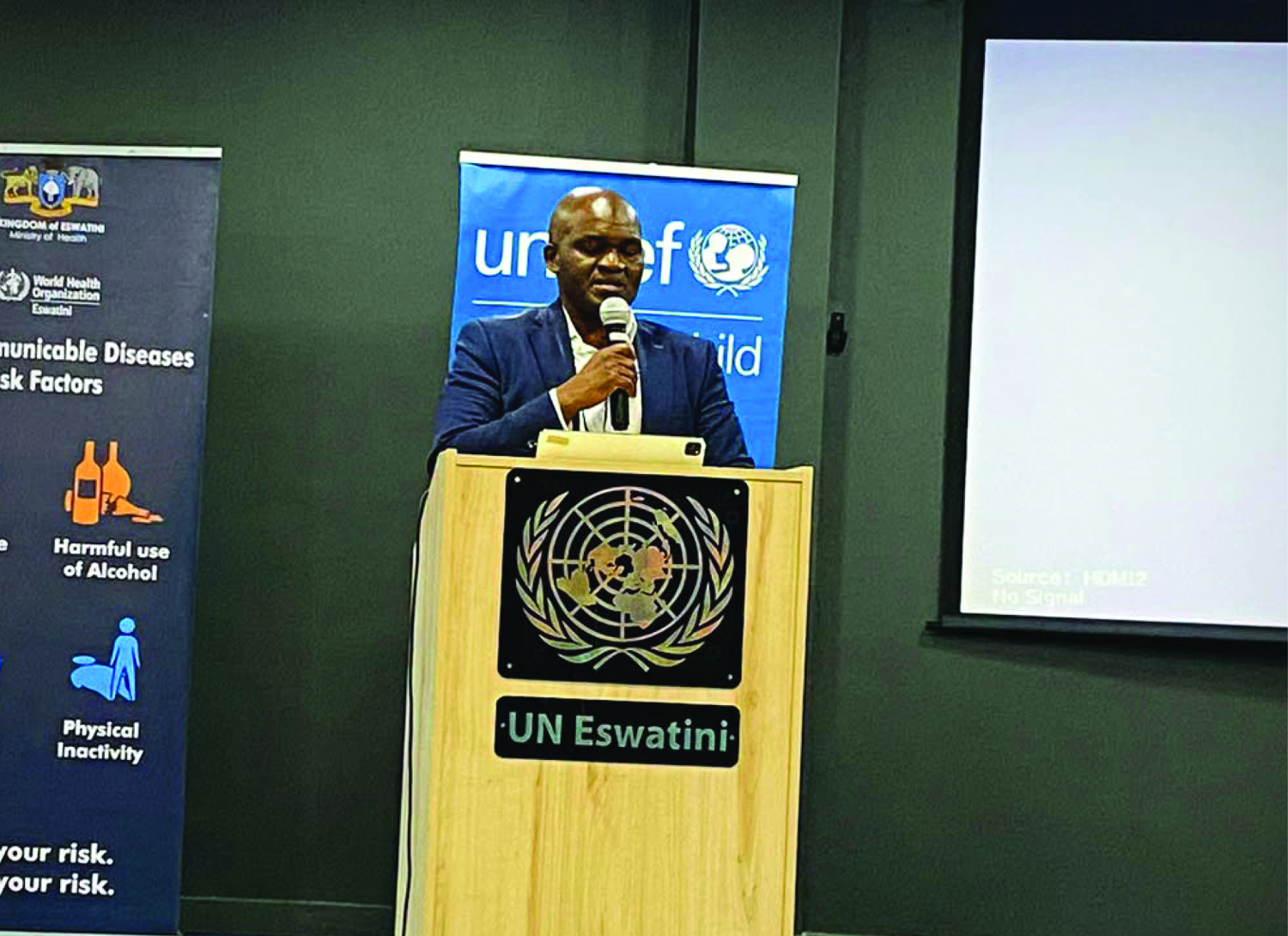
SOCCER– FOOTBALL’S massive reach among children places the sport in a position of responsibility to protect their mental health, according to Eswatini Football Association (EFA) Chief Executive Officer Frederick Mngomezulu.
Mngomezulu was speaking during a workshop facilitated by the ministry of health together with UNICEF at the UN building in Mbabane yesterday as part of their partnership with the EFA to promote children’s mental health and wellbeing through football.
He said football, after schools and other education institutions, was one of the biggest platforms involving children in the country, making it important for the sport to go beyond developing players’ technical abilities.
“We are not only converging to discuss mental health matters of children but to make a promise: that the mental health and wellbeing of every child must be protected, supported, and taken seriously,” Mngomezulu said.
He said football had an important role to play in developing children who were not only skilled players but also resilient enough to cope with the demands of life. Mngomezulu further linked mental preparedness and emotional intelligence to sporting performance, saying football demanded more than physical ability from young players.
“Football demands a high level of intelligence, in particular emotional intelligence, hence mental preparedness and resilience are a cornerstone for performance,” he said.
He said coaches were particularly important in this process because of the influence they have on young players.
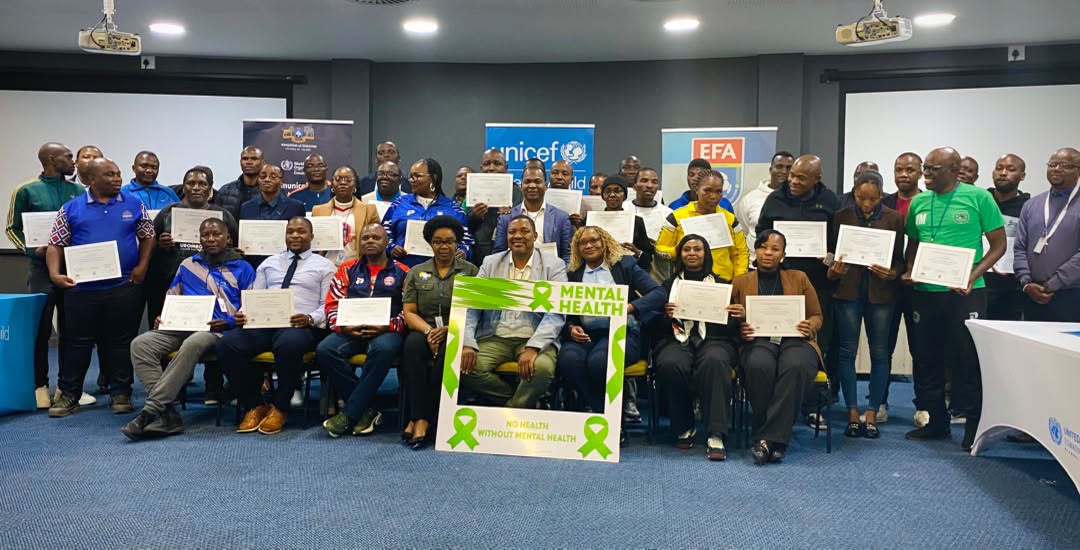
their certification at UN building in Mbabane yesterday.
“Coaching is the first requirement of developing a top athlete or player and as such have the greatest influence in the livelihood of a human being,” he said.
Mngomezulu said it was therefore critical that coaches were equipped with the necessary knowledge and skills to support children, especially given football’s widespread following.
The EFA CEO also highlighted the role of club public relations officers (PROs), saying their communication platforms could be used to promote positive messages about children’s wellbeing.
He said the partnership with UNICEF would use football as a platform to raise awareness, strengthen support systems, train people working with children and help communities understand that mental health should be treated with the same seriousness as physical health.
“Football reaches children where they are. It brings them together. It teaches teamwork, courage, discipline, respect, and resilience,” Mngomezulu said.
Also speaking during the workshop was ministry of health National Mental Health Focal Person Sindiso Bhembe, who thanked the participants and the EFA for their involvement in the initiative.
Bhembe said she was encouraged by the response and level of engagement from participants during the workshop, describing their participation as an important step towards strengthening awareness of children’s mental health within football.
The workshop brought together EFA coaches and club PROs, giving them an opportunity to engage on ways football can contribute to the mental wellbeing of children and young players.
Mngomezulu called for families, schools, coaches, health workers, communities and leaders to work together in protecting children’s wellbeing.