



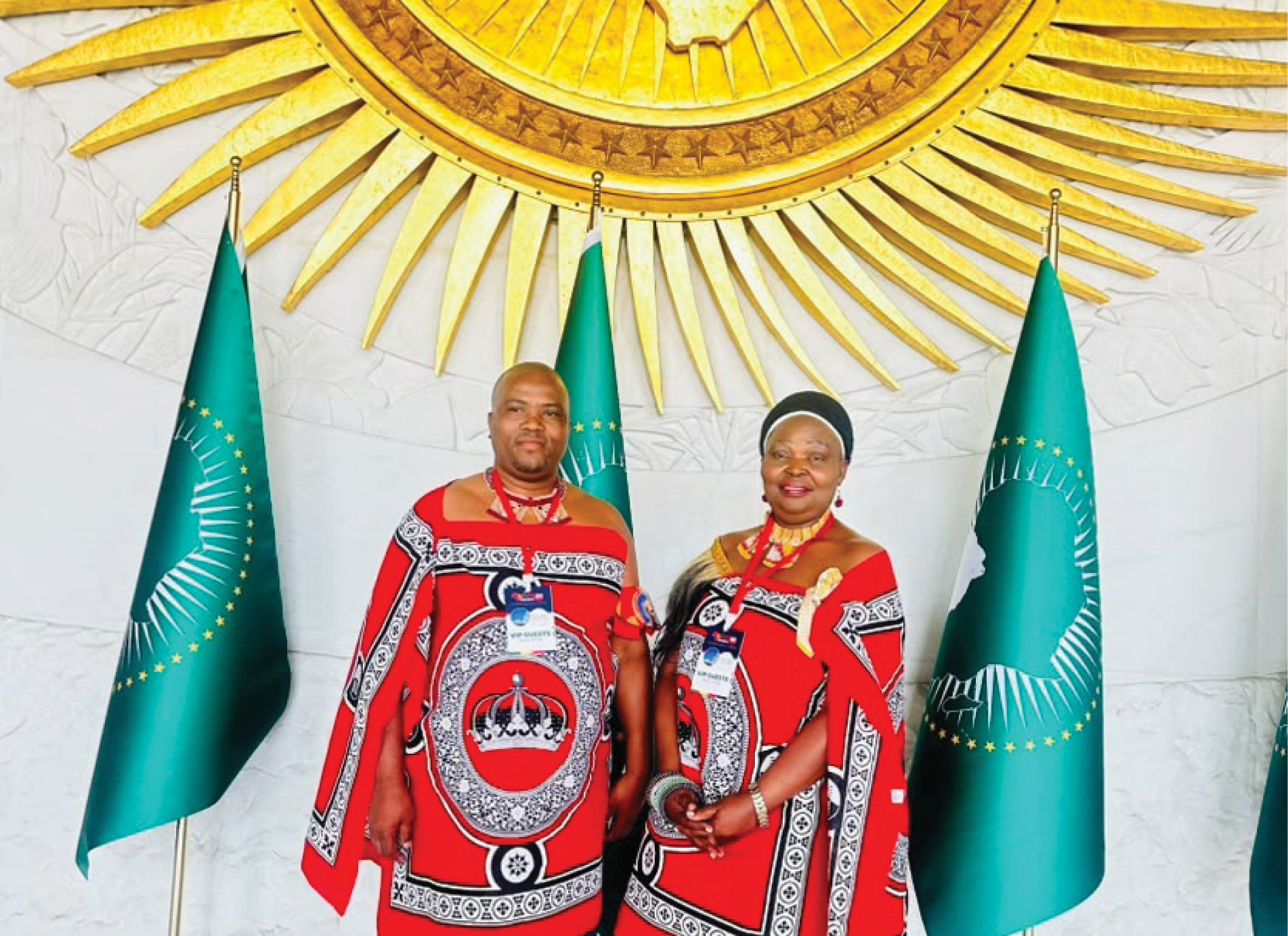
Eswatini has taken a firm position on customary land rights.
The country warned that investors cannot be allowed to access community land without the consent of the people who live on it. This was stated by Minister of Tinkhundla Administration and Development Sikhumbuzo Dlamini to an international gathering; Africa Celebrates 2026 in Addis Ababa, Ethiopia.
Africa Celebrates 2026 is the 6th edition of the annual Pan-African event celebrating African arts, culture, heritage, technology, and business. Traditional leaders were informed that land is held in trust for the nation and must never be treated as an asset that can be disposed of without community involvement.
It was held under the theme ‘One Africa, One People: Uniting Culture, Innovation and Enterprise for a Shared Prosperous Future’.
Dlamini delivered the uncompromising message as the country placed customary land ownership, traditional leadership and community participation at the centre of Africa’s sustainable development debate.
Addressing Panel 4 on Governance and Sustainable Development, the minister made it clear that investment must benefit communities rather than bypass them.
He argued that traditional institutions must not be reduced to ceremonial structures while decisions affecting land and livelihoods are made without the participation of the people they represent.
The minister’s intervention placed the country’s land governance system under the international spotlight, with a central message that economic development must not come at the expense of customary land rights. Speaking on behalf of His Majesty King Mswati III, Her Majesty the Indlovukazi and the people of Eswatini, Dlamini said the country’s Constitution vests land in the king as trustee for the people, while chiefs administer it at community level.
He argued that this arrangement should not be dismissed as an outdated tradition, but recognised as a living system that provides ordinary Emaswati with access to land, including those who might otherwise be unable to afford entry into formal property markets.
In a direct message to investors and African governments, Dlamini said investment on customary land must be structured around community consent, transparency and shared benefits. He explained that access to customary land in the country was structured through leasehold arrangements rather than freehold ownership, requiring documented community consent through the chief and community.
He further outlined the importance of benefit-sharing arrangements that should include employment opportunities, community development funds and infrastructure.
The minister also called for multiple layers of oversight to prevent any single individual or institution from alienating land held for the benefit of the community. His position was unequivocal: investors must not simply arrive with money and expect communities to surrender their land without meaningful participation.
“Custodianship is not ownership, but it is stewardship,” Dlamini declared.
He also challenged the perception that traditional leaders exist merely to preserve culture and perform ceremonial duties. The minister argued that traditional institutions are important development actors whose responsibilities extend to land administration, community governance and local development.
He said the Tinkhundla system provided a constitutional framework that combines traditional authority with elected representation, bringing government closer to communities through familiar institutions.
However, he acknowledged that recognising traditional institutions was not enough. He called for investment in their capacity to undertake planning, budgeting and record-keeping, alongside clearer mandates and greater participation by women and young people.
The minister also used the international platform to highlight the role of Sibaya, the traditional national consultation forum in facilitating dialogue between the monarch and the nation.
He explained that the monarch periodically convenes the nation for national dialogue, while chiefs facilitate similar consultations at chiefdom level. Dlamini said the Tinkhundla system draws on traditional community leadership and dialogue, which had been undermined during the colonial period.
He commended His Majesty King Mswati III and previous monarchs for preserving the country’s cultural heritage, which he linked to the country’s emphasis on peace, unity and stability.
Dlamini challenged African governments and continental institutions to reconsider how traditional authorities are recognised and supported in development planning.
He advanced three central arguments; traditional institutions must be treated as development actors rather than merely cultural custodians, community consent must be the threshold for land-based investment and African development frameworks must recognise and protect the institutions where land, communities and governance intersect.
His closing message was a challenge to African leaders that the issue was no longer whether traditional institutions should have a role in land governance, but whether governments are prepared to give them the legal recognition, resources and protection required to fulfil that role.