



SOCCER – THE country’s participation in this season’s TotalEnergies CAF interclub competitions may have ended earlier than hoped, but both Nsingizini Hotspurs and Royal Leopard left a trail of valuable lessons that could redefine the country’s approach to continental football.

From Nsingizini’s baptism of fire against Tanzania’s Simba SC, one of Africa’s top five clubs to Leopard’s dramatic penalty heartbreak against AS Maniema Union of the Democratic Republic of Congo, the campaign exposed both the promise and the pitfalls of Eswatini’s football development.
When Nsingizini walked off the Benjamin Mkapa Stadium pitch after holding Simba SC to a goalless draw, they may have been eliminated, but they were far from defeated. Their courage marked the rise of Eswatini’s new generation.
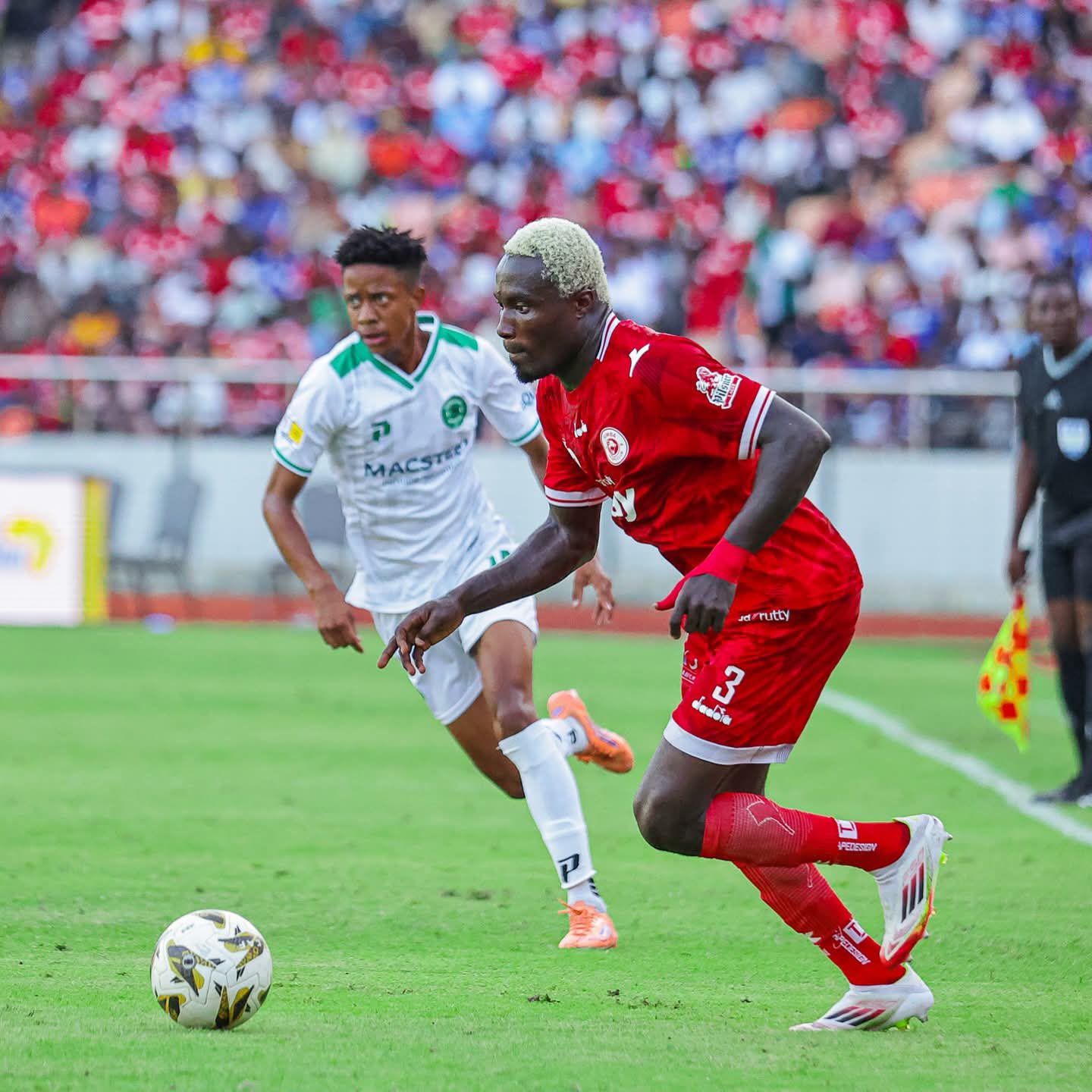
When Leopard fell to AS Maniema on penalties, they may have lost millions in potential prize money, but they gained priceless experience that no training ground could replicate. Both clubs demonstrated that Eswatini football has the talent and fighting spirit to compete — what remains is the structural and institutional support to sustain that momentum.
As PLE Chairman Polycarp Dlamini observed: “The potential is there — our teams simply lack the necessary support.”
From tactical discipline to psychological resilience, from improved preparation to national collaboration, the path forward is now clearer. These CAF campaigns were more than matches. They were mirrors reflecting Eswatini football’s strengths, weaknesses and untapped potential.
If the lessons are embraced, the next generation of teams could transform continental heartbreak into historic triumphs. And when that day comes, Nsingizini’s defiance in Dar es Salaam and Leopard’s brave fight will be remembered as the turning points — the moments when the country’s football learned how to roar on Africa’s grandest stage.
We picked seven key takeaways from the experiences of the two teams as they flew the nation’s flag on the African stage.
1. COURAGE, STRUCTURE CAN COMPETE WITH THE BEST
Nsingizini entered uncharted territory in their maiden CAF Champions League appearance, facing Simba SC — a continental powerhouse ranked fifth in Africa. Despite losing the first leg 3-0 at Somhlolo National Stadium, they displayed immense resilience in the return leg in Dar es Salaam, holding the Tanzanian giants to a goalless draw before 60 000 fans.
Coach Mandla Qhogi’s tactical discipline was evident in the second leg. His decision to introduce goalkeeper Sibusiso ‘Bharaba’ Dlamini and start Joel Madondo and Sinenkosi ‘China’ Dlamini gave Nsingizini defensive solidity and attacking mobility.
The goalless draw may not have altered their aggregate fate, but it sent a message that local sides can stand their ground against elite opponents if they play with structure and belief. As Qhogi’s charges frustrated Simba in their own backyard, it became clear that courage and organisation, not fear are the foundation for continental competitiveness.
2. DISCIPLINE IS NON-NEGOTIABLE AT THIS LEVEL
While Nsingizini’s second leg performance earned admiration, their downfall began with a lapse in discipline at home. During the first leg at Lobamba, Kwakhe Thwala’s reckless two-footed challenge on Simba’s Naby Camara turned the match. The resulting free-kick led to a corner from which Wilson Nangu scored, shifting momentum. Two unnecessary yellow cards, earned from arguing with the referee, drew the ire of Shiselweni Regional Administrator Themba Masuku who blamed the defeat on indiscipline.
“You cannot be collecting useless yellow cards. In football, just like in politics, once you get angry, the opponent takes advantage,” Masuku stated.
His words highlighted a harsh truth: in CAF competitions, emotional control is as vital as tactical execution. Every mistake is magnified and composure often separates progress from elimination.
3. PREPARATION, RESOURCES ARE THE REAL GAME CHANGERS
Premier League of Eswatini (PLE) Chairman Polycarp Dlamini hit the nail on the head after Royal Leopard’s exit. Despite the police side’s brave display, equalising through Felix Badenhorst in stoppage time before losing 4-3 on penalties, Dlamini argued that local clubs are set up to fail without adequate support.
“We need discussions on how our CAF interclub teams are supported. Other countries invest heavily in their teams because they know they carry the national flag,” he stressed.
The lack of preparation time, international friendlies and logistical backing means Eswatini’s clubs start at a disadvantage. In contrast, teams from the DRC, Tanzania and Egypt operate as professional, well-resourced entities with larger budgets and deeper squads. Without government and corporate involvement, the local club’s brave performances will remain gallant defeats rather than historic triumphs.
4. EXPERIENCE BREEDS MATURITY, LEOPARD SHOWED IT
Leopard entered the CAF Confederation Cup as seasoned campaigners and their 7-0 aggregate demolition of Namibia’s Young Africans was a statement of their growth. That emphatic 5-0 home win at Somhlolo National Stadium was not only the country’s biggest CAF result in history but also a reminder that local clubs can dominate when they combine experience with purpose.

Led by stars like Simanga ‘Stina’ Masangane, Junior Magagula and Thokozani ‘Thikithi’ Dlamini, Leopard showcased attacking flair, tactical discipline and an understanding of continental football’s demands.
Their subsequent narrow exit against AS Maniema showed maturity — they played with structure, intensity and courage until the very end, only losing out in the cruel lottery of penalties. Leopard’s performance was proof that experience and persistence narrow the gap between potential and achievement.
5. SMALL DETAILS DECIDE BIG MATCHES
CAF competitions are battles of fine margins and both Nsingizini and Leopard learned that the hard way. For Nsingizini, an ill-timed tackle and a few missed chances at home swung the tie irreversibly. For Leopard, a simple logistical lapse delayed kick-off by seven minutes due to missing corner flags, an embarrassing moment that reflected organisational inexperience at this level.
During the match, Leopard dominated possession and created the better chances, but missed opportunities from Thembisa Shabangu and the saved Junior Magagula and Mlamuli Makhanya’s penalties proved costly. Football at this level punishes errors mercilessly. From match-day logistics to player focus and penalty composure, every detail counts — a lesson local clubs must absorb if they are to thrive in Africa.
6. TURNING PAIN INTO DOMESTIC MOTIVATION
Royal Leopard President and National Commissioner of Police Manoma Masango summed up the mindset needed to progress:
“The experience we gained in this CAF tournament must now be utilised in domestic competitions. I can guarantee that we will return to CAF next season.”
His rallying cry transformed disappointment into determination.
The Nsingizini and the police side’s heartbreak should serve as a motivational spark to dominate the MTN Premier League and Ingwenyama Cup, using continental lessons as fuel for local supremacy.
This mentality, to build from failure rather than wallow in it, is what distinguishes strong football cultures. As Masango and Ingwenyama Cup PRO Nkosilenhle ‘Makawosi’ Masuku noted, such exposure sharpens mental toughness and competitiveness, setting the stage for future continental comebacks.
7. NATIONAL UNITY, INSTITUTIONAL BACKING ARE ESSENTIAL
Eswatini’s CAF journey was more than club football but rather it was a national representation.
Both government and the football fraternity recognised the broader significance of these matches. Minister of Sports, Culture and Youth Affairs Bongani Nzima, who watched Leopard’s historic 5-0 win, said.
“We expect them to advance to the later stages of the competition. This time around, we want to see an Eswatini side in the semi-finals.”
Such statements reflect ambition, but they must be matched by action. Financial backing, infrastructural development and strategic planning are the bedrock of sustained success. Support from government and private partners is not charity, it is an investment in national pride, talent development, and sporting diplomacy.
Eswatini Observer Press Reader | View Here