



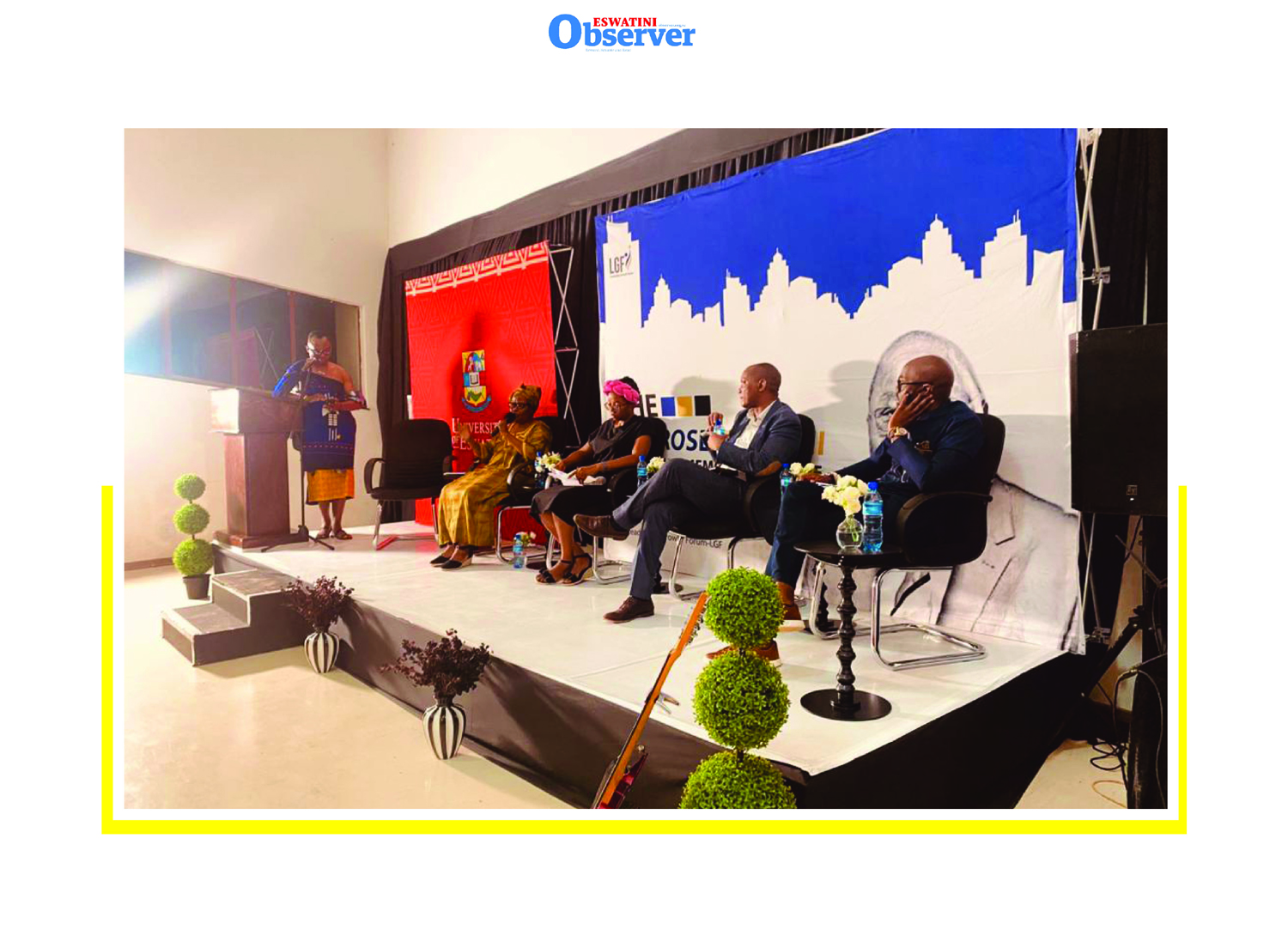
Africa does not need a renaissance, it needs a remembering. This above striking thesis ran through Chris Maroleng’s keynote address during the Mandvulo Memorial Lecture, delivered on Friday evening at the University of Eswatini.
Framed as a tribute to Ambrose Mandvulo Dlamini, the lecture evolved into a wider reflection on African leadership, its philosophical foundations and what Maroleng described as the enduring mischaracterisation of the continent’s intellectual and governance traditions.
He presented Dlamini not simply as a national leader, but as an embodiment of a distinctly African leadership ethic, one rooted in equality, accountability and a deep sense of community.
Dlamini’s authority, he suggested, did not derive from status or self-importance, but from trust and proximity to the people he served.
Maroleng described a leader who did not govern from a distance, nor seek validation through titles, but who remained consistently engaged with communities and institutions.
This, he argued, reflected a model of inclusive governance grounded in consultation, where listening is not a concession but a source of strength.
He was careful to distinguish this approach from what he termed the ‘narrow Western interpretation’ of democracy. In his view, African leadership traditions have long prioritised consensus, relational accountability and collective responsibility, values that are often overlooked when measured against imported frameworks.
It was from this foundation that Maroleng turned to the theme of the evening, “African Leadership Renaissance, Why our values, culture and ethos set us apart”. While acknowledging the emotional and political resonance of the term ‘renaissance’, popularised by figures such as Nelson Mandela, he argued that it demanded closer scrutiny.
The language of renaissance, he suggested, implies a narrative of rise, fall and rebirth. In the African context, this framing risks suggesting that the continent experienced a period devoid of intellectual vitality or governance sophistication, an implication he described as both inaccurate and dangerous.
Such assumptions, Maroleng argued, echo colonial-era depictions of Africa as a ‘dark continent’, a place defined by absence rather than presence. These narratives, he said, were not incidental, but formed part of a broader project to justify domination by diminishing the legitimacy of existing systems.

He told the audience that African societies historically possessed complex and effective governance structures, underpinned by philosophical traditions that valued consultation, balance and social cohesion. These systems were not erased by time, but were disrupted, fragmented and systematically misrepresented during colonial rule.
In that context, he proposed a shift in language and perspective. Rather than speaking of renaissance, he argued, Africa is called to rediscover, reclaim and remember.
This process, he said, is not about constructing something new, but about recovering what has been displaced.
Maroleng emphasised that this ‘remembering’ was neither nostalgic nor symbolic. It was, he argued, a practical and necessary step towards reasserting African agency in shaping contemporary governance and leadership models.
Returning to Dlamini’s legacy, he noted that his leadership reflected these principles in practice. It was marked by humility, a commitment to accountability and an ability to inspire performance not through coercion, but through example.
Crucially, it was leadership anchored in the belief that authority is legitimised by service.
Maroleng suggested that Dlamini’s approach challenged prevailing notions of leadership that prioritise individual elevation. Instead, it affirms a model in which leaders are custodians of collective aspirations, accountable to the communities from which they derive their mandate.
He further argued that colonialism’s impact extended beyond political control, reshaping how leadership itself is understood across the continent. By imposing external systems and undermining indigenous ones, it created a lasting tension between inherited structures and lived realities.
This, he said, continues to influence governance today, often creating a disconnect between formal institutions and the values that underpin African societies.
Maroleng cautioned against uncritical adoption of external models or language.
He maintained that Africa’s future would not be secured through imitation, but through a deliberate re-engagement with its own intellectual and cultural heritage.
In remembering the late prime minister, Maroleng suggested, there is also an opportunity to remember something larger, a tradition of leadership that remains present, resilient and capable of shaping the continent’s future on its own terms.