



SMALL businesses that fail to embrace Artificial Intelligence (AI) risk falling behind competitors as technology reshapes how enterprises operate and access markets.
This is according to Khandle Hedrick, an entrepreneurship specialist and mentor with Arizona State University, who says AI tools can help entrepreneurs improve efficiency, develop business ideas and reach customers locally and internationally.
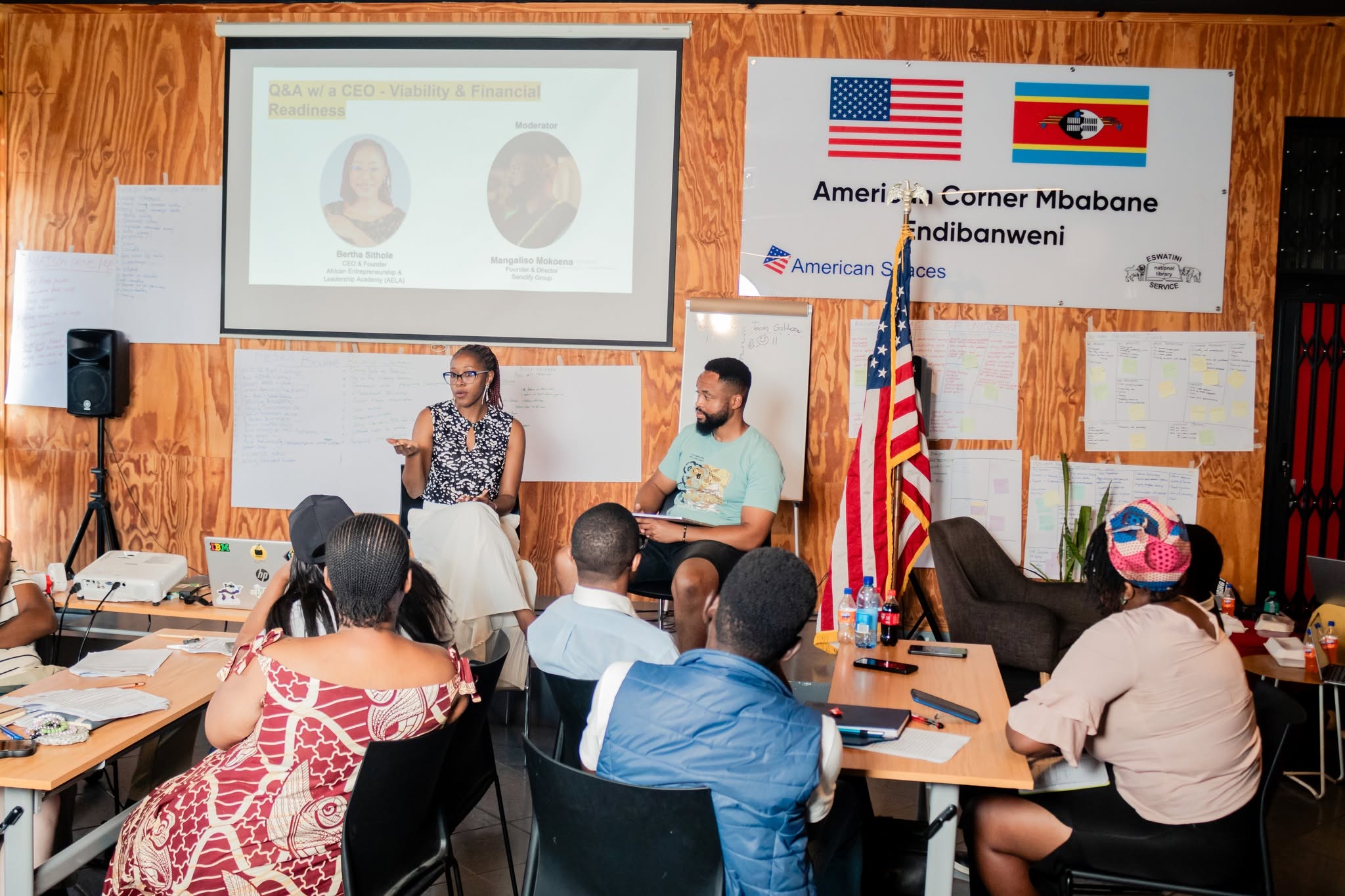
Hedrick shared these insights during the Youth Business Accelerator (YBA) Eswatini 2026, held at the American Corner at Mbabane Library from October 12 to 16.
“I think one of the hottest things right now we’ve talked about a lot is AI. The AI industry is huge, and we tell businesses if they’re not using it to grow, then they’re falling behind,” she said.
He encouraged entrepreneurs to explore AI platforms such as ChatGPT, Claude and Gemini to support business development, including generating ideas, planning operations and improving marketing.
“AI can build your business from scratch for you, and it can help you make money locally and internationally,” Hedrick said.
However, businesses need to apply the technology to their specific needs and verify the information it generates rather than relying on it unquestioningly. The growing relevance of AI is reflected in recent international research. An Organisation for Economic Co-operation and Development (OECD) survey published in April 2026 found that small and medium-sized enterprises are increasingly adopting readily available AI tools, although effective integration into business operations remains uneven. Skills gaps, costs and cybersecurity concerns continue to constrain adoption.
For young entrepreneurs in Eswatini, where access to business expertise, finance and professional networks can be limited, AI offers potential ways to undertake certain tasks more efficiently. Its benefits, however, depend on reliable digital access, appropriate skills and responsible use.
Samkelisiwe Ndlangamandla, founder and director of Tholulwazi Hub, said her own entrepreneurial experience had exposed her to challenges that motivated her to bring practical business development opportunities to local citizens.
After participating in the Mandela Washington Fellowship in 2024, where she studied leadership in business at Clark Atlanta University, USA, Ndlangamandla sought to extend similar learning opportunities to local entrepreneurs.
“Not everybody will get that opportunity, so why don’t we bring programmes like the one that I went to into Eswatini,” she said.
The YBA brought together up to 37 entrepreneurs aged between 16 and 35 for intensive business training, mentorship and networking. Delivered by Tholulwazi Hub in partnership with Arizona State University’s J. Orin Edson Entrepreneurship + Innovation Institute, the United States Embassy and Opemia Consulting, the programme focused on strengthening business models and preparing enterprises for growth. They all graduated and received certificates on the final day of the training on Friday.
Meanwhile, Hedrick said the programme went beyond classroom learning by enabling participants to establish connections with potential producers, manufacturers and distributors. She also highlighted the importance of helping local entrepreneurs identify opportunities in global markets and add value to their products.
For emerging businesses, combining practical business skills with appropriate AI tools could open new avenues for growth. However, sustainable success will still depend on understanding customer needs, developing viable business models and delivering products and services that can compete in the market.