



YOUNG innovators are applying artificial intelligence to Eswatini’s business and agricultural challenges, signalling a shift from AI theory to practical solutions.
Eight students showcased case studies on the first day of IndabaX Eswatini 2026, including web-based business profiling, cashflow verification for entrepreneurs and deep-learning applications for diagnosing cattle skin disease.
The presentations formed part of the two-day event, where tertiary students and young innovators are being introduced to machine learning and its potential applications in Eswatini.
In its latest update, the Central Bank of Eswatini (CBE) said the students presented “inspiring” work on ensemble machine learning for resilient decision-making, highlighting applications that extend beyond conventional technology demonstrations.
The projects point to the potential for artificial intelligence to address practical challenges facing businesses and other sectors of the economy. Cashflow verification, for example, could have applications in assessing businesses seeking finance, while business profiling could support financial institutions and entrepreneurs with better information.
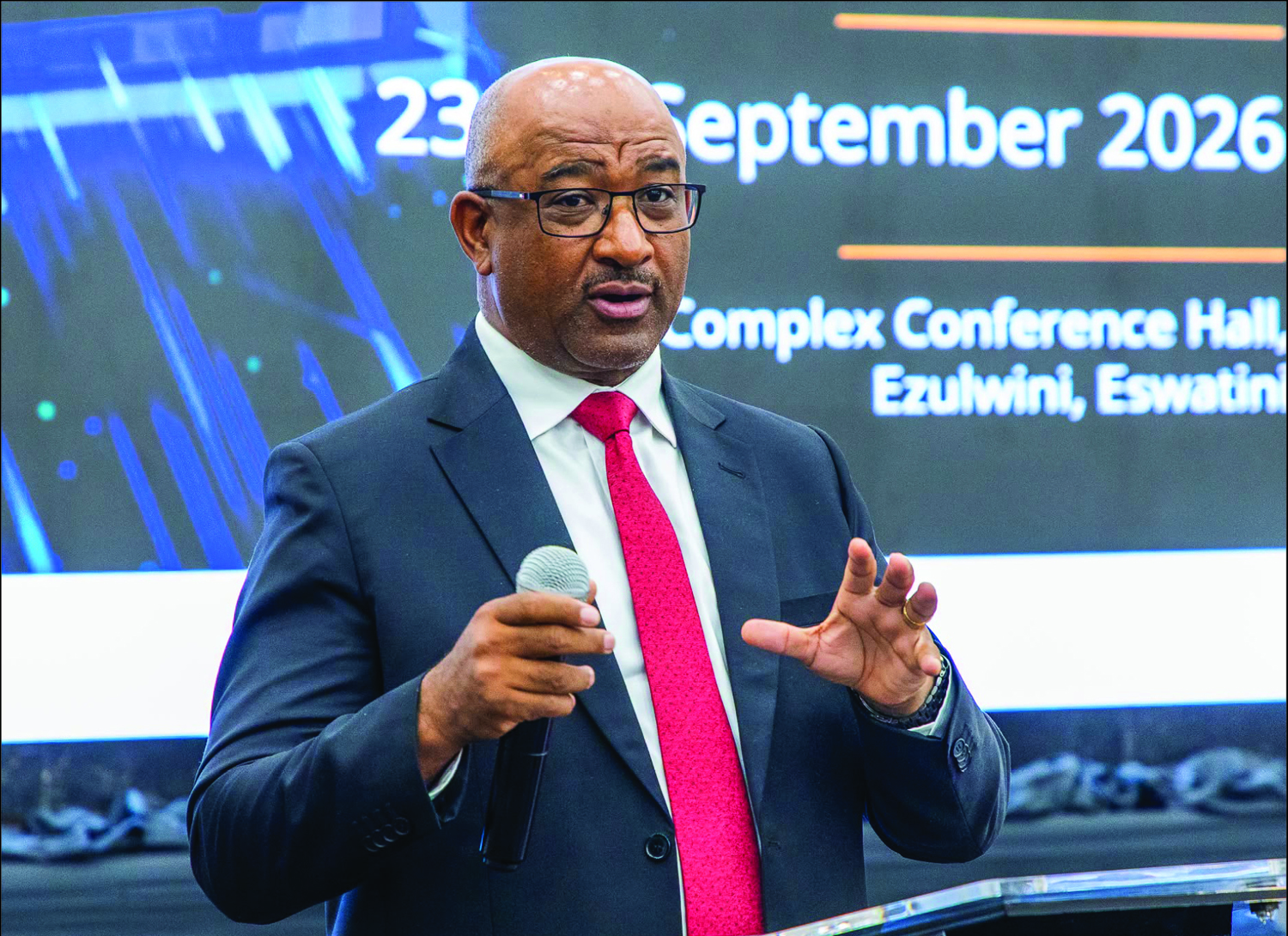
Governor of the CBE, Dr Phil Mnisi, in his opening remarks of IndabaX Eswatini 2026 a day ago, urged participants to focus on turning their knowledge into usable solutions. “Over the next two days, you will hear how machine learning is already being applied in credit, financial inclusion, tax administration, and communications regulation. Take this knowledge and use it for your innovations,” Mnisi said.
His remarks came as the CBE reintroduced the Eswatini FinTech Working Group as FinTech Forum Eswatini, broadening its role to engage industry, innovators, researchers, students and the wider public.
The CBE already operates a FinTech Unit that researches emerging technologies, including artificial intelligence, and supports initiatives such as its fintech regulatory sandbox and innovation hackathons. The CBE has been developing its fintech capabilities since establishing a dedicated FinTech Unit in 2018. The unit researches emerging technologies, including artificial intelligence, and the bank operates a regulatory sandbox where innovative financial products, services and business models can be tested under regulatory supervision.
The National FinTech Strategy 2025–2030 also identifies coordinated action, digital infrastructure, regulatory innovation and private-sector engagement as important to developing Eswatini’s fintech ecosystem.
For businesses, the emerging ecosystem could create opportunities to test locally developed technology against local problems. The immediate challenge, however, will be moving promising student projects from presentations and prototypes into products that businesses and institutions can actually use.
Data drives fintech push
ESWATINI is moving to unlock institutional data for researchers and innovators as technology reshapes financial services and economic decision-making.
At IndabaX Eswatini 2026, CBE Governor Dr Phil Mnisi said institutions were beginning to dismantle barriers that had limited access to data, creating opportunities for locally developed solutions.
The shift is already being demonstrated through IndabaX. Last year, the CBE made its dataset available to participants to forecast headline inflation, while this year the Eswatini Revenue Service has committed to making data available to participants.
For researchers and businesses, the significance lies in the potential to develop models and products that reflect Eswatini’s economic conditions and address local challenges.
Mnisi said the question facing institutions was no longer “what can machine learning do?” but how the technology, combined with data already held by institutions, could improve the quality of decisions.
He said the CBE itself makes decisions under uncertainty and therefore does not rely on a single indicator or model.
“A decision informed by several perspectives can, under the right conditions, be more reliable than one that rests on a single model,” Mnisi said, linking the principle to this year’s IndabaX theme, ‘Ensemble Machine Learning for resilient decision making’.
The emphasis on data is also being accompanied by institutional changes in Eswatini’s fintech ecosystem.
The focus on evidence-based decisions extends beyond IndabaX. At the launch of the FinScope Eswatini 2026 Consumer Survey, CBE Deputy Governor Felicia Dlamini-Kunene said, “Data only creates value when it is used to inform better decisions.”