


GOVERNMENT has strengthened controls over fuel usage across its fleet through an encrypted Fuel Management System designed to prevent fuel theft, diversion and shortages.
The system ensures that government vehicles are filled according to their capacity and only refuel once the previously dispensed fuel has been used, with each refuelling linked to the vehicle’s mileage.
This was shared by Communications Officer in the Ministry of Public Works and Transport Sandziso Malinga, who said the system, introduced through the Central Transport Administration (CTA), had strengthened the ministry’s control over how fuel was used and accounted for across the government fleet. This follows reports of civil servants allegedly stealing government fuel, with some reportedly reselling it.
More recently, government fuel was allegedly siphoned from machinery and sold to businesspeople for as little as E10 a litre, exposing what was described as a costly public-sector fuel racket.
The allegations form part of an internal investigation by the ministry led by Chief Ndlaluhlaza Ndwandwe into losses allegedly suffered through corruption and the abuse of government resources. Malinga said the improved fuel controls were a result of measures built into the new system, which he described as end-to-end encrypted.
He said the encryption prevented manipulation between the administrator and the fuel user, ensuring that every stage of the refuelling process was controlled.
He explained that, under the system, a unique code was generated for the specific driver and vehicle allocated to a department when a government vehicle was due for refueling. He said the code was linked to a predetermined date and corresponds with the vehicle’s mileage.
“Only when all three match does the vehicle proceed to the fuel pump. At the pump, the vehicle’s barcode or fuel sticker is scanned and the driver’s unique code is entered into the scanner. This activates the pump nozzle, which displays the litres issued to the vehicle and that the vehicle is ready to refuel,” Malinga said.
He said any fuel balance remaining after the vehicle had been filled was returned to the administrator while fuel could not be manually transferred between vehicles at the pump. This, he said, closed loopholes that could previously have allowed fuel to be diverted or lost.
Malinga said the system also ensured that vehicles were filled to their maximum capacity and could only refuel once the dispensed fuel had been used, with every refuelling transaction corresponding to the vehicle’s mileage.
He said active vehicles were therefore fuelled according to their allocated assignments or activities, which improved service delivery by ensuring that the government fleet had fuel for its intended work.
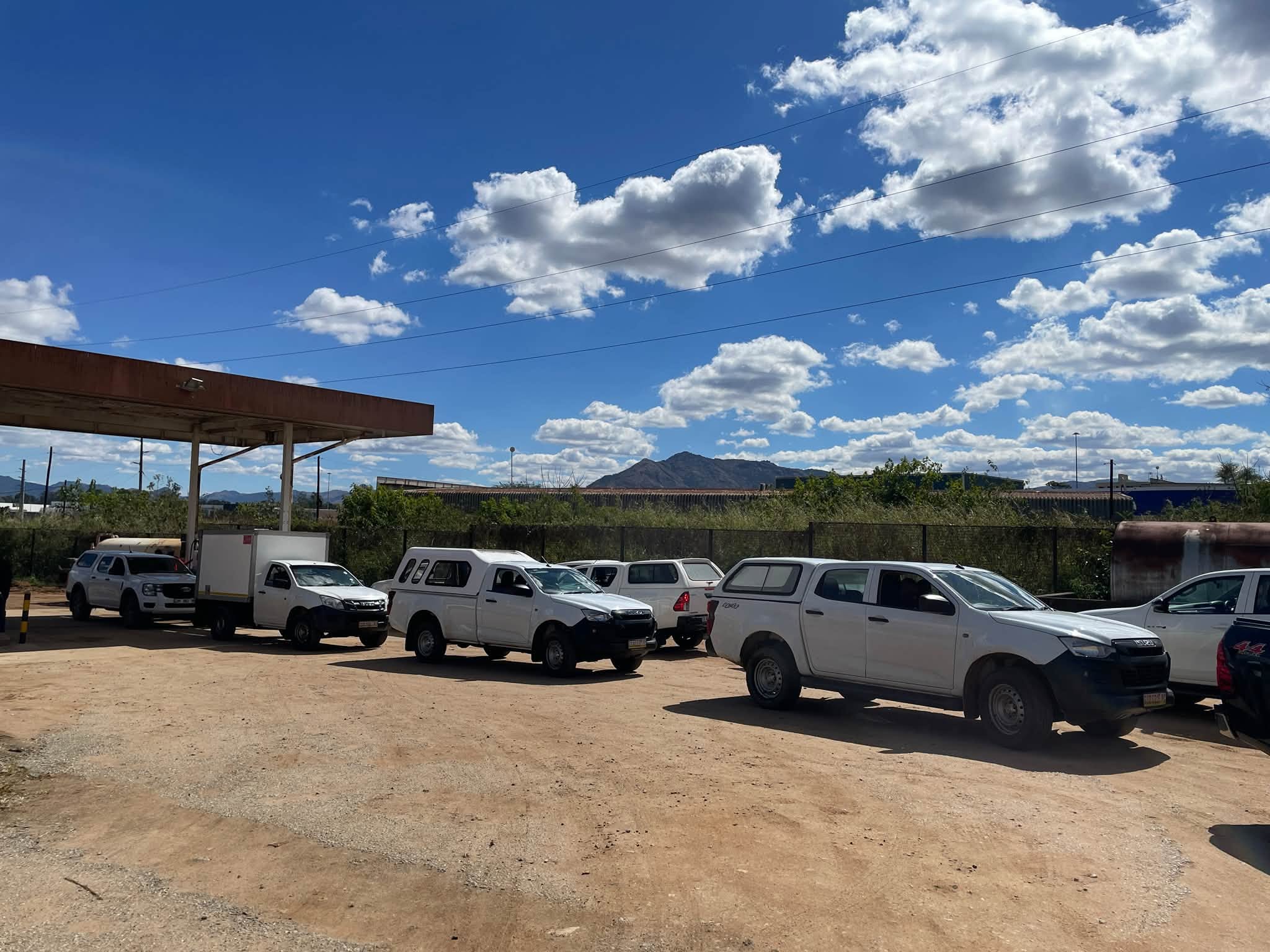
“The system has also brought efficiency to the fuel stations themselves. Time spent at CTA fuel pumps has been kept to a minimum, as the system ensures all fuel stations are operational and vehicles leave within 10 minutes,” he said.
Malinga said fuel managers could remotely monitor fuel levels and place orders when necessary, reducing downtime caused by shortages at fuel stations.
He added that oversight extended beyond the fuelling system, with all government fuel stations monitored by live cameras operating 24 hours a day.
“Managers are able to access live footage of the stations at any time,” he said.
Malinga said the combination of encrypted access control, mileage-based allocation, remote monitoring and round-the-clock surveillance had transformed the management of government fuel.
He said the measures had resulted in tighter control of fuel usage and expenditure, faster turnaround times at fuel stations, uninterrupted fuel availability and a government fleet that was ready to deliver services.