



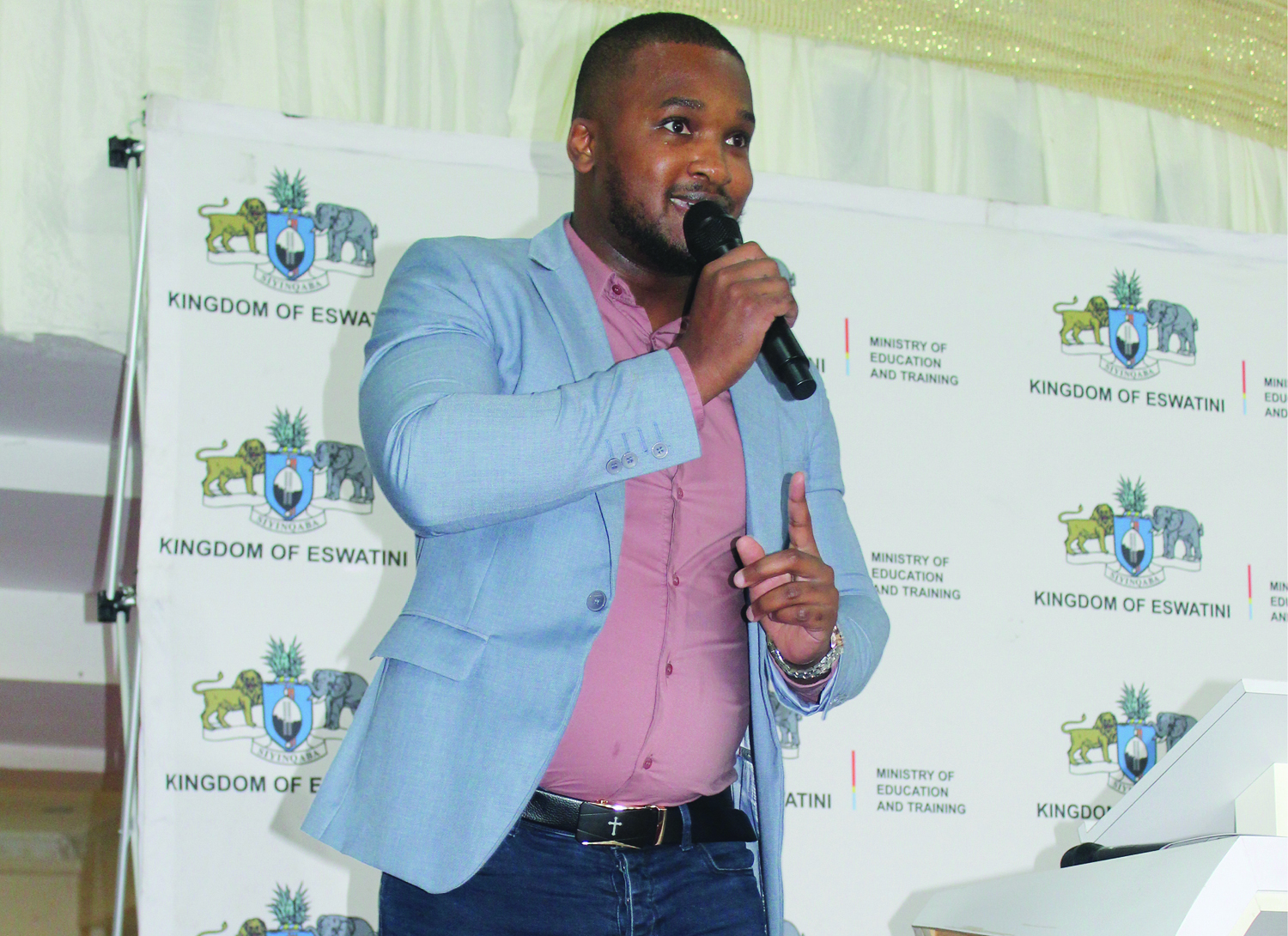
Teachers are among the professionals heavily affected by gambling, with financial pressures and mounting personal responsibilities placing their mental health at risk.
Clinical Psychologist Dr Sewele Ndzimandze raised the concern during the ministry of education and training’s commemoration of the 2026 World Teachers’ Day at Metropolitan Evangelical assemblies, held under the theme ‘Standing with Teachers: 60 Years of Protecting the Profession, Advancing Its Status and Shaping Our Futures’.
Speaking under the topic ‘Teaching the Nation, Tending to Ourselves’, Dr Ndzimandze called for greater attention to teachers’ financial literacy and mental wellbeing, saying educators needed support to manage financial pressures and the emotional demands of their profession. The clinical psychologist said he had been concerned about teachers’ wellbeing as he listened to speakers describe them as counsellors, financial supporters and emotional pillars for learners and their communities.
While acknowledging the important role teachers played in society, he questioned how they were coping with the demands placed upon them.
“I was sitting there trying to appreciate everything that has been said about teachers. But I felt so heavy as I was sitting there, asking myself how they were managing and how they were in terms of their mental health,” he said.
Ndzimandze said his concern about gambling among teachers had been reinforced by conversations with a friend working in the banking sector and a fellow clinical psychologist at the National Psychiatric Referral Centre.
He said the banking-sector friend had encouraged psychologists to engage teachers on gambling, describing them as a group heavily affected by the practice.
The observations come amid growing concern about gambling-related harm locally, where the rapid expansion of online betting has made gambling increasingly accessible through mobile phones.
According to figures previously reported from the ministry of tourism and environmental affairs, registered online gaming users increased from approximately 220 000 in April 2023 to 385 000 in April 2024, representing a 75% rise in one year. Active users increased from 60 000 to 73 000 over the same period.
The figures illustrate the scale of online gambling’s expansion, although they do not establish how many users experience gambling addiction or how many are teachers.
The financial returns to government have also grown. In November 2025, Eswatini Observer reported that the ministry had collected E7.5 million in gaming levies from licenced operations between July and August that year, a 17% increase from E6.48 million collected during the corresponding period in 2024.
Recently, concerns have persisted over whether safeguards are keeping pace with the industry’s growth.
Last month Eswatini Observer reported that only 45 people had voluntarily enrolled in gambling-exclusion programmes between April and December 2024, according to the ministry’s 2024/25 performance report.
The report also highlighted concerns about the delayed establishment of a fund intended to support people affected by gambling addiction.
Against this background, Dr Ndzimandze urged government to complement efforts to improve teachers’ salaries with financial-management training, stressing that higher earnings did not automatically translate into financial stability.
He said improved salaries could still expose individuals to greater financial difficulties if they lacked the knowledge and discipline to manage their income.
“I appreciate that there is advocacy for teachers’ salaries to be increased. We want that for every teacher and civil servant. However, while that is being done, financial management should increasingly be taught,” he said.
He called for financial management and stress management to be incorporated into regular professional development programmes for teachers.
Drawing a comparison with the continuing professional development requirements followed by psychologists, Ndzimandze said educators should also receive regular training to strengthen their ability to manage the financial and emotional demands of their work.
He argued that teachers needed more than salary adjustments, as their responsibilities extended beyond the classroom and often included supporting learners emotionally while managing their own family and personal challenges.
Ndzimandze said the demands placed on teachers had evolved alongside changes in society, including the growing influence of social media on children and the increasing financial as well as parenting pressures faced by families.
He said these pressures could contribute to chronic stress when individuals lacked effective coping mechanisms.
According to the psychologist, prolonged stress could drive people towards harmful coping behaviours, including gambling and substance use, while also contributing to relationship difficulties and gender-based violence.
He explained that stress was a normal part of life, but the inability to deal with recurring challenges could gradually overwhelm an individual.
Using the analogy of water flowing continuously through a pipe that had been blocked at the end, he said emotional pain that was repeatedly suppressed without being addressed could eventually lead to a breakdown.
He warned that teachers who did not seek support risked experiencing burnout, which could affect their ability to perform their duties effectively.
Ndzimandze described burnout as a condition in which a person struggled to recover from exhaustion, waking up tired despite having rested.
He also highlighted presenteeism, where an employee continued reporting for work but was no longer fully engaged emotionally, physically or mentally.
Such disengagement could affect learners, he said, because children often model their behaviour on the adults who teach them.
He challenged educators to consider the example they set for learners when they were struggling emotionally but had no support to address their difficulties.
Ndzimandze acknowledged that discussing gambling and mental health could be uncomfortable, but said these were realities that needed to be confronted rather than ignored. He encouraged teachers to seek professional assistance when experiencing stress, financial difficulties or other challenges affecting their wellbeing.
He noted that psychologists were available through private healthcare facilities and other mental health services, while the National Psychiatric Referral Centre also provided psychological support.
He said it was not practical for psychologists to visit every school and screen every teacher individually, making it important for educators to recognise when they needed help and take the initiative to seek it.
Ndzimandze’s message was that caring for teachers should be treated as an essential part of strengthening education, rather than an issue to be addressed only when problems had become severe.
He said teachers could continue fulfilling their responsibilities to learners and society more effectively if their own mental health and financial wellbeing received the attention they deserved.
| Metric / Sector Indicator | Official Figure | Context & Social Impact |
|---|---|---|
| Registered Online Gaming Users | 385 000 | Surged 75% from ~220 000 in April 2023 (as of April 2024). |
| Active Online Gamers | 73 000 | Up from 60 000 active monthly players. |
| Bi-Monthly Gaming Levies Collected | E7.5 Million | Collected July–August 2025; a 17% increase year-on-year. |
| Voluntary Self-Exclusions Enrolled | 45 Persons | Recorded April–December 2024, highlighting minimal uptake of formal safeguards. |
| Responsible Gaming Addiction Fund | Delayed / Pending | Statutory treatment and rehabilitation fund yet to be fully operationalised. |
Sources: Ministry of Tourism and Environmental Affairs Annual Performance Reports & Eswatini Observer Market Archives.