


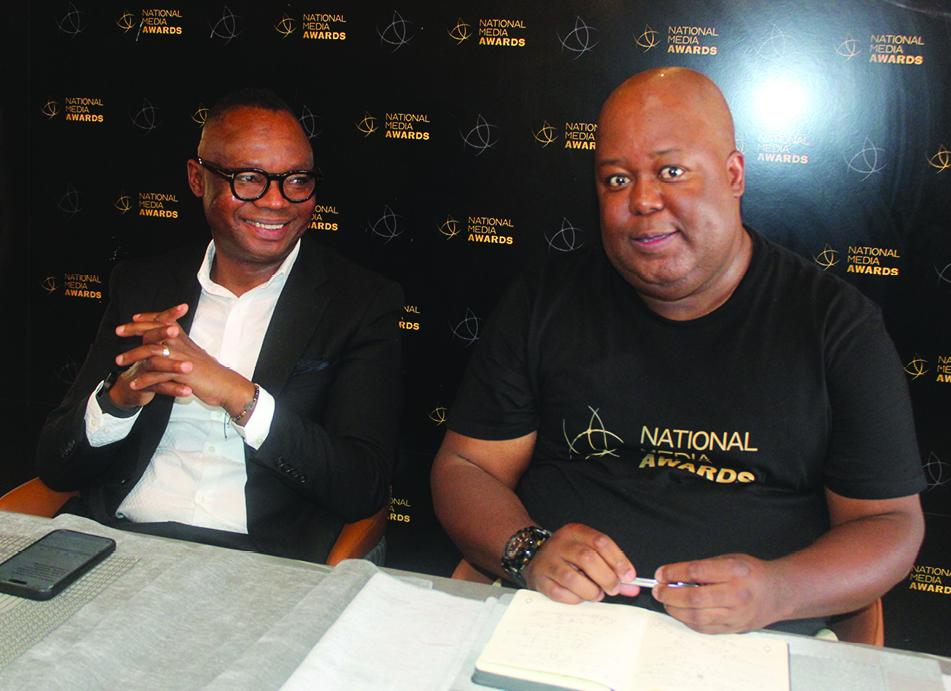
THE 2026 National Media Awards are expected to be bigger and better, with organisers planning to expand the categories to accommodate digital media.
This was revealed by Eswatini National Association of Journalists (ESNAJ) President Lwazi Dlamini during the launch of the second edition of the awards, following the pre-launch held last year.
He said last year’s awards featured 16 categories, adding that organisers hoped to increase the number to around 20 or more this year to accommodate digital media.
Dlamini urged online media houses to ensure they were registered with the ministry of information, communication and technology (ICT), adding that ESNAJ would assist them with the process.
Dlamini said the association had also adopted a new approach to working with sponsors, with consultancy agency Marketing Advertising Research Council (MARC) helping to bring in more sponsors to provide much-needed support.
He thanked sponsors and other stakeholders for supporting the association and the awards through coverage, advertisements and stories.
He further revealed that ESNAJ had established international partnerships to support its efforts to empower journalists.
“When we took over as the executive, we made it clear that we wanted to focus on empowering journalists. We have already established links with the International Federation of Journalists (IFJ) and the African Federation of Journalists (AFJ),” he said.
Dlamini said the executive would also seek to address challenges facing the profession, including those arising from artificial intelligence (AI).
He said the association would support journalists through training sessions and workshops to help them keep pace with developments in the industry and perform at a national level.
He added that the current executive had committed itself to addressing journalists’ welfare issues.
“I am happy to announce that three members of the executive are serving on the Wages Council and we have already held the first meeting with them regarding this matter,” he said.
According to Dlamini, a second meeting with the Wages Council members would be held today.
He also thanked the sponsors and the Editors Forum for their support, adding that ESNAJ would continue collaborating with them.
Editors Forum hails awards
ESWATINI Editors Forum Chairman Mbongeni Mbingo says journalism is often a thankless task that required passion and hard work, particularly given the difficult conditions under which journalists operate.
“One day in a year to come together and share these experiences and successes is really important,” Mbingo said.
He noted that, as was the case elsewhere, awards were bound to attract both excitement and disappointment among participants.
Speaking about the second edition of the awards, Mbingo said organisers intended to cover more ground, having learnt valuable lessons from the previous edition. He said they were committed to ensuring that important areas were addressed going forward.
He noted that the awards had historically been held before taking a break. He said holding the event again this year should therefore be regarded as a success. “The event last year was a success because of our stakeholders, including the people we work with, interact with and write about,” he said.
Mbingo said consistently encouraging journalists to carry out their duties would contribute to better governance and help the country run more effectively.
He added that the Editors Forum had a responsibility to remind journalists to take pride in their work.
The chairman said the forum was committed to the improvement and growth of the profession, adding that the awards provided an opportunity for journalists to gain recognition and demonstrate their contribution to an industry facing growing demands.
He commended ESNAJ for organising last year’s awards, describing the event as outstanding and hugely successful, with significant support from the public and stakeholders.
Mbingo said the professional manner in which the event was organised was particularly important, as it had been delivered without embarrassment.
He also praised those who worked behind the scenes to ensure the event was of a high standard.
The chairman extended appreciation to MARC for its partnership with ESNAJ, noting that the consultancy agency had worked behind the scenes to ensure the awards were more than a box-ticking exercise.
He said the partnership aimed to ensure that the event met professional standards and appropriately recognised journalists’ work and their standing in the public domain.
Mbingo also congratulated last year’s winners, emphasising that the awards celebrated both winners and participants. He described the winners as ambassadors of the profession and said the awards were intended to encourage ethical and professional conduct while recognising stories that would become part of the country’s history.
Entries open tomorrow
Media Awards will open tomorrow and close on November 23.
This was announced by Eswatini Editors Forum Chairman Mbongeni Mbingo, who said eligible entries would include work published between December 1, 2025 to November 23, 2026.
Mbingo said the entry period would be limited and encouraged journalists to submit their work, noting that they had worked hard to produce their stories.
He said journalists generally knew which of their stories were significant and deserved recognition.
Mbingo, however stressed that identifying outstanding work should not be left to individual journalists alone, as colleagues were also familiar with each other’s quality stories and could encourage each other to enter. Meanwhile, journalists raised concerns about being separated into categories according to their platforms, namely broadcast, print and online media.
Responding to the concerns, MARC founder Zethu Dlamini said based on last year’s experience, key categories such as Journalist of the Year and Story of the Year had been separated between print and electronic media. She, however, said it would be difficult to apply the same approach to specialised categories such as business reporter and sports reporter because these were based on subject matter rather than the platform used to publish or broadcast the work.
“We are promoting excellence across the board, regardless of the platform,” she said.