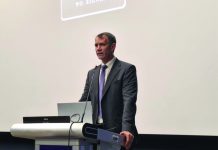

Auditor General (AG) Timothy Matsebula says the country is greatly affected by the slow absorption rate on grants received under the ministry of health.
Matsebula says the country had previously had some of the grants returned to the grantors because it had not been utilised for the intended purpose while the health sector remains in crisis.
Matsebula submitted that even though the ministry of health received multiple billions in the country’s annual budget, it was facing difficulty servicing the nation in health and the grants received by the National Emergency Response Council on HIV and AIDS (NERCHA) could come in handy.
The AG made this submission in respect of a query on slow implementation of the global fund project, as reflected in the Compliance Audit Report – Public Enterprises and Local Government Authorities for the financial year 2024.
Through the report, he reported to the controlling officer that he noted a slow implementation of the project named SWZ-C-NERCHA HIV/TB, for halting the spread of HIV and TB and reverse its impact in Eswatini which was funded by Global Fund. The project implementation period was October 1, 2022 to September 30, 2024 and the funds received from Global Fund were US$61 690 409. According to information revealed under note five of the financial statements, the balance of the grant funds as at March 31, 2024 were E61 398 328.
The AG expressed concern about the slow implementation of the project since a significant amount of the funds had not been utilised by year end yet the project had only six months before closing.
“The intended beneficiaries from the programme are deprived from receiving a better health service, which is a constitutional right, due to inefficiencies or delays in the utilisation of the Global Fund funds by the council,” shared the AG. Matsebula said he was happy that the council was reporting 92% absorption from the grant received in the current financial year, ending in September, stating that in previous financial years, the absorption was slow and the money was returning back to the grantors.
Matsebula revealed that he does meet with the Global Fund executive team during international conferences and they do disclose to him the issue of slow grant absorption rate by the Kingdom of Eswatini.
Matsebula said the council should reveal the programme of the funds received from Global Fund so that his office and Parliament appreciate exactly what the funds are utilised for.
NERCHA Executive Director, Nondumiso Ncube, explained that when the organisation applies for Global Fund resources, it specifies the intended use of the funds. However, circumstances sometimes change when other development partners provide support for the same activities.
She said in such instances, NERCHA formally requests permission from the Global Fund to reprogramme the money towards other pressing needs within the health sector.
“It lies with the Global Fund to determine whether it is an allowable expense or not and if not, we cannot utilise it,” she submitted.
Ncube said NERCHA had made deliberate efforts during the current financial year to ensure that grant funds were utilised for their intended purposes, contributing to the current 92% absorption rate.
She added that part of the grant would now be used to support the transition of the Eswatini Medical Supplies Agency (EMSA), following a request submitted to the Global Fund for that purpose.
According to Ncube, the funding will facilitate the implementation of an electronic resource planning system at EMSA, which will serve as a tool for monitoring the distribution of medicines across the country. She said that they have tried by all means in the current financial year to utilise the funds on the intended projects, hence the 92% absorption rate.
“We are working closely with the ministry and the Global Fund to make sure that there is full absorption of the grant,” she said.