



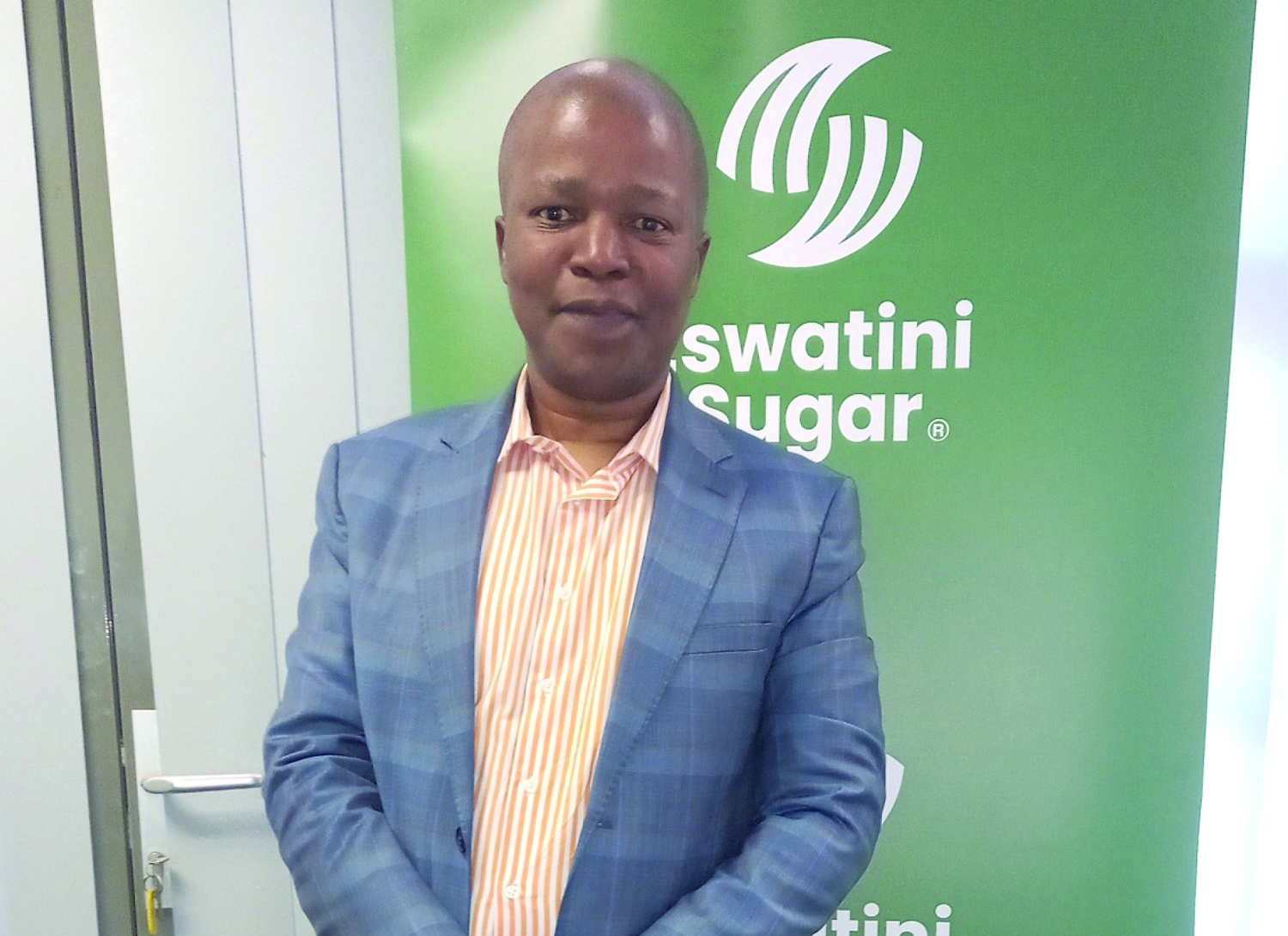
Despite the E8 billion sugar revenue announced last week, Eswatini Sugar Chief Executive Officer (CEO) Banele Nyamane says the local sugar industry has hit rock bottom.
He described the latest performance as one of the toughest in recent years as global sugar prices continue to weigh heavily on growers and producers. Speaking after the release of Eswatini Sugar’s latest integrated annual report, Nyamane said the headline revenue figure does not tell the full story. Beneath the E8 billion turnover is an industry grappling with an 8% decline in grower returns, shrinking sales volumes and mounting pressure on profitability.
“This is one of our worst performances,” Nyamane said, explaining that while the industry pays cane growers immediately upon delivery, the sugar is sold later into international markets where prices have deteriorated significantly.
“The figure that matters most to growers is how much they receive, and there has been an 8% decrease. That is the reality behind the numbers.”
The industry also sold about 2 000 tonnes less sugar than in the previous season, compounding the impact of lower prices. “If you take those 2 000 tonnes and multiply them by the prevailing market price, it translates into a massive loss of revenue,” he said.
Nyamane attributed the downturn almost entirely to global market dynamics, saying the country has little influence over international sugar prices.
“For any commodity, prices are determined globally. We are simply price takers. The only lever we can control is cost, but there is only so much cost reduction that can achieve. That is why some players in the local industry are reporting losses. They have worked hard to manage costs, but it has not been enough to offset the decline in revenue,” he said.
The CEO said the current downturn follows several years of relatively strong sugar prices, culminating in what he described as an exceptional 2025 season.
“When prices remain high for some time, they naturally attract new producers into the market because they see opportunities for profit,” he explained. “As more producers enter, global supply increases while demand remains largely unchanged. Eventually, prices fall.”
He said the oversupply has been particularly evident in major producing countries such as Brazil, where excess production has resulted in sugar being exported into the Southern African Customs Union (SACU) at prices local producers struggle to compete with.
Nyamane explained that sugarcane is unlike many other agricultural commodities because it must be harvested within a limited period and processed almost immediately. “You cannot keep harvesting cane indefinitely or store sugar forever because eventually warehouses become full,” he said. “When that happens, producers are forced to reduce prices simply to move stock.”
According to Nyamane, Brazilian producers have found it more worthwhile to sell sugar into SACU at heavily discounted prices rather than hold unsold inventory. Although SACU has protective measures, including import duties on sugar from outside the customs union, Nyamane believes these are no longer sufficient under current market conditions.
“Currently, importers pay around E4 400 in duty when bringing sugar into SACU from outside the region, but even after paying freight and the tariff, imported sugar can still be cheaper than locally produced sugar,” he said.
The industry is now working with its South African counterparts to lobby governments within SACU to review the existing protection mechanism so that it better reflects today’s market realities.
Despite the difficult trading environment, Nyamane remains optimistic that the industry is approaching the end of the current downturn. He noted that sustained low prices are already forcing less competitive producers around the world to exit the market. About 15% of land previously under sugarcane production in the European Union has reportedly gone out of production, while sugar factories have also closed in countries such as Brazil and Thailand.
“The supply is starting to reduce and it won’t be long before prices begin to recover. The market is resetting itself. It is always a cycle. Right now we are at the bottom and we cannot go any lower than this. The only way now is up. That is why we are looking towards a brighter 2027,” he assured.
Nyamane said the current downturn mirrors the global sugar cycle experienced in 2014 and urged growers to remain patient.
“Our message to growers is simple: hold on tight because this is a very rough period,” he said. He appealed for unity across the value chain, encouraging employers and employees alike to recognise the extraordinary market conditions facing the industry.
“If there is unity within the industry during difficult times, everyone will emerge stronger when the market improves.”
He added that most local cane growers have at least managed to break even despite the depressed prices, largely because the kingdom remains among the world’s lowest-cost sugar producers. For Nyamane, the industry’s immediate priority is resilience rather than expansion.
“We continue encouraging growers to maintain best agricultural practices and look after their cane. When prices begin rising again, those who have stayed the course will be best positioned to benefit immediately,” he said.