



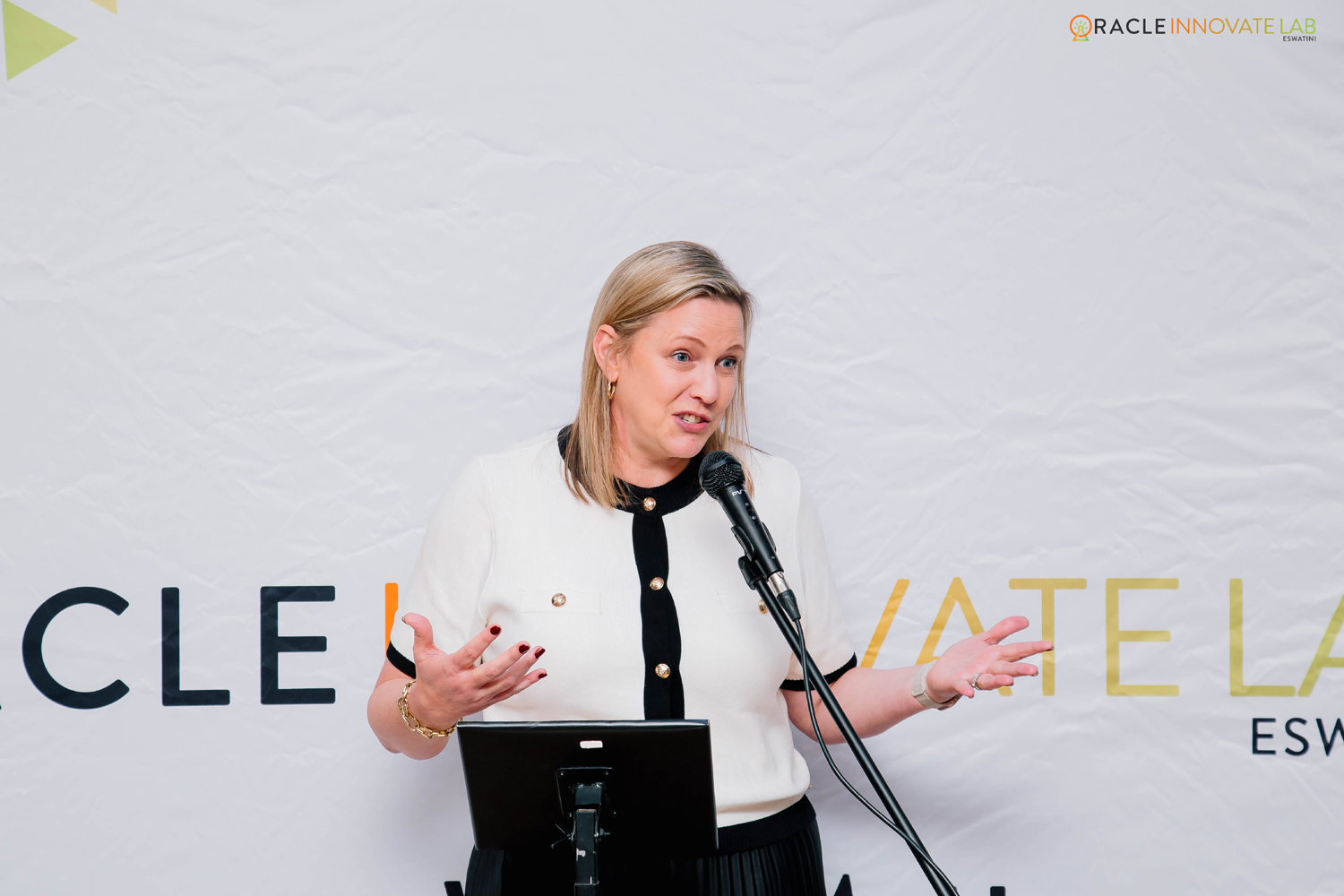
Local entrepreneurs must expand their ambitions beyond the local market if they want to build scalable businesses, says Thinkroom Consulting CEO Lucie Fink.
The country’s limited domestic market remains one of the biggest barriers facing emerging enterprises, making regional expansion a critical step for businesses seeking long-term growth.
“The biggest challenge is simply the size of the local market. Businesses need to think beyond Eswatini much earlier than they realise and that is where our networks really help,” said Fink.
Fink was one of the key speakers during the launch of the second cohort of the Oracle Innovate Lab accelerator programme at the Oracle CX Hub in Mbabane, where programme partners celebrated the progress of the inaugural intake and welcomed four new businesses into the six-month accelerator.
She said many entrepreneurs wait too long before considering regional opportunities, but businesses must begin preparing for larger markets while they are still building their foundations.
However, Fink cautioned that expansion required more than ambition. Entrepreneurs need strong financial systems, good governance and the ability to present their businesses effectively to potential investors.
“It’s not only about access to funding, it’s being ready for funding,” she said.
According to Fink, investors want businesses with clear financial records, structured operations and founders who understand their numbers and can confidently communicate their growth plans.
She added that founder dependency remains another major challenge limiting micro, small and medium enterprises (MSME) growth.
“Too many businesses rely on one person to do everything,” said Fink. “A big part of our coaching is helping founders build systems and businesses that can grow without them having to do it all themselves.”
The call for scalable businesses comes as the first Oracle Innovate Lab cohort recorded more than E1 million in combined revenue growth within a year, demonstrating the impact of targeted enterprise support.
The 2025 inaugural cohort started with 52 applications, from which 14 entrepreneurs were interviewed before six businesses were selected.
“In year one, those six businesses grew their combined revenue by over E1 million. This created jobs for Eswatini,” said Fink.
She said the first cohort also improved its investment readiness, with entrepreneurs reporting that the programme met or exceeded their expectations. Three businesses received direct introductions to investors, while Luna Hair+Body won an online pitching competition against 14 businesses from Eswatini and South Africa.
“That’s not a pilot that survived. It’s a model that proved itself,” said Fink.
Meanwhile, Luna Hair+Body founder Seria Masilela said the accelerator helped the company develop strategies to enter markets outside Eswatini. She said accessing the South African market, with a population of about 64 million people, required careful planning and a realistic approach.
“We have started trying out the SA market but we’re taking small steps because of resource limitations. The feedback is okay so far,” said Masilela.
Fink said lessons from the first cohort shaped improvements to the second edition of the programme. Businesses that complete the initial accelerator will now have access to a second track offering continued coaching, advisory support, market-access assistance and fundraising preparation.
Oracle Innovate Lab, delivered by Thinkroom Consulting in partnership with Oracle Group Eswatini, supports early-stage and growth-stage businesses through mentorship, expert masterclasses, pitch preparation, investor readiness and networking opportunities.
Oracle Group Eswatini Head of People’s Experience Rose Hamilton described the initiative as a different approach to corporate social responsibility, focused on creating lasting impact through entrepreneurship development.