His Majesty’s Correctional Services (HMCS), the Ministry of Health and the Prime Minister’s Office were among the best-performing government entities in the 2025/26 financial year.
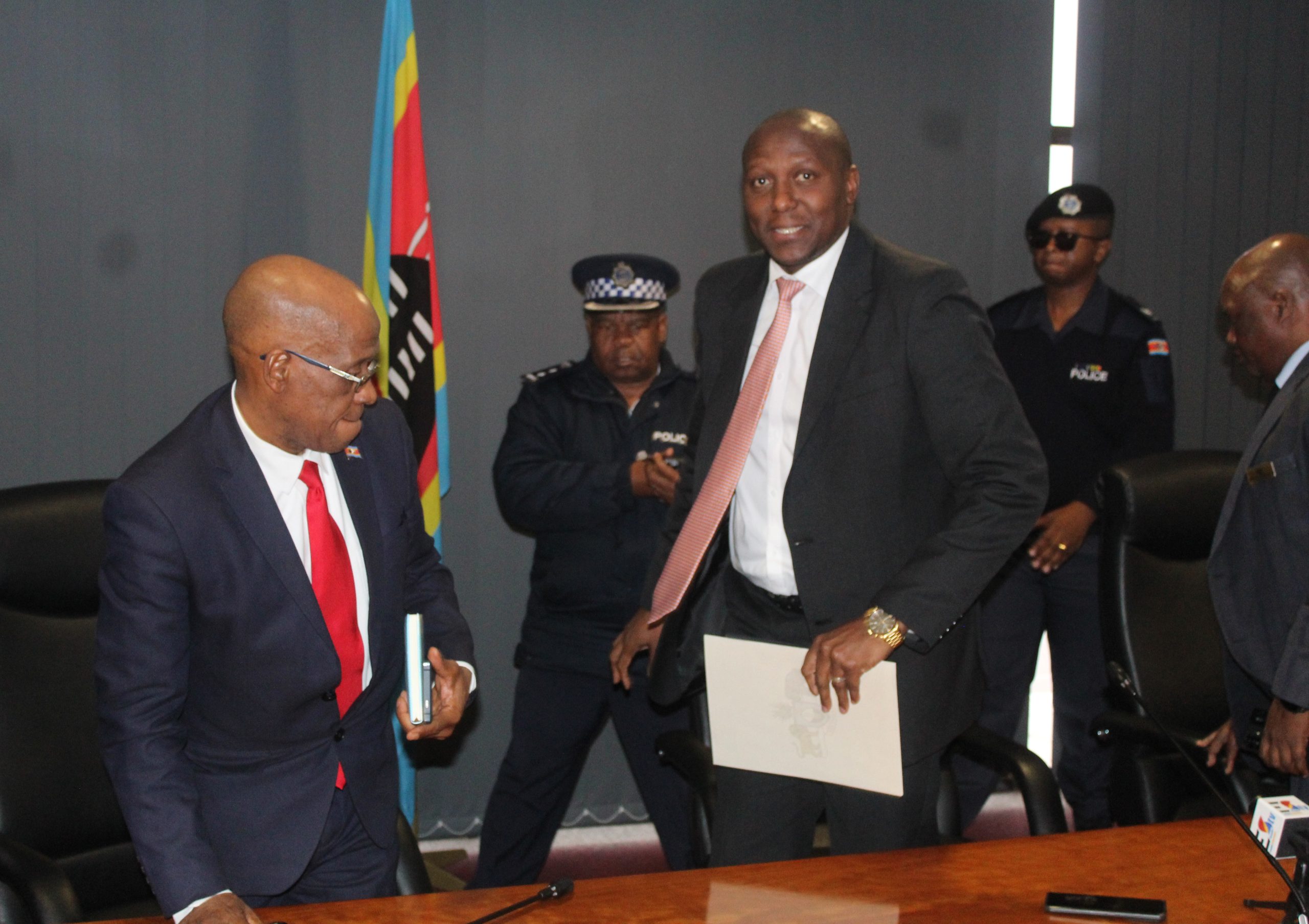
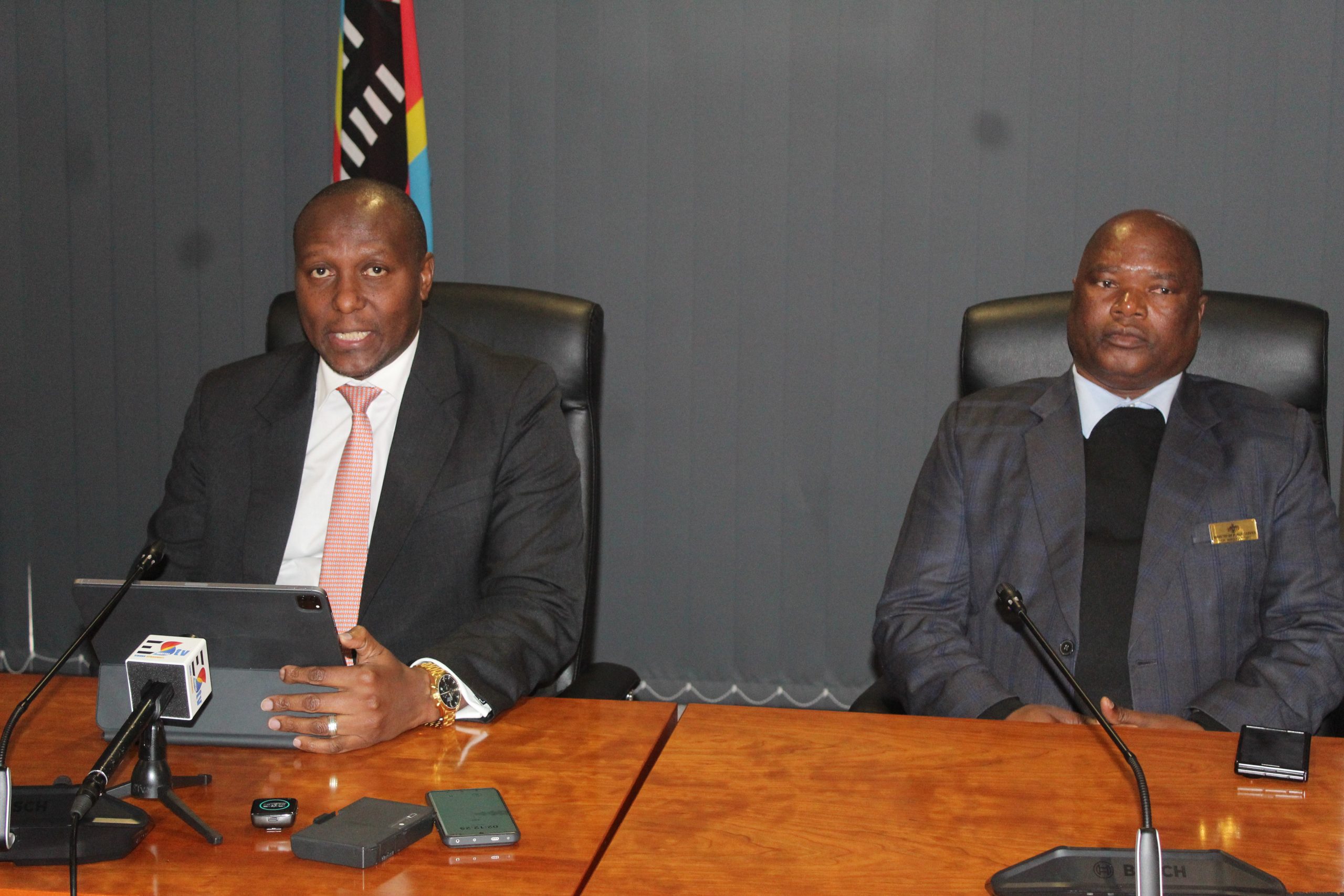
This is according to the latest government performance assessment presented by Prime Minister Russell Mmiso Dlamini during a press briefing held at the Private and Cabinet Offices yesterday.
The report stated that HMCS recorded the highest overall score at 75%, followed by the Ministry of Sports, Culture and Youth Affairs at 60%, the Ministry of Health at 58% and the Prime Minister’s Office at 56%.
The performance assessment, conducted by the Programme Performance Coordination Unit (PPCU), placed overall government performance at 48% for the year.
This reflected an improvement from 22% in the first quarter, 31% in the second quarter and 41% in the third quarter.
The assessment noted, however, that HMCS was primarily a supporting department with peripheral activities and was not a lead entity for most Programme of Action (PoA) outputs.
It stated that the high score should therefore be viewed within the context of the department’s mandate.
The stronger performance of the Ministry of Health and the Prime Minister’s Office was considered more significant, as both were lead ministries responsible for complex and critical government programmes.
The assessment found that only four ministries and departments scored above 55%, while the majority were at or below the national average of 48%.
At programme level, social protection emerged as the best-performing Programme of Action objective, recording 56%, followed by Food Sovereignty and Sustainable Development at 55% and Economic Growth at 50%.
Infrastructure and ICT integration recorded 48%, while national security and law enforcement scored 43%.
Human capital was the weakest-performing objective at 37%.
The report attributed some of the stronger performance to progress in areas such as fibre-optic rollout and improvements in health facilities.
The assessment was based on annual performance reports submitted by ministries and departments, supported by evidence including completion certificates, attendance registers and financial statements.
Site visits and independent verification were also conducted where possible.
The findings suggested that although some government entities demonstrated the capacity to deliver against planned targets, the performance gap between stronger and weaker institutions remained significant.
The report recommended that successful approaches from high-performing entities be replicated across weaker sectors.
It also called on government to strengthen quarterly monitoring and address implementation challenges earlier in the financial year.
Addressing the media during the press briefing, the prime minister said the performance report set out the progress made by government in implementing the Nkwe Programme of Action across ministries and departments.
He said the report reflected government’s continued commitment to keeping the nation informed and ensuring that government remained accountable for the commitments it had made to the people of Eswatini.
“The report reviews implementation of national priorities, measures progress towards the country’s 2029 development targets and identifies key achievements, challenges and areas requiring urgent intervention,” he said.
He explained that government performance was assessed through a three-pillar framework made up of the execution of plans, weighted at 80%; quality of execution, weighted at 15%; and timeliness of reporting, weighted at 5%.
The prime minister said while the report recognised constraints relating to funding, external dependencies and legislative processes, it provided a credible picture of implementation performance and service delivery across government.
“The assessment indicates that overall government performance improved steadily over the financial year, rising from 22% in the first quarter to an annual performance score of 48%.
“This improvement demonstrates meaningful progress as ministries accelerated implementation during the year.
“At the same time, it underscores the need for renewed urgency if we are to achieve the ambitious targets set under the Nkwe Programme of Action,” he said.
The prime minister said the report also raised concern about compliance with reporting requirements.
He stated that only six ministries submitted their annual performance reports within the prescribed timelines, while 16 submitted them after the deadline.
“Delayed reporting weakens government’s ability to monitor implementation in real time, make informed decisions and undertake early corrective action.
“As a way forward, government has accepted the recommendations contained in the report and will implement a comprehensive programme of reforms to strengthen delivery and improve performance,” he said.
MAJORITY OF MINISTRIES FALL BELOW 50% PERFORMANCE MARK
The majority of government ministries and departments failed to reach the 50% performance threshold during the 2025/26 financial year, with the national average settling at 48%.
According to the government’s annual performance assessment, 12 ministries and departments scored at or below the overall 48% average, highlighting persistent challenges in implementing planned programmes.
Among the entities recording particularly low scores were the Ministry of Foreign Affairs and International Cooperation, the Ministry of Housing and Urban Development, the Ministry of Information and Social Security, and the Royal Eswatini Police Service (REPS), all of which recorded performances below 40%.
The Ministry of Education also performed below the national average, recording 42%, while the Ministry of Finance scored 41%.
Overall government performance improved progressively during the year, rising from 22% in the first quarter to 31% in the second quarter, 41% in the third quarter and 48% at year-end.
Despite the improvement, the assessment stated that the annual score remained below the 50% threshold, meaning more than half of the planned outputs were not fully achieved.
The report further identified delayed budget releases, slow procurement processes and weaknesses in planning as some of the factors that constrained implementation.
The assessment warned that the uneven performance required stronger leadership attention, particularly in human capital development, institutional capacity and support for micro, small and medium enterprises (MSMEs).
It recommended that government frontload critical activities at the beginning of the financial year, strengthen quarterly performance monitoring and tackle structural challenges before delays accumulated.
The report further called for stronger accountability and institutional capacity to ensure that ministries translated approved plans and budgets into measurable results.
With the national performance score remaining below 50%, the findings pointed to the need for government to move beyond gradual improvements and focus on reforms that could deliver more consistent and measurable outcomes across all sectors.