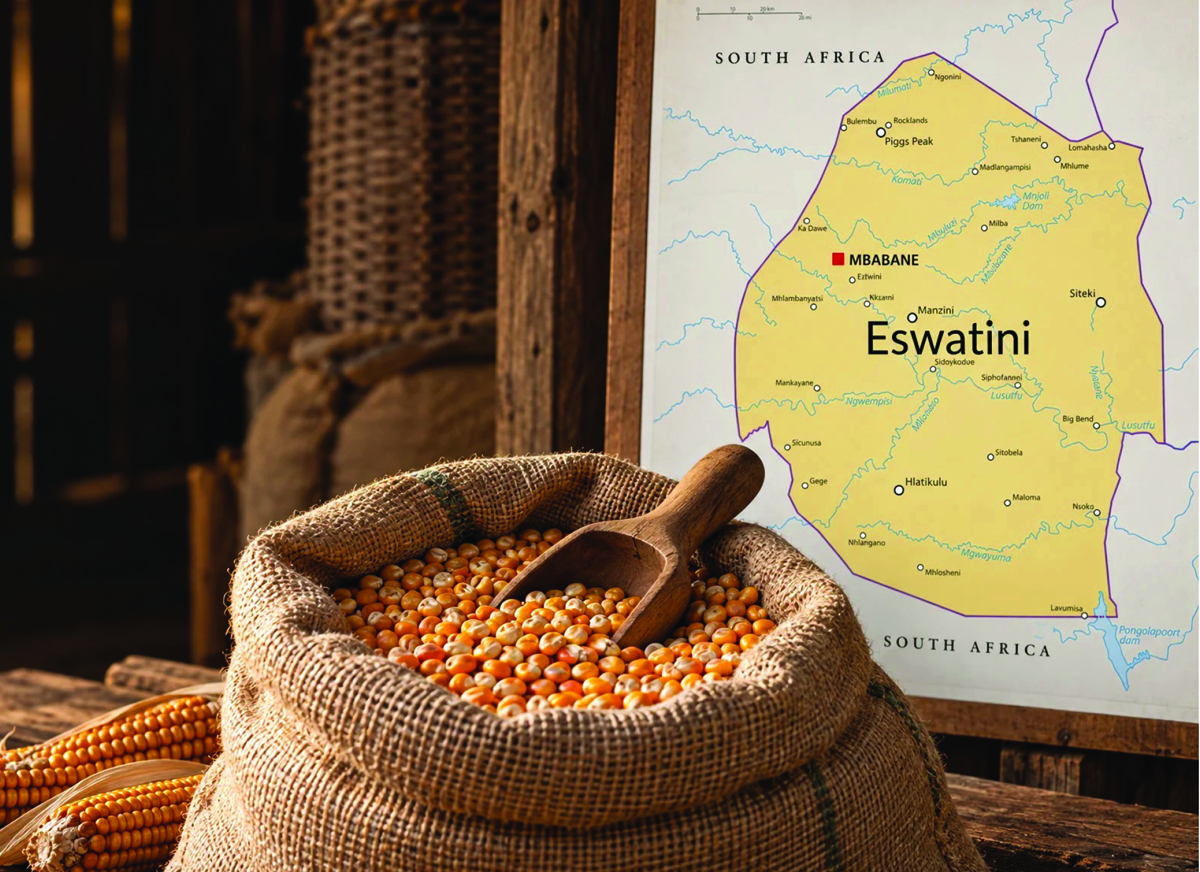
THE country faces the prospect of reduced maize harvests, rising food prices and declining agricultural employment.
This is as the high probability of El Niño threatens rainfall during the 2026/27 farming season, according to the Integrated Food Security Phase Classification (IPC) Acute Food Insecurity Analysis for June to March 2027.
It projected normal to below-normal rainfall, prolonged dry spells and higher temperatures, conditions that could significantly reduce maize production in the dry middleveld (DMV), lowveld cattle and maize (LCM) zone and Lubombo Plateau.
The anticipated production shortfalls could deepen the country’s dependence on imported maize, while rising transport and agricultural input costs threaten to make food even less affordable for struggling households.
According to the report, there would be a national maize deficit which must be covered through imports from South Africa and other Southern African Development Community (SADC) countries.
Although cross-border trade is expected to remain functional, higher transport costs and exchange rate fluctuations could increase the cost of importing food.
Global inflationary pressures, geopolitical tensions involving Russia and Ukraine and instability in the Middle East are also expected to sustain volatility in fuel prices, shipping costs and supply chains.
These pressures could feed into higher import and retail food prices, further reducing household purchasing power.
The report warns that rising production costs and projected drought conditions could also reduce employment opportunities in agriculture, threatening the incomes of households that depend on farming.
Farmers would be expected to face mounting pressure from higher fuel, transport and agricultural input costs which could limit their ability to maintain production in the coming season.
However, drought-tolerant crops such as sorghum, cowpeas, groundnuts and sweet potatoes may perform relatively better under the projected conditions.
The report recommended that farmers be provided with affordable agricultural inputs and drought-tolerant seeds to help protect production.
It also called for greater investment in climate-smart agriculture and conservation farming to reduce dependence on rainfall.
The livestock sector faces additional challenges from foot-and-mouth disease (FMD), which is expected to persist at localised levels. Continued restrictions affecting livestock marketing, combined with rising animal-feed and fuel costs, could reduce livestock productivity and income for affected households.
“Stronger disease surveillance and control measures are recommended to limit these losses,” reads the report.
The report recommended expanding emergency food assistance, nutrition programmes and cash transfers for households experiencing acute food insecurity classified in IPC Phase three or above.
It also proposed short-term employment schemes to help vulnerable families cope with high food prices and unstable incomes.
Other measures included strengthening early warning systems, monitoring food prices and improving water access in drought-prone communities through borehole rehabilitation, water harvesting and emergency water supplies.
In the longer term, the report called for investment in irrigation infrastructure, strategic grain reserves, domestic food processing and stronger agricultural value chains.
These measures are intended to reduce the country’s vulnerability to drought, strengthen domestic food production and limit dependence on imports.
The report further recommended expanding social protection systems so assistance can be increased quickly during droughts, sharp price increases and other emergencies.
“Climate financing, sustainable job creation and improved food security data as additional priorities for strengthening the country’s resilience to future shocks,” further reads the report.
Country faces 91 000-tonne maize deficit
THE country has produced only 69 064 metric tonnes of maize against a national requirement of 160 000 tonnes, leaving a deficit of 90 936 tonnes that must be covered through imports.
The shortfall persists despite a 10% increase in cultivated land to 75 143 hectares, highlighting the continued vulnerability to low crop yields, climate shocks and rising food costs. The warning is contained in the Integrated Food Security Phase Classification (IPC) Acute Food Insecurity Analysis for June to March 2027.
The report identified climatic shocks, rising fuel costs and economic instability as major threats to household food security.
The deficit is expected to be covered through imports from South Africa and other Southern African Development Community countries. However, dependence on imported food leaves households exposed to rising prices and increased transport and production costs.
The dry middleveld recorded a maize deficit of 4 665 tonnes, while the lowveld cattle and maize zone has experienced one of its lowest maize yields in a decade.
The latter is also affected by foot-and-mouth disease (FMD) which restricts livestock sales and undermines household income.
The Lubombo Plateau faces similar challenges, having produced only 1 365 tonnes of maize and 225 tonnes of beans from 452 hectares. Production in the Timber Highlands was also low at 280 tonnes of maize. In peri-urban areas, production of 7 155 tonnes of maize and other crops provides some support for household consumption. However, more than half of households in these areas reportedly had no access to land and depend entirely on markets for food. Urban households in Hhohho and Manzini regions are similarly exposed because they rely heavily on purchased food and are vulnerable to price increases.
The food availability challenges come as the country prepares for the 2026/27 farming season, when the high probability of El Niño is expected to increase the risk of below-average rainfall, prolonged dry spells and higher temperatures. These conditions could further reduce maize production, particularly in already vulnerable farming areas.
Drought-tolerant crops such as sorghum, cowpeas, groundnuts and sweet potatoes may perform better under the projected conditions.
The analysis warns that higher agricultural input costs and reduced production could also affect employment opportunities for people who depend on farming for income.
FMD remains another concern because restrictions on livestock marketing can reduce income for affected households, while higher feed and fuel costs add pressure.
Beyond food availability, vulnerable households could face further pressure from declining dietary diversity and food consumption during the lean season, increasing the risk of acute malnutrition across several livelihood zones. The analysis projects that access to safe drinking water will remain stable in most areas.
However, drought-prone communities may experience seasonal shortages. The use of contaminated water sources, particularly if sanitation conditions deteriorate, could increase the risk of cholera outbreaks.
Continued access to health and nutrition services, together with stable infant and young child feeding practices, could help prevent a significant deterioration in nutrition outcomes.
The IPC analysis recommended emergency food assistance, nutrition support and cash transfers for households facing severe food insecurity.
| Indicator | Metric / Volume | Operational Context |
|---|---|---|
| National Requirement | 160 000 MT | Total staple consumption requirement for the country |
| Actual Domestic Production | 69 064 MT | Supplies under 45% of national requirement |
| National Maize Deficit | 90 936 MT | Required to be bridged via commercial & humanitarian imports (RSA / SADC) |
| Cultivated Land | 75 143 hectares | Represents a 10% expansion in area planted despite poor final yields |
| Upcoming Climate Risk | El Niño (2026/27 Season) | High probability of below-normal rainfall, heatwaves, and prolonged dry spells |
Source: IPC Acute Food Insecurity Analysis (June–March 2027) reported by Nokuzola Thwala.
| Livelihood Zone / Region | Recorded Harvest / Deficit | Key Vulnerabilities & Compounding Factors |
|---|---|---|
| Dry Middleveld (DMV) | 4 665 MT deficit | Depleted household cereal stocks, sensitivity to dry spells |
| Lowveld Cattle & Maize (LCM) | Lowest yields in a decade | Foot-and-Mouth Disease (FMD) livestock movement/marketing restrictions; rising animal feed and fuel costs |
| Lubombo Plateau | 1 365 MT maize; 225 MT beans (452 ha) | Severely depressed output relative to arable potential, high import dependency |
| Timber Highlands | 280 MT maize | Marginal grain output, reliance on outside food markets |
| Peri-Urban Areas | 7 155 MT maize and other crops | Over 50% of households lack land access and rely entirely on cash purchases |
| Urban Hhohho & Manzini | N/A (Market reliant) | Exposed to staple food price shocks, inflation, and eroded household purchasing power |
Source: IPC Acute Food Insecurity Analysis reported by Nokuzola Thwala.