



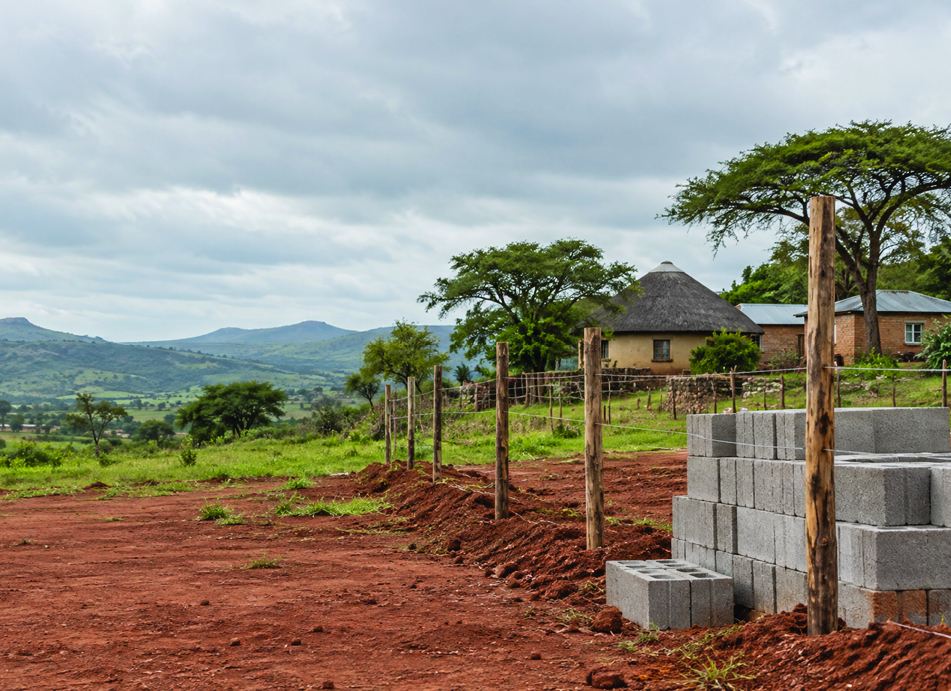
A man has approached the High Court seeking an urgent interdict to stop his stepson from constructing a house, subdividing land and allegedly altering the boundaries of the family homestead at Mpolonjeni pending the resolution of a customary dispute.
Able Mthupha Mbhamali alleges that Thando Dlamini who is the first respondent, returned to the homestead without his consent and began preparations to build a house with the assistance of his mother, Zanele Mirriam Mbhamali who is married to him.
In his founding affidavit, Mbhamali claims that the construction activities threaten his rights over the homestead, which he says he acquired through customary procedures after marrying Zanele.
He is asking the court to intervene before the property is irreversibly divided or altered, arguing that financial compensation would not adequately address the potential damage. The papers seek an interim order pending the determination of the dispute by the Mpolonjeni Umphakatsi.
Mbhamali wants the court to restrain Dlamini from undertaking further construction, delivering building materials, installing infrastructure or making any other alterations to the property.
He is also seeking an order directing Dlamini to stop entering the premises, trespassing or occupying any buildings without his consent.
The application further seeks the removal of poles allegedly erected by Dlamini and Zanele to mark new boundaries within the homestead.
According to the founding affidavit, Mbhamali married Zanele through the customary practice of kuteka in or around 1999. He says he subsequently acquired the land through kukhonta and completed the process through kuphopha lufindvo around 2002.
He states that he then built a family home comprising a roundavel, two rooms and a tool room, with the intention of establishing a permanent home for his family.
“Out of excitement, I proceeded to building the home of our dreams that I thought I would enjoy a peaceful and undisturbed right with my wife and kids,” Mbhamali states in his affidavit.
He maintains that he believed his wife did not have unilateral customary authority to divide or alienate the family land.
The applicant further alleges that the marriage experienced difficulties, forcing him to report the problems to the Mpolonjeni Umphakatsi in an attempt to find an amicable solution.
He claims that the domestic situation became intolerable and that he eventually moved into two rooms he had built for storing construction materials, hoping that the relationship would improve.
Mbhamali says he later returned to his parental home at Luve after becoming concerned for his safety and that of his son born during the marriage. He alleges that in December 2025, he discovered that Dlamini was occupying the homestead without his consent.
However, he says he initially permitted his stepson to stay there to pursue his studies.
According to Mbhamali, he told Dlamini that he could remain at the property while studying, but would be expected to find accommodation elsewhere after securing employment.
The applicant alleges that Dlamini subsequently completed his studies, relocated to Matsapha and obtained employment before later returning to the homestead following his marriage.
Mbhamali claims that, upon Dlamini’s return, he discovered that some fencing and poles had been removed and new poles erected to mark what he describes as a subdivision of the property.
He further alleges that building blocks and other construction materials had been brought onto the premises in preparation for construction.
“I had demanded that the first respondent cease construction immediately, but he had refused and is continuing to build aggressively as he is receiving support from Zanele,” he states. Mbhamali argues that urgent intervention is necessary because continued construction could permanently alter the homestead before the traditional authorities resolve the dispute.
“I respectfully submit that if the court does not step in immediately, the land will be irreversibly subdivided, sold or built on or compromised and that standard financial compensation will not fix the damage,” he states.
He further argues that he stands to suffer greater hardship if the interdict is refused than Dlamini would suffer if the proposed subdivision and construction were temporarily halted. The Mpolonjeni Royal Kraal and the attorney general are also cited as respondents in the proceedings.
Mbhamali is asking the court to dispense with the ordinary rules governing time limits and service because of the urgency he claims the matter presents. He also seeks costs against the respondents if they unsuccessfully oppose the application.