

Some invitations are easy to accept. Others arrive carrying questions that must be answered before the journey begins.
The Israeli government invited me, as a political reporter, to spend a week in Israel and see the country for myself at a particularly fraught moment in its relationship with the world.
Israel’s military campaign in Gaza has placed its conduct under fierce international scrutiny. The International Criminal Court has issued a warrant of arrest for Prime Minister Benjamin Netanyahu after finding reasonable grounds to believe he bears criminal responsibility for alleged war crimes and crimes against humanity, including starvation as a method of warfare. Israel rejects the accusations and the Court’s jurisdiction, maintaining that it has facilitated humanitarian assistance into Gaza and that its military campaign is a legitimate response to the Hamas attacks of October 7, 2023.
While arguments over what Israel has done or what has been done to Israel, dominate headlines across the world, Emaswati, thousands of kilometres away have felt consequences of a conflict they had no involvement with.
Disruption in the Strait of Hormuz, the narrow passage through which a significant share of the world’s oil moves, has helped push up global oil prices and, with them, the price of fuel at home. The strain has reached the national purse too, with Minister of Finance Neal Rijkenberg recently conceding that government’s ambitious target of collecting nearly E18 billion in domestic taxes this financial year is now out of reach as the conflict weighs on the economic outlook.
That made the invitation relevant. It did not, however, make accepting it any easier. There was the obvious question of security; there were conversations with my boss about what the trip meant journalistically. At home, they were less concerned with the story than with whether I would return safely.
Armed with the support of my community and a heart simmering with passion and a newly found conviction, I accepted the invitation. What propelled me was not a misguided belief that a week could shape me into an expert/connoisseur on a conflict that has confounded diplomats, historians, soldiers, and generations of negotiators alike.
Neither could it offer anything close to a complete view of what this widening conflict has meant for people across Israel, Palestine, Iran, Lebanon and Syria. What it could offer me, was entrance into places I had only previously known through international reporting; place me in conversation with the people through this trialing and unstable moment, and as such allow me to hear Israel tell its story – make a case for itself. My responsibility then was to look through that window without mistaking it for the whole house.
There was another reason to go. Eswatini and Israel are old friends, although the history behind that relationship predates the Israeli state itself. During the Second World War, Jewish refugees fleeing Nazi persecution found refuge in what was then the British Protectorate of Swaziland after South African immigration restrictions closed the door to many seeking sanctuary. By the early 1970s, relations between the newly independent Swaziland and the State of Israel were established.
When the Yom Kippur War erupted in 1973, Arab oil-producing states used access to petroleum as diplomatic leverage, while African governments faced growing pressure to align themselves with the Arab position. Most African states severed diplomatic relations with Israel. Swaziland did not, remaining alongside Lesotho and Malawi as the only African nations that maintained full diplomatic ties. More than half a century later, the politics and circumstances have changed. The relationship, it seems, has not.
Eswatini continues to engage Israel at a moment when doing so can be diplomatically uncomfortable. That became particularly visible when the kingdom abstained from the United Nations General Assembly vote on the New York Declaration supporting steps towards an independent Palestinian state earlier this year. The resolution passed with 142 countries in favour. Eswatini joined only 11 other abstentions, while South Africa, Botswana, Lesotho, Mozambique and Zimbabwe voted in favour.
The kingdom has held to its stated policy of non-alignment. South Africa, its largest neighbour and dominant regional power, has taken a markedly different position, bringing its case against Israel before the International Court of Justice.
“In Israel, friendship is remembered,” Israel’s Ambassador to Eswatini Ilan Fluss told me in an interview.
“Our country’s legitimacy is being questioned internationally, so having friends like Eswatini who recognise us in such tough times is significant,” he said.
Fluss also made clear that Israel wants to deepen ties between the two countries, particularly through innovation and technology, fields in which it has established itself as a major global hub. International relations are often understood through armies and borders, resolutions and sanctions, alliances made and broken. Yet diplomacy can reveal itself in something much simpler: who is still willing to call you a friend when others have chosen to distance themselves. Eswatini has been that friend for Israel. What that friendship means now is a more difficult question.
While acknowledging the kingdom’s sovereign right to choose its diplomatic partners, civil society voices have questioned what closer cooperation between Eswatini and Israel means in practice, particularly around security and surveillance technology. International relations analyst Melusi Simelane pointed to previous reports of Israeli-linked surveillance technology in the country, and questioned what deeper cooperation in technology and innovation might entail.
“When an Israeli ambassador speaks of deepening ties with Eswatini, citizens are entitled to ask plainly: which technologies and innovations, and for what?” he said.
Israel’s case, however, is that the relationship is broader than that. It points to innovation, agriculture, technology and development as areas in which its experience can benefit countries such as Eswatini. The invitation offered an opportunity to examine that argument closer to its source. I would enter Israel’s innovation ecosystem, but also visit communities near Gaza and speak with survivors of the October 7 attacks. Some things, Israel was effectively saying, are better understood up close.
So I went. What I encountered was more complicated than the Israel I had known from a distance.
HOW ISRAELIS FEEL ABOUT NETANYAHU
One of the first things that became apparent was that a country still bound together by the shock and anger of October 7 is not necessarily united behind the man who has led it through almost three years of war. That matters as Israelis prepare to vote in about two months (October 27) in their first national election since the Hamas attacks.
Benjamin Netanyahu has served as Prime Minister for more than 18 years, longer than anyone else in Israel’s history. Yet he approaches this election unusually vulnerable, with October 7 damaging the security credentials on which much of his political reputation was built. While Israelis have largely supported the wars against Hamas, Hezbollah and Iran, that support has not necessarily translated into confidence in Netanyahu’s leadership.
In conversations held during the visit, there was no single view of him. Anger over October 7 sits alongside arguments over responsibility for it; support for military action alongside frustration with the government directing it.
Eylon Levy, the former Israeli government spokesman who became one of the country’s most recognisable international voices after October 7, put it plainly.
“The people are not united behind Netanyahu,” he said during a wide-ranging dinner conversation. “There’s a lot of frustration, a lot of resentment.”
Much of that resentment, Levy argued, begins with October 7 itself. The attack shattered assumptions Israelis had been encouraged to trust about their security: that Hamas was deterred, that sophisticated surveillance along the Gaza border would provide sufficient warning and that Israeli intelligence would detect preparations for an attack of such magnitude. Those assumptions proved catastrophically wrong.
“It was a disaster,” Levy said, describing failures at military, intelligence and strategic levels.
“Why did it take so long for the army to get its act together? Why was the border so poorly defended?” he asked.
There was also an intelligence failure, he argued, in not piecing together what Hamas was planning, and a strategic failure in allowing the group to become powerful enough to carry out such an attack.
Levy believes those failures still require a state commission of inquiry. The question has become more politically potent because senior figures within Israel’s military and intelligence establishment have accepted responsibility for failures surrounding October 7, while Netanyahu has not accepted personal responsibility in the manner many Israelis expected.
October 7 is not the only fault line running through Israeli politics. After years of war, an older dispute over military service has acquired new urgency. Most Jewish Israelis are required to serve, while ultra-Orthodox Jewish men have historically benefited from broad exemptions. Netanyahu has depended politically on ultra-Orthodox parties, even as reservists have repeatedly been pulled away from their families and livelihoods to return to military service. That has sharpened what Levy describes as “a basic question of fairness”. He spoke of reservists in their late thirties spending hundreds of days in service while Netanyahu’s coalition seeks to preserve exemptions for thousands of ultra-Orthodox men. The dispute may concern religion and politics, but after October 7 it has also become about burden: who serves, who sacrifices and who does not.
Mark Regev, a former senior adviser to Netanyahu and former Israeli ambassador to the United Kingdom, cautioned, however, that anger with Netanyahu does not automatically mean his defeat. Israel’s political arithmetic is complicated. No party has ever won an outright majority in the 120-seat Knesset, meaning governments are assembled through coalitions and smaller parties can wield considerable influence over who eventually becomes prime minister. It is an arithmetic Netanyahu knows particularly well.
More significantly, dissatisfaction with Netanyahu should not, in Regev’s view, be confused with rejection of the harder security thinking that has emerged since October 7. Whoever wins, he argued, Israel’s determination to prevent armed groups from building significant military capabilities along its borders is unlikely to disappear.
That leaves Israelis approaching October 27 with two questions that do not necessarily have the same answer: whether Netanyahu should continue leading them, and how Israel should protect itself after previous security assumptions failed so catastrophically.
For the first time since October 7, they will answer the first at the ballot box. The second is likely to outlast whoever wins.
LOSING THE WORLD’S SUPPORT
Israelis might be divided over Netanyahu, but there appears to be considerably less disagreement over another problem confronting the country: Israel is losing support abroad.
Most conspicuous is the shift in the United States, Israel’s most important international ally and a country that has provided it with military, financial and diplomatic support for decades. A Pew Research Center survey conducted in March found that six in 10 Americans held an unfavourable view of Israel, up from 53 per cent a year earlier, and 42 per cent in 2022. For Israel, that is more than an uncomfortable opinion poll. It signals an erosion of public support in the country it has relied upon most heavily internationally.
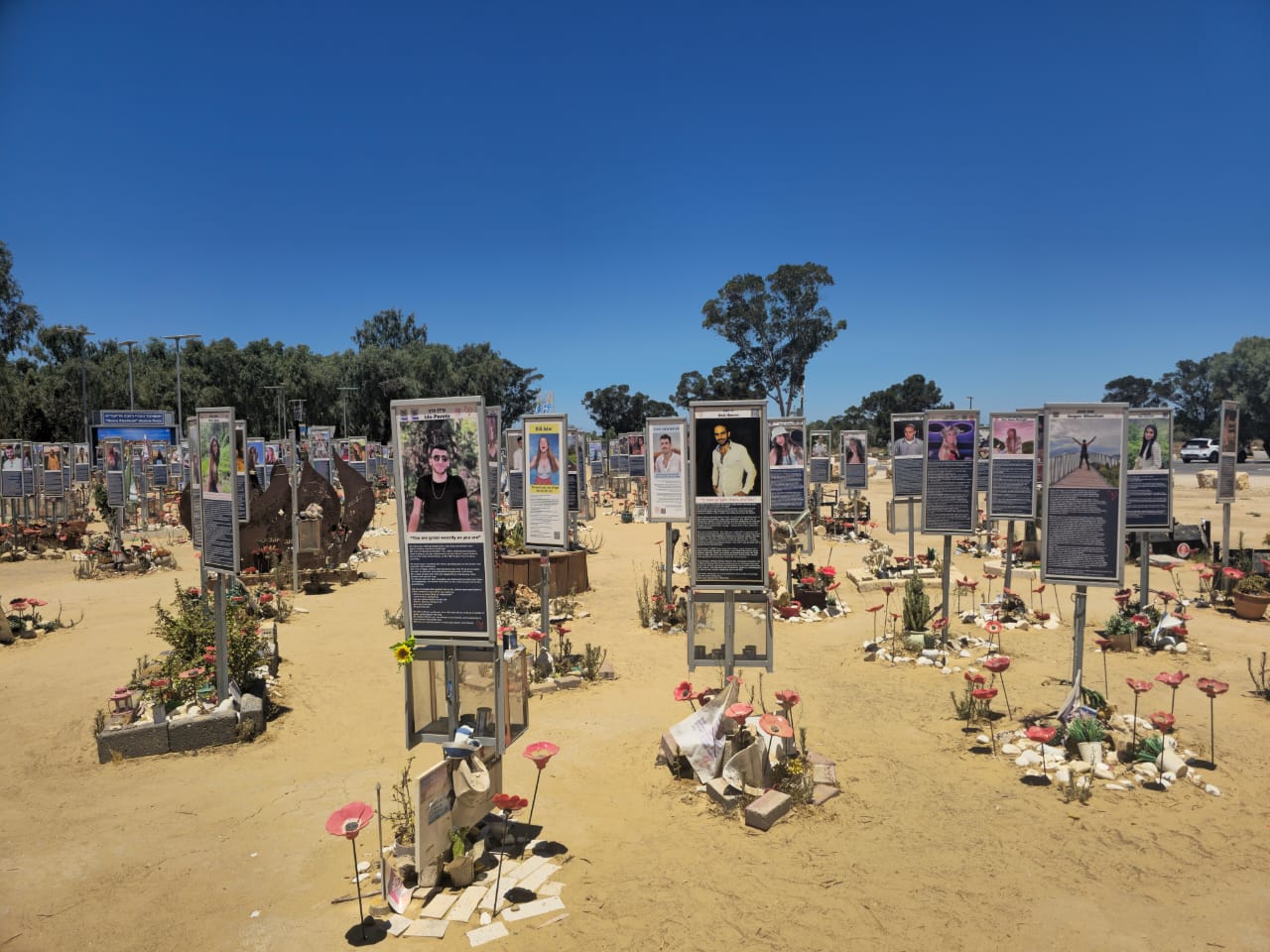
At the United Nations, the isolation is more visible. On major resolutions concerning Gaza and Palestinian statehood, Israel and the United States have increasingly found themselves among a small minority facing more than 140 countries on the other side.
Alongside the war itself, Israel is fighting another battle it acknowledges it is struggling to win, the battle over how the world understands its actions.
Regev acknowledged as much during our conversations. Israel, he argued, has struggled to communicate its case internationally just as images of death and destruction in Gaza have come to define the country for much of the outside world.
Levy, himself once charged with making Israel’s case internationally as a government spokesman, was more pointed. One of his sharpest criticisms of the current government is its failure to adequately explain Israel to audiences beyond its borders. Part of the problem, in his telling, is cultural.
Israelis, Levy argued, are uncomfortable presenting themselves as victims. October 7 left families murdered, communities devastated and hostages dragged into Gaza, yet he believes Israelis recoil from repeatedly displaying that suffering to solicit international sympathy.
“We’re not victims. Israelis hate victimhood mentality,” he said.
Levy contrasted that restraint with what he characterised as the “Palestinian practice of rapidly broadcasting images of suffering for political advantage.” That is his interpretation of an information war in which images have themselves become evidence, argument and accusation. Yet the imbalance he describes is revealing. Palestinian suffering has been visible to the world on an extraordinary scale, while Israel increasingly believes the trauma of October 7 has receded from international memory.
Levy now wonders whether that reluctance cost Israel.
“In hindsight, maybe that was a mistake,” he said, arguing that Israel believed it could fight the information war “the nice way”. For him, the consequences extend beyond Israel’s reputation.
He pointed to the Strait of Hormuz, the narrow waterway through which a significant share of the world’s oil and gas travels, and the reluctance of American allies to become involved when Iran disrupted shipping through it.
“Closing the Strait of Hormuz was an attack on the global economy,” Levy argued.
He said that while he understood why countries opposed to the confrontation with Iran had little appetite for joining it, they should have separated opposition to the war from the principle of keeping an international shipping route open.
Instead, he said, Washington was effectively told: “You broke it, you fix it.”
Levy believes that risks teaching armed states and groups elsewhere that strategic waterways can be disrupted without sufficient international consequence.
His argument reveals something larger about Israel’s predicament. Israel wants the world to distinguish between disagreement with its conduct and cooperation where interests converge. Increasingly, however, countries appear less willing to make that separation. That is why losing the information war matters beyond Israel’s image. A country may possess the military strength to act without much of the world’s approval. The harder test comes when it needs that same world to act with it.
TAIWAN MUST BE WORRIED
From the Strait of Hormuz, Levy’s argument travelled much further east.
“I think the Taiwanese need to be really concerned. Extremely concerned,” he said.
For Eswatini, the Republic of China (Taiwan) is hardly an abstract subject. The kingdom is Taiwan’s only formal diplomatic ally in Africa, making questions about the island’s future unusually relevant here.
Levy’s concern was the larger security calculation Taiwan must make about mainland China. Beijing considers Taiwan part of China and has not renounced the use of force to bring the island under its control. Taiwan rejects Beijing’s sovereignty claim and maintains that its future can only be decided by its people.
Watching events involving Iran, Levy said, left him wondering what conclusions Beijing might draw about the durability of American commitments when sustaining them becomes expensive.
“What lesson do you think the Chinese are taking from the way that America ended the war with Iran?” he asked.
That matters, Levy argued, because Taiwan’s security calculations rest partly on making the cost of coercion prohibitively high.
He pointed to what is commonly called the “porcupine” strategy: Taiwan does not need to match China weapon for weapon, but instead seeks to make any attempt to take the island extraordinarily difficult and costly.
But Levy argued that Taiwan’s calculation extends beyond its own defences.
“What they really think will save them is that their semiconductor industry is so critical for global supply chains that the world cannot tolerate the Taiwan Strait being closed,” he said.
Taiwan, in Levy’s telling, therefore depends partly on a larger calculation: that its economic importance, geography and place in regional security would make the cost of allowing it to fall too great for other countries to remain on the sidelines.
But that calculation ultimately depends on those countries being prepared to act.
“They’re expecting that this regional security alliance will jump into action because it would be too costly for Taiwan to fall,” Levy said.
His concern is that events in the Strait of Hormuz have given Taiwan reason to question that assumption.
Levy argued that the international response there demonstrated how even when a strategic waterway is critical to the global economy, governments can still decide that intervention is too politically or militarily costly.
“That even the United States at some point is going to back down,” he added.
For Levy, that is what connects Hormuz to Taiwan. His concern is not that the two crises are identical, but that deterrence depends partly on what an adversary believes other countries will do when the cost of keeping their commitments rises.
That gives Levy’s warning particular relevance in the kingdom. For decades, the country has maintained diplomatic relations with Taiwan even as almost every other African country switched recognition to Beijing. China continues to make the economic and diplomatic advantages of such a switch clear.
Eswatini has chosen to remain with Taiwan. Levy’s argument raises a question about what happens if Taiwan one day faces something more consequential than diplomatic pressure. Eswatini may be one of Taiwan’s oldest friends, but it is far too small to influence the military calculations surrounding the island. The kingdom can choose whom it recognises, but it cannot determine whether the powers capable of protecting Taiwan would actually do so.
This is the first of a two-part series. The concluding part will be published next week.