


An ongoing Facebook trend in which women publicly name and shame the fathers of their children for allegedly failing to provide financial support could expose some users to serious legal consequences, including a fine of up to E100 000 or imprisonment of up to five years, depending on the nature of the online conduct.
The trend, which is circulating on social media platforms including Facebook and TikTok, has seen women posting photographs, names and personal details of alleged deadbeat fathers while accusing them of failing to take responsibility for their children.
Some posts have attracted significant public attention, with other social media users commenting and sharing the posts. However, while the women behind the posts may be seeking to pressure fathers into providing for their children, the manner in which this is done raises questions under the country’s cybercrime and data protection laws.
The Computer Crime and Cybercrime Act, 2022 criminalises a range of conduct committed through computer systems and electronic communications networks, including cyberbullying, cyberstalking and harassment utilising electronic communication. A Commonwealth review of the country’s cybercrime legislation notes that the Act provides for penalties ranging from fines of E100 000 to E1 million and imprisonment ranging from three to 20 years for various cyber-related offences.
This means the E100 000 figure should not be interpreted as an automatic penalty for simply posting the name or photograph of a child’s father. Rather, the circumstances and content of the post would have to be assessed against the specific offence created by the law.
The issue, therefore, raises concerns over when publicly exposing an alleged absent father could amount to unlawful online harassment. The Data Protection Act, 2022 also becomes relevant where personal information is published online. The legislation regulates the collection, processing, disclosure and protection of personal data while the Eswatini Communications Commission (ESCCOM) has responsibilities relating to data protection and cybersecurity.
The publication of a person’s photograph, telephone number, workplace, address or other identifying information could, therefore, raise data protection questions, particularly where such information is circulated to a large audience.
The online campaign also highlights the frustration experienced by parents who say they are left carrying the financial burden of raising children alone.
Instead of resorting to public exposure on social media, mothers seeking financial support for their children can report the matter to the department of social welfare under the office of the deputy prime minister (DPM).
The department assists mothers to pursue maintenance from fathers who are not providing financial support for their children. Once a matter has been reported, the social welfare department liaises with the courts to have the father brought before the appropriate process, where he is expected to commit to a monthly maintenance amount.
Once an amount has been agreed upon, the father is required to pay the stipulated maintenance at the social welfare offices each month. The department then facilitates the payment by handing the money over to the mother, providing a structured channel through which the child receives financial support.
The arrangement means that mothers do not necessarily have to engage directly with fathers over monthly payments after an agreement has been reached. Instead, the social welfare department serves as an intermediary in the collection and disbursement of the maintenance.
The scale of maintenance disputes is reflected in the latest figures from the department of social welfare. Between April 1 and June 30, the department recorded 1 522 child maintenance cases. Of these, 1 060 were resolved through mediation and other interventions, while 298 were referred to magistrates’ courts after parents failed to honour maintenance agreements, repeatedly failed to attend mediation or could not agree on the amount to be paid. A further 434 cases remained under active investigation and at different stages of processing.
The department attributed the growing number of maintenance defaults largely to difficult economic conditions, although officials also noted that some parents fail to cooperate with the maintenance process by ignoring mediation sessions arranged by social workers. Cases may be referred to court where one or both parties fail to attend mediation meetings on more than three occasions or where negotiations fail to produce an agreement on the maintenance amount.
The social welfare department has regional and sub-regional offices where cases can be reported. The government lists offices in Mbabane, Manzini, Nhlangano and Siteki, as well as sub-regional offices including Pigg’s Peak, Mankayane and Hlathikhulu.
NAMING, SHAMING NOT PROBLEM SOLVER – DIRECTOR
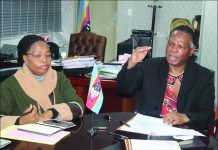
Director for Social Welfare Services Marcelia Dlamini says naming and shaming alleged absent fathers on social media is not an appropriate way of addressing child maintenance disputes because it does not provide a lasting solution.
Dlamini advised mothers facing challenges in securing financial support for their children to use the established channels available through the social welfare services department rather than resorting to public exposure.
She said the department’s offices remained open and welcoming to members of the public who needed assistance with matters involving the care and maintenance of children.
Dlamini warned that publicly posting another person’s personal information could also expose mothers to legal consequences under existing laws governing data protection and the disclosure of personal information.
She said mothers could ultimately find themselves facing the law over social media posts intended to pressure fathers into providing for their children.
Dlamini cautioned that such consequences could ultimately affect the children the mothers were trying to protect, as a mother facing legal action or imprisonment would potentially leave the child without her care and support.
“Naming and shaming is not appropriate because it does not bring the solution. There are proper channels where issues concerning the taking care of a child can be addressed and our offices are always open and welcoming to people who need assistance,” Dlamini said.
She encouraged mothers experiencing maintenance challenges to approach the department for assistance rather than taking their grievances to social media.