



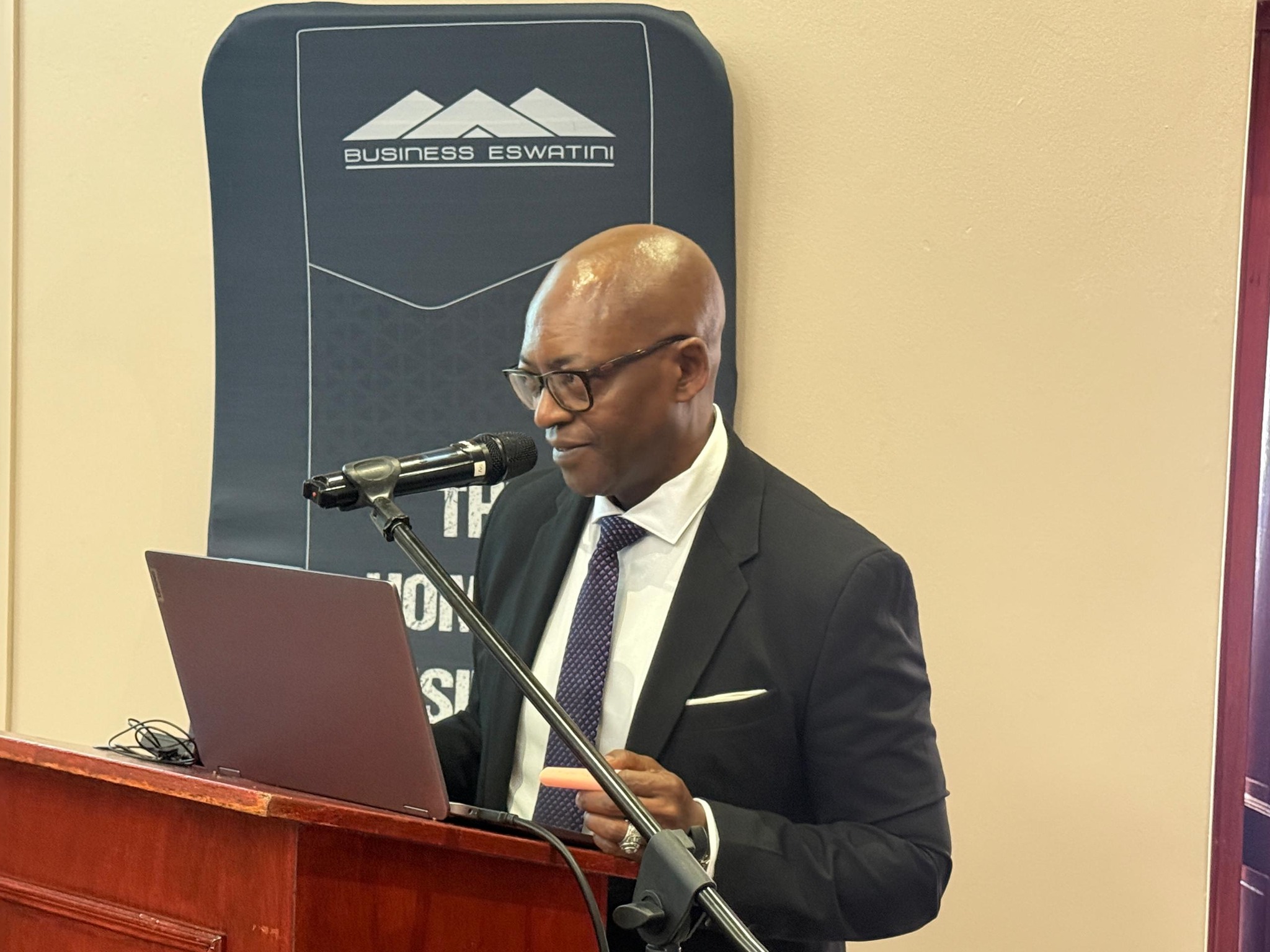
BUSINESS Eswatini (BE) has called for sustained engagement between the private sector and the Eswatini Revenue Service (ERS).
This is as the country moves closer to implementing its landmark fiscalisation project commonly known as e-invoicing.
The call came during a high-level engagement convened by Business Eswatini with its retail and wholesale members as well as ERS where businesses raised concerns and offered practical recommendations on the transition to a digital tax invoicing system.
The fiscalisation project is expected to move businesses away from manual and paper-based invoicing towards a standardised digital system in which transactions can be generated, transmitted and validated electronically in real time or near real time.
ERS Commissioner General Brightwell Nkambule told businesses that the system is intended to improve the accuracy of tax information, speed up processing and strengthen voluntary compliance.
However, businesses emphasised that the success of the initiative would depend heavily on how effectively it is introduced across an economy where companies operate with widely varying levels of technological capacity.
The members raised questions around the integration of the new system with existing point-of-sale and accounting platforms, the cost of implementation and the practical arrangements that will govern the transition period.
They also stressed the need for sufficient preparation time and clear guidance to ensure that businesses are able to comply without unnecessary disruption to their operations.
Nkambule said the fiscalisation project advances from design and piloting towards national implementation, businesses are expected to remain closely involved in discussions around its practical rollout.
For the country, the transition represents more than a technological upgrade to the tax system. It is a significant shift in how businesses record and report transactions one that could improve tax administration, provided implementation is responsive to the realities facing businesses across the country.
Business Eswatini said the concerns raised during the engagement were not simply objections to digitalisation, but important insights from businesses that would ultimately be required to implement the system.
BE Chief Executive Officer E. Nathi Dlamini argued that early consultation would allow potential challenges to be identified before the national rollout, reducing the risk of costly implementation problems for both businesses and the revenue authority. He noted that the significant number of companies also volunteered to participate in the pilot phase of the fiscalisation project, signalling willingness within the private sector to participate directly in testing and refining the new system.
Dlamini welcomed the move.
He stated that the willingness of companies to participate demonstrated the value of meaningful consultation between government and business.
He said continued engagement would be critical as the project progresses. He said the engagement positions BE as a key intermediary in discussions between the private sector and government on the country’s evolving tax administration framework.
“Continued, deep engagement is not a luxury; it is a necessity. Early, robust consultation is the only way to identify implementation challenges before they become costly speed bumps for either businesses or the revenue administration,” said Dlamini.
With companies now stepping forward to participate in the pilot, the next phase will be critical in determining whether the country’s move towards e-invoicing can deliver on its promise of greater efficiency and compliance without placing disproportionate burdens on businesses.