



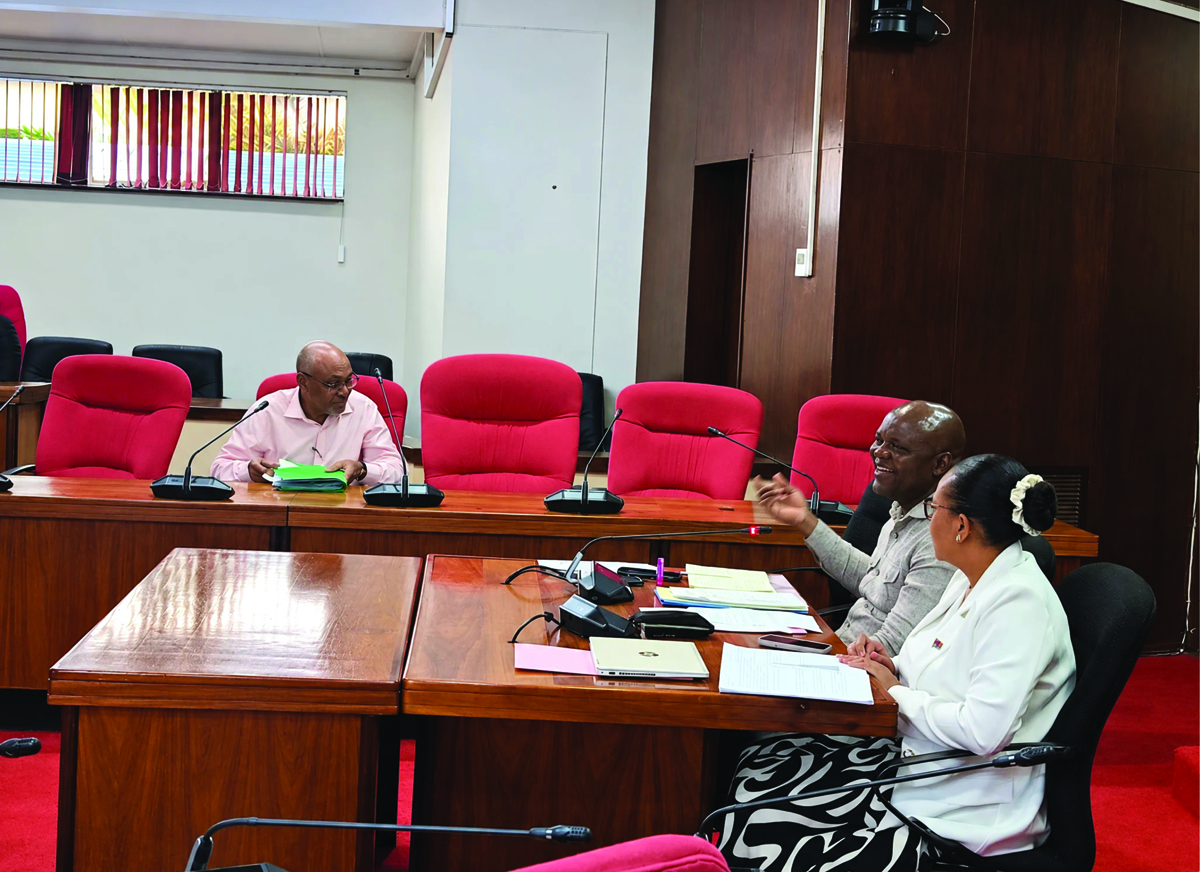
FORMER senator Walter Bennett has blamed past Cabinets for the financial challenges facing the Eswatini Posts and Telecommunications Corporation (EPTC), saying their failure to address the pension scheme’s problems early has left future generations facing the cost.
Bennett said the EPTC pension scheme had a deficit of about E8 million in the past, which had since grown to approximately E400 million.
He said the situation could have been avoided if the problem had been addressed when it first emerged, instead of allowing it to grow over the years.
“It is unfortunate that this is now becoming a burden on the taxpayer,” he said.
Bennett was speaking during a stakeholder engagement on the International Bank for Reconstruction and Development (Eswatini Posts and Telecommunications Corporation) Loan Bill, 2026, where senators met with stakeholders to discuss the proposed loan and issues affecting the corporation.
He said the pension scheme’s financial challenges reflected the failure of previous Cabinets to deal with the matter, adding that future generations would now have to bear the cost.
Bennett also raised concerns about corruption at EPTC, saying there had been instances where people involved in corrupt activities were protected instead of being held accountable. He said this had contributed to the corporation’s decline.
“The easiest way to eliminate corruption is to enhance the checks and balances,” he said.
Bennett called for stronger measures to ensure accountability within the corporation and prevent further financial problems.
The proposed loan seeks to authorise the minister of finance to raise up to USD 26 million from the International Development Association to finance the Digital Eswatini Project under the Inclusive Digitalisation in Eastern and Southern Africa Multiphase Programmatic Approach programme.
The proposed legislation has also raised questions about the corporation’s pension obligations and the financial support needed to address its challenges.
…Questions transparency in government borrowing
ON the other hand, Bennett called on government to disclose full details of its loans, saying Parliament and the public need to know the country’s debt obligations before approving further borrowing.
Bennett said ministries seeking loans should provide all relevant information, including technical and financial charges, instead of only disclosing details they wanted the public to know.
He questioned how Parliament could properly consider loan requests if important details of the agreements were not made available to Parliament.
Bennett said all loans currently being serviced by the country should be made public so that Emaswati could understand the country’s debt position and the commitments being made on their behalf.
He also questioned why senators did not have a debt sustainability report, despite the importance of such information in assessing the country’s ability to repay its loans.
Bennett referred to the November 2022 debt sustainability report, which he said indicated that the country needed to maintain debt at 50% of gross domestic product (GDP) and eliminate arrears, in line with a Cabinet policy adopted in 2018.
He questioned whether the arrears had been eliminated and whether the country’s current debt position remained in line with the stated policy.
The former senator also raised concerns about loans taken out by municipalities, asking who was responsible for guaranteeing them and whether the relevant information was available to Parliament.
He further questioned the lack of a schedule showing the country’s loans and called for the auditing of loans to establish how the borrowed money was being used.
Bennett referred to E11.8 million in commitment interest highlighted in the auditor general’s report in relation to loans that had not been utilised as intended. He called for loans to be audited by independent auditors.
He also proposed the establishment of a sinking fund to help the country manage its debt obligations.
On the cost of borrowing, Bennett advised government to consider borrowing from within the region before approaching international banks, particularly where loans carried fluctuating exchange rates that could increase repayment costs.
He said the country should only look beyond the region when the required assistance was not available locally.
Bennett further questioned the consequences of failing to meet constitutional requirements relating to borrowing, saying Parliament needed to understand the details of loan agreements rather than simply approve them.
The engagement was held to discuss the proposed loan to finance the Digital Eswatini Project, which seeks funding of up to USD 26 million from the International Development Association.
The proposed bill seeks to authorise the minister of finance to raise the loan for the project under the Inclusive Digitalisation in Eastern and Southern Africa Multiphase Programmatic Approach programme.
| Demand or question | What he said | Status in the copy |
|---|---|---|
| Full loan disclosure | Ministries should put up technical and financial charges, not only the details they want known. Parliament cannot consider a request properly without the agreement. | A demand. No disclosure is reported as having been tabled. |
| Public debt book | Every loan now being serviced should be public, so Emaswati can see the obligations being taken on their behalf. | Not published in this report. He also said senators had no debt-sustainability report. |
| Schedule and audit | He questioned the lack of a loan schedule, asked for loans to be audited to show how the money is used, and asked that independent auditors do that work. | Proposals. No audit is reported as commissioned. |
| Municipal loans | Who guarantees loans taken by municipalities, and is that information before Parliament? | Questions only. No municipal loan is named. |
| Sinking fund | Proposed a fund to help meet debt obligations. | A proposal, not a decision. |
| Where to borrow | Look within the region before international banks where the exchange rate can move the repayment cost. Go outside only if the assistance is not available locally. | Advice. The proposed cap is in US dollars. No local alternative is costed in the copy. |
| Constitution | He asked what follows if constitutional borrowing requirements are not met, and said Parliament should understand agreements rather than simply approve them. | No section is cited. Do not add one. |
| EPTC accountability | Past Cabinets failed to act early. Corrupt conduct was protected and, he said, contributed to the corporation’s decline. Checks and balances are the remedy he named. | No person, case or Cabinet is identified. Treat it as his allegation. |
Source: Eswatini Observer, report by Sabelo Majola. None of these demands is reported as accepted.