



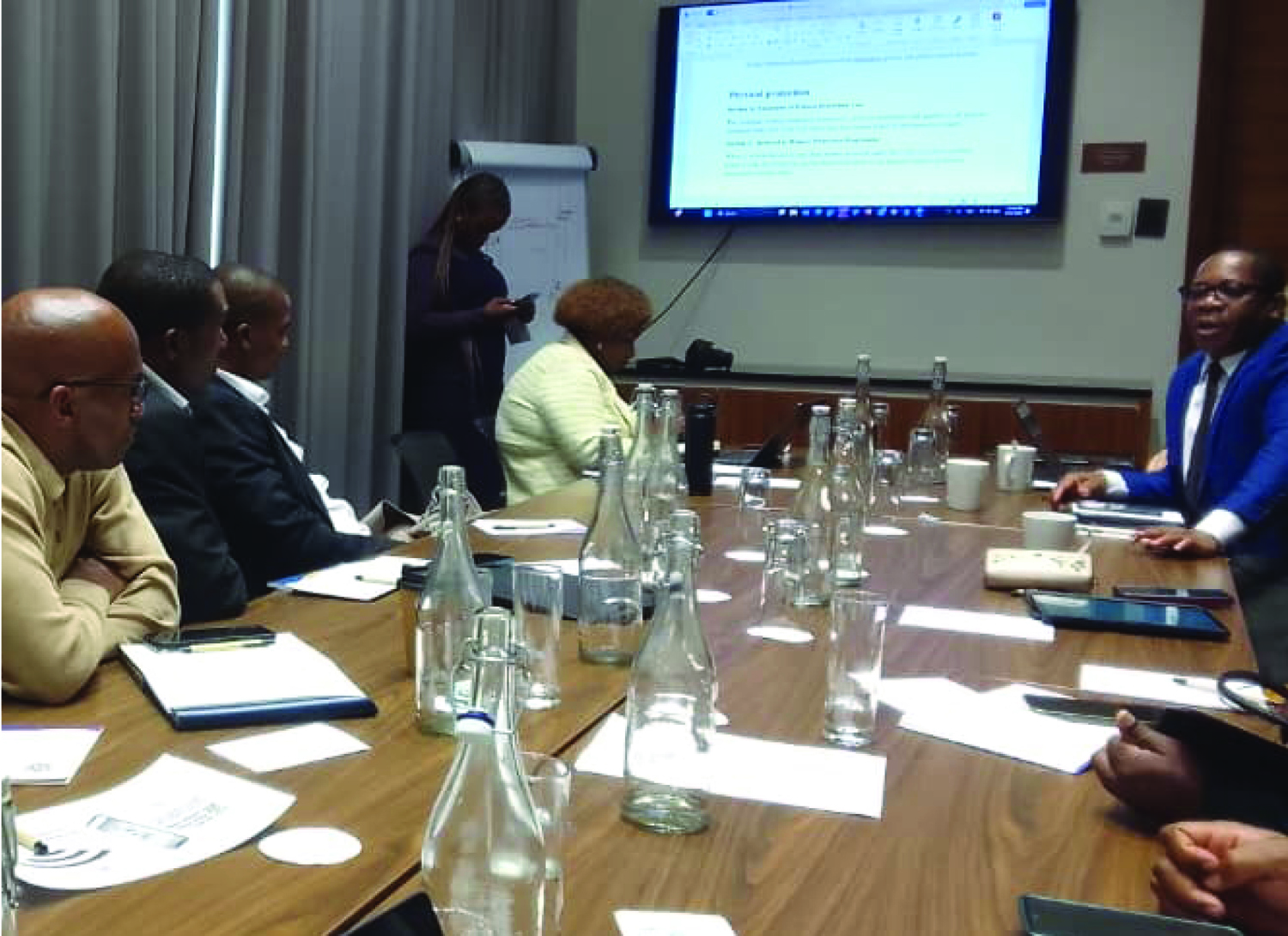
THE country’s cultural practices and attitudes in workplaces are discouraging people from exposing corruption and other wrongdoing, with whistle-blowers often being turned into victims instead of being protected.
This was discussed during the national workshop hosted by the ACC at the Hilton Garden Inn on Thursday, where stakeholders examined international standards and explored how the country can strengthen its legal framework for protecting whistle-blowers.
The workshop focused on building on the methodology contained in the United Nations Office on Drugs and Crime (UNODC) practical toolkit for developing whistle-blower protection frameworks.
According to Anti-Corruption Commission (ACC) Director Jabu Phakathi, the country’s social values and the way people respond to allegations of wrongdoing have created an environment where individuals are afraid to come forward with information.
Phakathi noted that whistle-blowers were often subjected to pressure to remain silent, particularly when reporting a person whose actions could have consequences for their employment and livelihood.
She explained that people were sometimes made to feel guilty for reporting wrongdoing because they were told to consider the impact their actions could have on the alleged offender and their family.
“People will tell you to consider what you are doing because you are putting that person’s life at risk,” Phakathi said.
She explained that a whistle-blower may be reminded that the person being reported could lose their job and subsequently struggle to provide food for their family.
According to Phakathi, such arguments shift attention away from the alleged wrongdoing and instead place the burden on the person who has taken the courage to report it.
She said this had made it difficult for people to provide information that could assist authorities in investigating corruption and other offences.
Phakathi further noted that society often tends to side with the person accused of wrongdoing, particularly where that person was known or influential within the community or workplace.
Condemning
She said instead of condemning wrongdoing, people can sometimes end up celebrating or protecting those accused of committing offences.
This, according to the ACC director, creates a dangerous environment for whistle-blowers, who may fear being isolated, criticised or victimised after reporting misconduct.
She stressed that the focus should instead be placed on the wrongdoing and the consequences it had on institutions and society as a whole.
Phakathi’s remarks highlight the challenge faced by anti-corruption agencies in encouraging members of the public and employees to report suspected corruption.
While whistle-blowing can provide authorities with crucial information needed to uncover wrongdoing, the willingness of individuals to report depends largely on whether they feel protected and supported.
She said society needed to change its attitude towards whistle-blowers and recognise that reporting wrongdoing is not an act of betrayal, but a contribution towards accountability.
Phakathi’s concerns also raise questions about the role workplaces and communities play in protecting those who expose wrongdoing, particularly where cultural expectations of loyalty and solidarity may discourage people from speaking out.
‘Firms should pay for whistle-blower victimisation’
INSTITUTIONS and companies that victimise or threaten whistle-blowers should face financial sanctions as part of measures to protect people who expose corruption and wrongdoing, according to the United Nations Office on Drugs and Crime (UNODC).
UNODC representative Louise Partas said sanctions were necessary to discourage institutions from retaliating against employees who came forward with information on suspected wrongdoing.
Partas noted that whistle-blowers often faced victimisation, threats or other forms of retaliation after reporting misconduct, making it difficult for anti-corruption efforts to succeed.
She said international standards promoted by the United Nations required countries to establish measures that protect whistle-blowers and discourage institutions from abusing or intimidating them.
According to Partas, institutions found to have victimised a whistle-blower should be held accountable and be required to pay a specified amount as a sanction.
She explained that such penalties would serve two purposes: punishing institutions that fail to protect whistle-blowers while also providing support to the affected individual.
Deterrent
Partas said the financial consequences would act as a deterrent, particularly for companies and institutions that might otherwise view the victimisation of whistle-blowers as an internal matter.
The proposed approach would also ensure that whistle-blowers are not left to bear the personal and financial consequences of exposing wrongdoing.
She noted that where a person was threatened or victimised after reporting corruption, the institution or company should bear responsibility rather than leaving the whistle-blower without assistance.
Her comments come amid concerns that fear of retaliation remains one of the major barriers preventing people from reporting corruption.
Witness protection fund needed for whistle-blowers – UNODC
A witness protection fund and dedicated protection facility should be established to safeguard whistle-blowers who face threats to their lives after exposing corruption.
UNODC representative Louise Partas said whistle-blower protection should go beyond simply encouraging people to report corruption, with the law providing concrete protection for those whose lives may be placed at risk.
Partas noted that some whistle-blowers could face serious threats as a direct result of the information they provide to authorities. In such cases, she said, there should be mechanisms capable of protecting the individual from harm.
She called for the establishment of a witness protection fund that could help finance measures required to keep whistle-blowers safe.
Partas also proposed that a witness protection facility be put in place where necessary, particularly for individuals facing serious threats because of their role in exposing wrongdoing.
She said legislation protecting whistle-blowers should clearly provide for such interventions, ensuring that a person who reports corruption is not left vulnerable after coming forward.
According to Partas, effective protection is critical in encouraging people to report corruption because individuals are unlikely to provide information if they fear retaliation or threats to their lives.
ACC urged to set up whistle-blowing hotline
THE Anti-Corruption Commission (ACC) should establish a dedicated whistle-blowing hotline to give members of the public a safer and more accessible platform to report corruption and other wrongdoing.
This is according to Regional Advisor for the Anti-Corruption and Financial Crime Hub for Africa Kodjo Attisso.
Attisso said creating a hotline would reduce the chances of whistle-blowers being victimised, particularly in situations where reporting wrongdoing through internal channels could expose them to retaliation.
He said whistle-blowing should not be limited to specific institutions or companies, as this could discourage members of the public from reporting corruption they witnessed.
According to Attisso, a dedicated ACC hotline would allow people to report wrongdoing directly to an independent anti-corruption body rather than having to approach the institution where the alleged misconduct occurred.
He said this could provide greater confidence to whistle-blowers, who may otherwise fear that their identities could be exposed or that they could face consequences for reporting colleagues, managers or other individuals.
Emphasised
Attisso emphasised that the public should be encouraged to report corruption whenever they came across it, arguing that fighting corruption requires the participation of society as a whole.
He said an accessible reporting mechanism could therefore play an important role in strengthening the country’s anti-corruption efforts.
The proposed hotline could also provide the ACC with information from members of the public who may have witnessed corrupt activities but are uncertain about where or how to report them.
“Reducing the barriers to reporting wrongdoing would encourage more people to come forward and ultimately contribute towards discouraging corruption,” he said.
He noted that when people have a safe avenue through which they can provide information, they are more likely to report wrongdoing rather than remain silent.