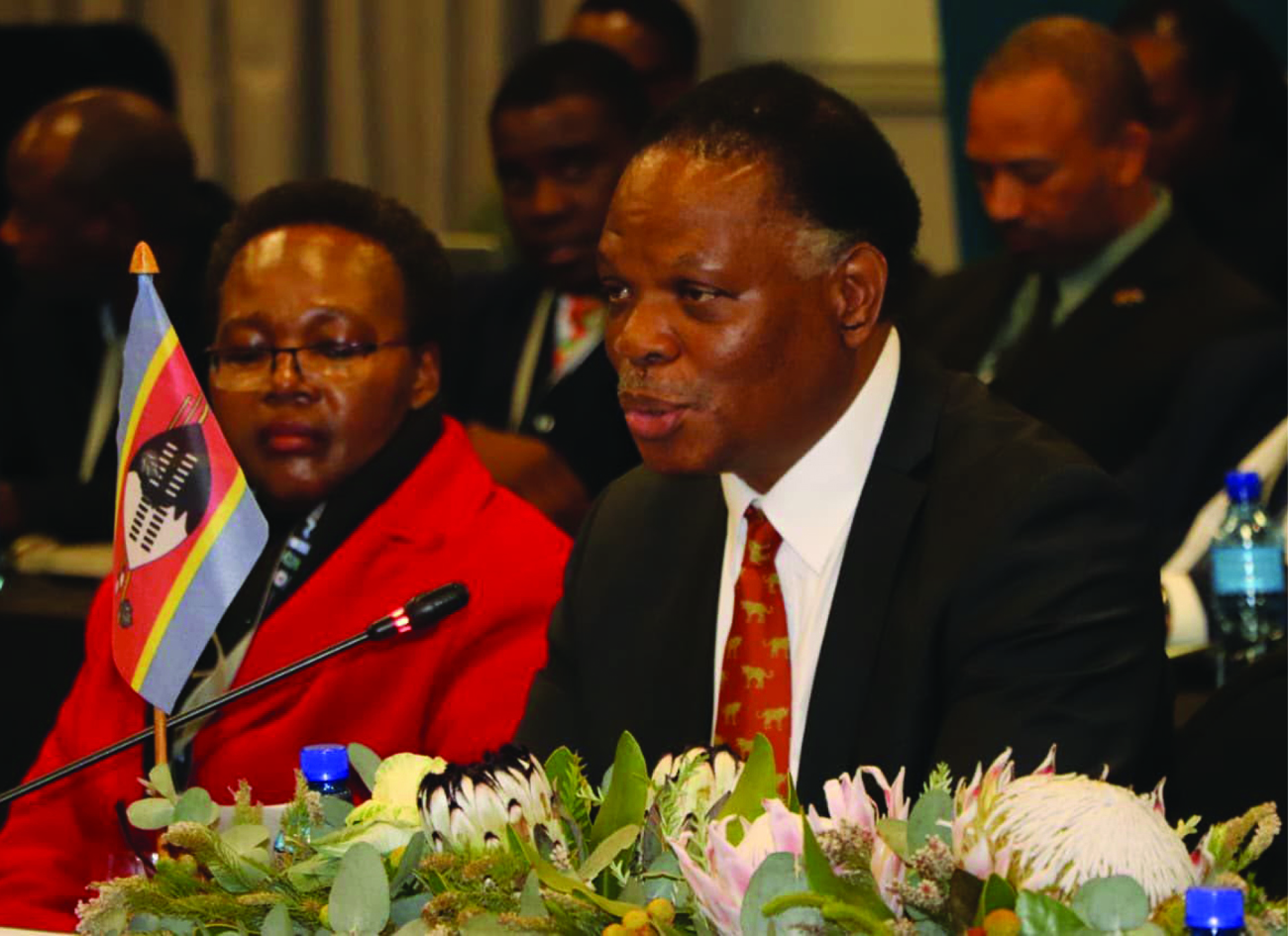
AFTER the Eswatini Electricity Company (EEC) revealed in a meeting with editors that it will, before the end of the year, apply for a new tariff hike, Minister of Natural Resources and Energy Prince Lonkhokhela says it is legal for the power utility to apply for electricity tariff adjustments every two years.
According to the minister, there was an agreement made around 2012 to the effect that if EEC wants to increase electricity tariffs, it must apply every two years.
This was shared by the minister during the first-quarter performance debate of the Ministry of Natural Resources and Energy at Senate yesterday.
The minister said the application process does not only apply when the company wants to increase tariffs, but could also apply when it wants tariffs to remain the same.
He added that the company could also apply when it wants to decrease tariffs, stating that it depends on the company’s agreement with ESERA on how the application was categorised.
He said he would therefore not say much on what EEC considers.
However, he clarified that when it comes to applications for tariff adjustments, it was legal for EEC to review costs every two years.
He said EEC imports 70% of the country’s electricity, which means local production is at 30%. He said the country’s aim was to increase local production to at least 75%.
He said by 2028, they need to be significantly below 60% on electricity importation, further stating that they were confident of this and would provide more details in their responses.
Adding, the minister said when electricity is generated locally, they hope it will not hike at a high rate.
He explained that when there were hikes on imported electricity they were unable to negotiate, while they could negotiate with local producers.
The minister said they had started with independent power producers (IPPs) because it was not costly to set up small producers. Such has been adopted by many countries across the globe.
“EEC started its hydro power station in 1960 and that is the only station they have. We can no longer wait as it is costly to set up a big power station,” he said.
He added that the schedules for electricity schemes appeared to be moving slowly, which some locals were concerned about. The minister said EEC had released a schedule on how it would visit the whole country regarding issues of electricity schemes.
“Those who have challenges can visit EEC for the schedule,” he said.
Senate Deputy President Ndumiso Mdluli stated that electricity prices were affecting everyone as they were high.
He asked whether the country would depend less on imports after 2028 and whether charges would decrease.
He said units worth E500 were only 175, which was very costly, and the ministry needed to do something so as to meet citizens halfway.
Senator Stukie Motsa said she was frustrated reading in the newspapers that EEC wanted to apply for another electricity tariff hike.
She asked if the ministry was doing something to mitigate this. She said she could not read further because the headlines frustrated her and asked if this was true or not.
Senator Chief Ngome Ndlangamandla asked what EEC was doing to help generate electricity locally. He asked how much electricity was being generated by EEC as the main entity entrusted by government with electricity production.
“There is something good that government is doing to help people get electricity through schemes, but there is frustration caused by EEC, as the process is being completed at tinkhundla and umphakatsi level. There are schemes whose applications do not pass EEC,” he said.
GOVT SHOULD FIND WAYS TO END ‘BOZAMA ZAMA’
Senate Deputy President Ndumiso Mdluli says government needs to come up with strategies to prevent and end ‘bozama zama’ as they are conducting activities in an unsafe and illegal manner.
This was shared by the senator, who stated that there were three active mines in the country with five licences issued according to the Ministry of Natural Resources and Energy.
He asked whether activities had started, as there were suggestions that the processing of raw material should be done locally during their previous debates, as this could help the country generate better revenue.
“How will government curb the prevalent ‘boZama Zama’ syndicate? The way they conduct mining activities is also not safe.
“How are you going to put an end to this because there are reports that about 1 000 people were killed after a mine collapsed on them in another country?” he asked.
Minister of Natural Resources and Energy Prince Lonkhokhela said there were three mines that were operational, according to the geology department.
He said five licences had been granted and the country was at a point where it was no longer transporting raw material.
“BoZama Zama solo bayinkinga. Police officers and soldiers are helping us contain the crime. There is machinery that was confiscated by Mbabane Police with the hope that the ‘bozama zama’ will stop,” he said.