

EswatiniMed shareholders resolved to restart the process of appointing two new members to the fund’s Governing Board after determining that the procedure adopted during the recent Annual General Meeting (AGM) did not fully comply with the organisation’s constitutional requirements.
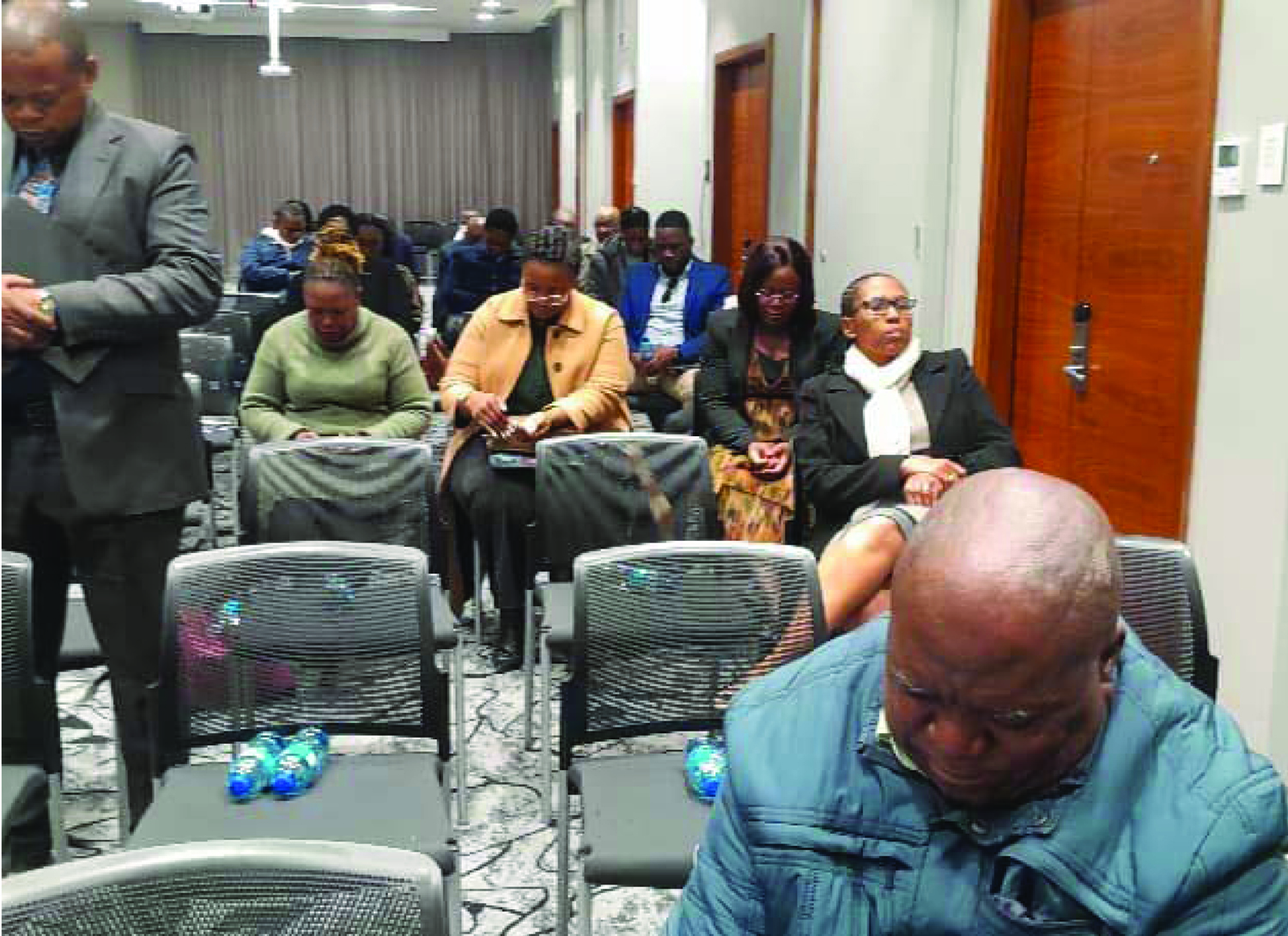
The decision was taken yesterday at a Special Meeting held at Hilton Garden Inn in Mbabane.
The meeting was chaired by Board Chairman Sammy Dlamini. It reflects the country’s leading healthcare services provider’s growing commitment to transparency, procedural integrity, and sound corporate governance as it continues its institutional turnaround.
Acting Principal Officer Sicelo Mkhonta attended the meeting alongside management and shareholders.
Rather than proceeding with appointments that could be vulnerable to future legal or procedural challenges, shareholders instructed management to restart the nomination process, ensuring every constitutional requirement is fully observed.
The decision follows the fund’s AGM held earlier this year, where shareholders had nominated Jerry Soko, Chief Executive Officer of MTN Eswatini, and Zama Ngcobo, General Manager of ESRIC, to replace former board members Sibusiso Nhleko of MTN Eswatini and Vusi Khumalo of the Central Bank of Eswatini. Those proposed appointments formed part of a broader governance renewal following a period of institutional rebuilding and improved financial performance.
Yesterday’s meeting, however, shifted attention from personalities to process.
A Procedural Question, Not a Personal One
Several shareholders advised the meeting that concerns had been raised immediately after the AGM, some contacting EswatiniMed directly and others submitting written representations questioning whether the nomination process had complied fully with the Fund’s Constitution.
At the centre of the discussion was the use of nominations from the floor through a simple show of hands. Shareholders argued that while the intention may have been straightforward, the procedure did not adequately verify whether individuals making nominations or participating in voting were properly authorised through valid proxy arrangements.
In corporate governance, a proxy is the written authority that allows one person to attend and vote on behalf of a shareholder who cannot be present. Before any voting takes place, that authority is ordinarily verified to ensure the representative has the legal right to exercise the shareholder’s vote.
Shareholders noted that, during the AGM, no formal proxy verification exercise was undertaken before nominations were accepted from the floor.
They expressed concern that leaving the matter unresolved could expose future board decisions to unnecessary procedural challenges.
Instead, shareholders opted for what many described as the more responsible course: restart the process properly.
Mkhonta and his management team were therefore instructed to issue fresh nomination forms to all eligible shareholders, allowing every shareholder an equal opportunity to nominate candidates.
Once nominations close, a fresh Special Meeting will be convened after the mandatory 21 working day notice period, with early September emerging as the likely timeframe.
At that meeting, proxy documentation will first be examined and verified before voting commences, while the election itself will be supervised by properly constituted electoral officers, typically independent auditors, to safeguard transparency and credibility.
Choosing Certainty Over Future Disputes
Far from signalling division, the meeting projected an institution increasingly prepared to place governance above expediency.
“Strong governance is demonstrated not when everything goes perfectly, but when an institution has the discipline to correct its course whenever necessary. Today’s decision reflects our collective commitment to protecting the integrity of EswatiniMed and ensuring every constitutional requirement is fully respected,” Dlamini told shareholders.
The resolution also reinforces the governance reforms that have characterised EswatiniMed’s recent recovery.
The fund recently reported a return to financial surplus following a significant turnaround from the previous year’s deficit, while shareholders at the AGM broadly welcomed renewed operational stability and stronger financial stewardship.
Broad Support for Constitutional Adherence
Several shareholders interviewed after the meeting said restarting the process would ultimately strengthen confidence in both the board and the fund.
“Today’s outcome shows that shareholders were focused on protecting the institution. Starting again may take a little longer, but it guarantees that whoever is eventually elected carries an unquestionable mandate,” one shareholder said.
Another shareholder added that their concern was simply that the process should be beyond reproach.
He said following the Constitution from beginning to end gives everyone confidence in the final outcome.
“This meeting demonstrated mature governance in action. Rather than allowing uncertainty to remain, shareholders and management agreed to resolve it properly. That strengthens EswatiniMed, not weakens it,” another stakeholder said.