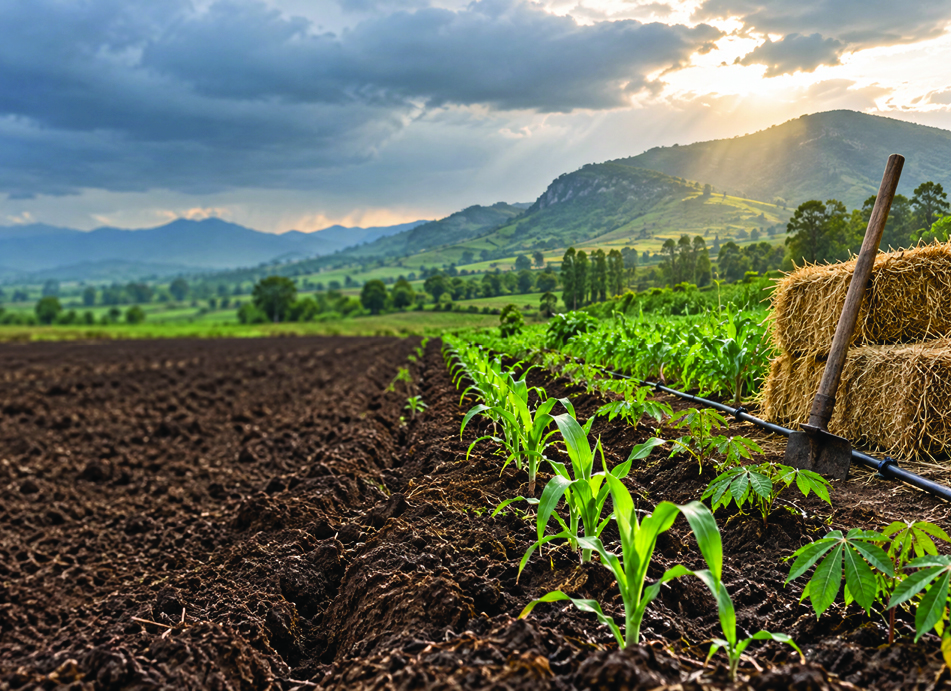
THE ministry of agriculture has urged farmers to take advantage of the early rains and plant their crops as soon as possible.
It warned that the looming El Niño phenomenon could expose crops to prolonged dry spells and threaten harvests.
Principal Secretary in the Ministry of Agriculture Sydney Simelane said farmers needed to act swiftly by planting early-maturing seed varieties to maximise the available moisture and harvest their crops before the anticipated dry conditions set in.
Simelane was speaking at Malkerns Research Station on Friday, following a technical visit by delegates attending the Second African Vegetable Forum, which was held at the Hilton Garden Inn from October 21 to 22.
He described El Niño as a natural climate phenomenon whose effects were threatening agricultural production across the Southern African Development Community (SADC) region, adding that farmers needed to adapt their practices to withstand the anticipated challenges.
The principal secretary said the ministry was particularly concerned about two critical areas of agriculture: crop production and livestock farming.
On crop production, Simelane encouraged farmers to exploit the current window of early rainfall, cautioning that the onset of rains did not necessarily guarantee sustained precipitation throughout the growing season.
“We are well acquainted with the future predictions of rainfall. However, there are times when rainfall will temporarily be experienced. Farmers should take advantage of that period and plant their crops,” he said.
He specifically urged maize farmers to consider planting early-maturing seed varieties, some of which take approximately three months to reach maturity.
Simelane warned that relying exclusively on traditional varieties that take up to six months to mature could expose farmers to substantial losses if rainfall ceased before the crops were ready for harvesting. “We are urging farmers to plant seed varieties that swiftly reach maturity so that they can promptly harvest their crops before they are destroyed by the sun,” he said.
He said early planting, combined with the selection of appropriate seed varieties, could help farmers make the most of the available rainfall and minimise the risk of crop failure.
Turning to livestock farming, Simelane warned that prolonged dry conditions could leave cattle vulnerable to hunger and nutritional deficiencies as pastures dried up and green grass became increasingly scarce.
He explained that livestock depended on grass for sustenance and essential nutrients, meaning the disappearance of grazing land during drought could severely compromise their health and survival.
The principal secretary urged farmers to supplement their animals’ diets with hay bales and provide mineral supplements, including appropriate salt blocks, to help maintain their nutritional condition.
He also cautioned farmers against allowing their cattle to travel long distances in search of water, saying exhausted and dehydrated animals could collapse or die along the way.
Instead, he encouraged farmers to ensure that water was readily available at their homesteads or nearby watering points.
Simelane said such measures could help farmers protect their livestock and sustain their herds until conditions improved.
Chief Research Officer Thembinkosi Gumedze urged farmers to rethink their traditional farming practices and embrace climate-resilient crops and diversified production systems to withstand the anticipated El Niño conditions.
Gumedze identified cassava as one of the crops farmers could consider because of its ability to tolerate relatively dry conditions compared with more water-demanding crops.
He also encouraged farmers to practise intercropping, explaining that cultivating different crops together could reduce the risks associated with relying on a single crop.
He argued that mono-cropping left farmers particularly vulnerable when adverse weather conditions destroyed their main crop, while diversification offered a better chance of securing at least part of their harvest. The discussions on climate resilience came as Eswatini hosted the Second African Vegetable Forum, bringing together policymakers, researchers and development partners to explore how traditional African vegetables could improve nutrition, strengthen farmers’ livelihoods and create new market opportunities.
Supported by Government of the Republic of China (Taiwan) through Phase II of the Taiwan–Africa Vegetable Initiative (TAVI), the forum was facilitated by the ministry of agriculture in collaboration with the World Vegetable Center (WorldVeg) and national partners.
The initiative sought to strengthen the conservation, production, consumption and commercialisation of traditional vegetables by connecting agricultural research with practical opportunities for farmers and consumers.
The 2026 forum was built on the inaugural gathering held in Nairobi, Kenya, in 2025, placing greater emphasis on the practical use and commercialisation of traditional vegetables while maintaining conservation as the scientific foundation of the initiative.
At the conclusion of the deliberations, participants developed a communiqué outlining shared priorities for the conservation, utilisation and market development of traditional vegetables, as well as guiding future regional cooperation.
Following the forum, delegates visited Malkerns Research Station where they were introduced to the country’s on-going efforts to conserve agricultural biodiversity and develop alternative food-production systems.
The visit included a tour of the genebank, where delegates were shown how seeds were conserved to safeguard plant genetic resources for future generations.
The facility plays an important role in preserving vegetable diversity, which can support future research, crop improvement and efforts to strengthen the resilience of agricultural production.
| Agricultural Sector | Identified Risk | Recommended Farmer Interventions |
|---|---|---|
| Maize & Field Crops | Mid-season dry spells and scorch risk before 6-month varieties mature | Plant immediately with early rains; select early-maturing varieties (~3 months to harvest) |
| Alternative Crops | Vulnerability of high water-demand mono-crops | Switch to drought-tolerant crops such as cassava; implement intercropping to mitigate crop failure |
| Livestock (Cattle) | Pasture depletion, nutritional deficit, starvation | Stock and supply hay bales; provide mineral supplements and nutritional salt blocks |
| Livestock Hydration | Animals collapsing or dying during long treks to distant water sources | Ensure clean water is accessible directly at homesteads or nearby local watering points |
Source: Ministry of Agriculture directives issued by PS Sydney Simelane and Chief Research Officer Thembinkosi Gumedze.
| Parameter | Details Reported |
|---|---|
| Event Name | Second African Vegetable Forum |
| Dates & Venue | October 21–22, 2026 at Hilton Garden Inn, Mbabane |
| Technical Visit | Malkerns Research Station & National Genebank (Friday tour) |
| Funding & Technical Partners | • Government of the Republic of China (Taiwan) via TAVI Phase II • World Vegetable Center (WorldVeg) • Ministry of Agriculture (Eswatini) |
| Forum Predecessor | Inaugural African Vegetable Forum held in Nairobi, Kenya (2025) |
| Core Objective | Conservation, production, consumption, and commercialisation of traditional African vegetables |
| Key Outcome | Regional communiqué outlining shared priorities for vegetable conservation and market integration |
Source: Field report by Kwanele Sibiya, Malkerns.