



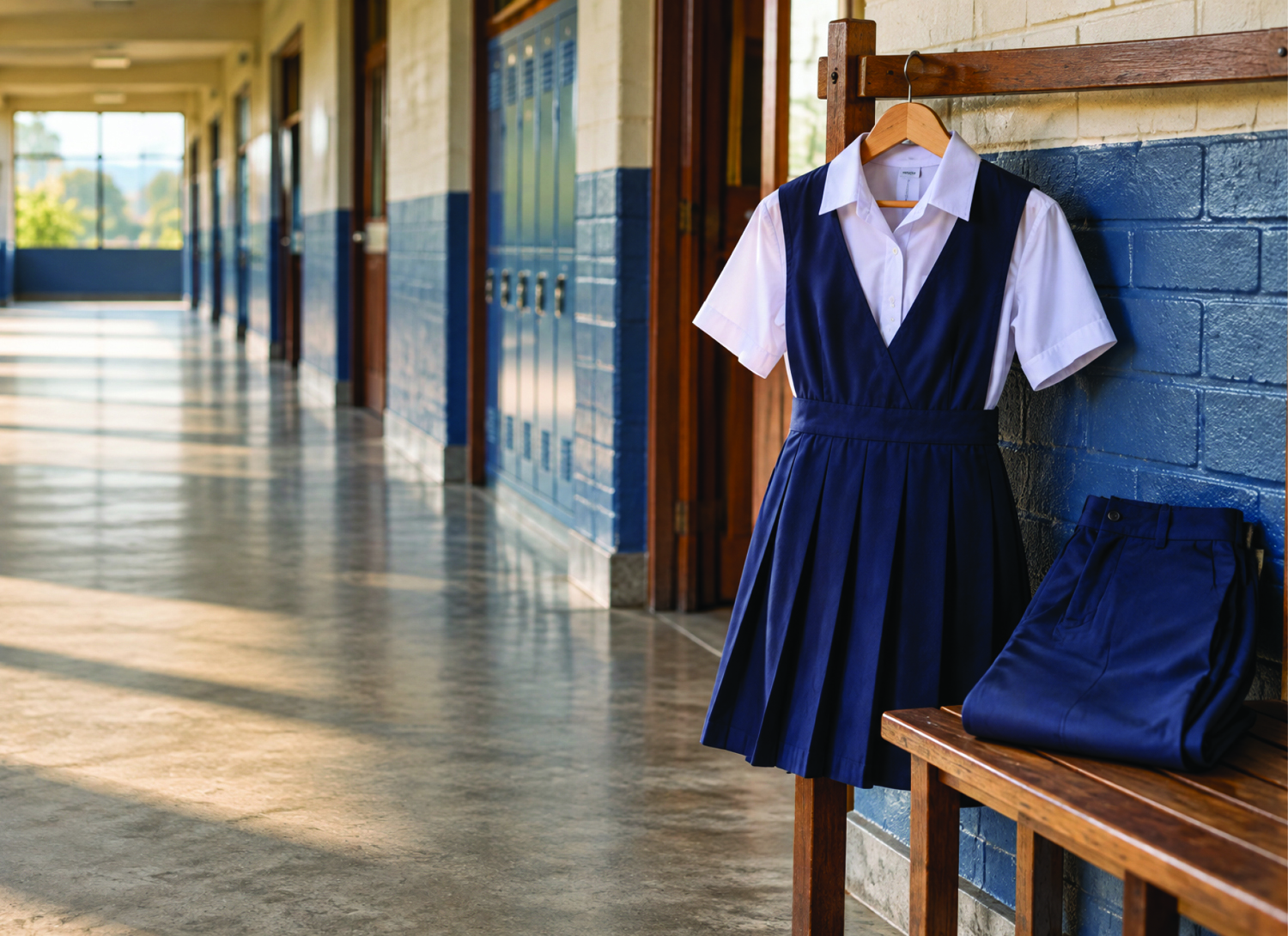
AS some schools have started introducing trousers for female pupils, the ministry of education and training moved to ban their adoption as part of the official school uniform.
Principal Secretary Naniki Mnisi has since warned headteachers against deviating from the existing uniform policy.
Mnisi said the ministry had been made aware that some headteachers were planning to introduce trousers for girls in their respective schools, but maintained that such changes would not be permitted.
She was speaking during the National Teacher’s Day commemoration held at the Metropolitan Evangelical Church on Friday, under the theme ‘Standing with Teachers: 60 Years of Protecting the Profession, Advancing its Status and Shaping our Futures’, where she was directing proceedings.
Mnisi said the ministry expected all schools to adhere to the existing uniform policy which required that female pupils wear skirts and tunics rather than trousers. She cautioned headteachers against introducing changes without following the prescribed guidelines, warning that Director of Education Dr Tholakele Mngometulu-Dlamini would visit schools that defied the policy and engage parents on the matter.
“May I encourage you headteachers to stick to the policy. Otherwise, the director of education will be visiting your schools and will be asking the parents to revisit the decision and buy new and proper school uniforms,” she said.
Just recently (September 24) Duze High School was trending on social media for introducing ‘pants for girls,’ a move many users applauded. The post drew thousands of likes and comments. Many users said pants for uniform were far better than wearing mini-skirts which they claimed was prevalent amongst school girls.
Clarifying the trousers ban, Mnisi said tracksuits have not been banned for female pupils, explaining that they remain permitted on sports days, while trousers are not allowed as part of the regular school uniform. The PS said female pupils were expected to wear skirts or tunics on ordinary school days, with tracksuits reserved for sporting activities.
She emphasised that the ministry’s position was not a blanket prohibition on trousers in all circumstances, but a requirement for schools to adhere to the approved uniform arrangements.
Mnisi said pupils were expected to comply with the prescribed dress code during school hours, while remaining free to dress as they wished once they had completed their schooling.
She argued that communities had long-established standards of decent dressing for females, which she said pupils were expected to observe while at school.
“However, for uniformity’s sake and in keeping with the moral standards we were raised to adhere to, it would be prudent for pupils to wear the expected and approved school uniform,” she said. Mnisi further revealed that the ministry was preparing to issue a policy outlining the type of school uniforms pupils should wear.
She said Cabinet was expected to advise the ministry tomorrow regarding the type and quantity of school uniforms to be worn in schools. The PS warned that allowing schools to introduce trousers as an additional uniform option could place an unnecessary financial burden on parents, particularly if the proposed garments were later excluded from the forthcoming policy. She said parents could end up spending money on trousers for their daughters, only for the items to be rendered unacceptable under the new uniform guidelines.
She said no school should introduce extravagant additional or alternative uniform items, including trousers for girls. Such would create another uniform requirement and increase the cost of education for parents and sponsors.
Mnisi said its position was firmly grounded in Circular No. 10 of 2017, which remains in force. The circular was introduced in response to concerns that the rising cost of education was making school attendance increasingly unaffordable for parents and sponsors, with uniforms and related expenses contributing significantly to the financial strain.
She said to promote access to education, the ministry directed schools to adopt one basic uniform for everyday wear, thereby eliminating the requirement for separate uniforms from Monday to Friday. She said schools were, therefore, expected to maintain their existing approved uniform arrangements rather than introduce additional garments that could increase costs for families.
“Accordingly, if the school referred to currently has a tunic and a shirt as its school uniform for girls, it should maintain the status quo so that education remains accessible to all learners,” she stated.
The PS’s ‘ban’ of pants for female pupils drew a response from Swaziland National Association of Teachers (SNAT) Secretary General (SG) Lot Vilakati who questioned the interpretation of the uniform policy and called for greater flexibility in determining what pupils and teachers should wear at school.
Vilakati said it was unfortunate that the PS had invoked the uniform policy to oppose the introduction of trousers for girls, arguing that the document should be interpreted holistically rather than selectively.
He maintained that the policy did not explicitly state that pupils should wear traditional regalia to school, yet they do, arguing that the absence of such a provision suggested that uniform requirements could be reconsidered where necessary.
“We know and understand the policy. However, there is nowhere in the policy where it says pupils should wear traditional regalia to schools. If such a provision is not found in the policy, it means that even when it comes to the issue of trousers, we can bend the rules until the matter is formally incorporated,” he said.
Vilakati said SNAT would advocate for female pupils who preferred trousers to be allowed to wear them once the issue of school uniform was formally reviewed.
He added that the association would extend the same argument to teachers, saying female educators should also be permitted to wear trousers, provided they dressed responsibly and maintained a presentable appearance while carrying out their duties. “There is no harm in female pupils wearing trousers in schools because, after all, they do wear trousers outside the school premises. At the end of the day, it is not the trousers that are doing the actual learning,” he said. The SG called for school uniforms to be phased out, although he acknowledged that they had been introduced, in part, to prevent differences in pupils’ economic circumstances from becoming too visible.
He said uniforms played an important role in promoting a sense of equality among learners, but questioned the practice of sending pupils out of class because they were not wearing the prescribed attire, particularly when their parents could not afford to buy the required uniform. Vilakati said such circumstances should not be allowed to interfere with pupils’ access to education, arguing that a child’s inability to afford a uniform should not become a barrier to learning. Eswatini Principals Association (EPA) President Armstrong Dlamini said the ministry of education and training was responsible for determining and directing education policy in the country therefore headteachers as employees, were expected to implement the ministry’s directives rather than act contrary to them.
“We cannot go against the advice of the ministry. Ours is to follow that directive as an organisation because we are employees after all and when the employer tells us what to do, we cannot be reluctant to adhere to the directive,” Dlamini said.
He acknowledged that trousers could help protect pupils against cold weather, particularly during winter, however, the association would enforce the ministry’s position.
Dlamini maintained that, regardless of the potential benefits of trousers, headteachers were obligated to comply with the directives issued by the ministry. On the other hand, Eswatini Schools Committee and Parents Association (ESCAPA) President Cedric Chirwa said the matter should also be examined in light of the rights guaranteed to pupils under the country’s Constitution. Chirwa said it was important to establish what the Constitution provided regarding pupils’ dress codes, particularly in relation to freedom of expression. “We are all governed by the Constitution, and when you consider how people dress, you will figure out that it has everything to do with how they express themselves, as people can express themselves based on how they choose to dress,” he said.
He cited the wearing of traditional regalia by Emaswati as an example of how clothing could communicate cultural identity and national pride. Chirwa said the ministry should, therefore, exercise caution when prescribing what pupils could wear, ensuring that its directives did not infringe on their constitutional rights.
| Stakeholder / Organisation | Representative | Core Stance & Key Argument |
|---|---|---|
| Ministry of Education and Training | Naniki Mnisi (Principal Secretary) | Enforcing ban on trousers for girls under Circular No. 10 of 2017; cites community moral standards and avoiding financial strain on parents. |
| Swaziland National Association of Teachers (SNAT) | Lot Vilakati (Secretary General) | Opposes ban; advocates flexibility for female learners and teachers; argues trousers don’t affect learning and calls for phasing out costly uniforms. |
| Eswatini Principals Association (EPA) | Armstrong Dlamini (President) | Acknowledges weather benefits of pants, but insists headteachers are government employees bound to enforce ministry directives. |
| Eswatini Schools Committee & Parents Association (ESCAPA) | Cedric Chirwa (President) | Urges caution; highlights constitutional rights to freedom of expression and identity in determining student attire. |
Comparative summary of positions taken by key educational bodies following the Ministry’s pronouncement.