



The first phase of the Mkhondvo-Ngwavuma Water Augmentation Project (MNWAP) is projected to cost approximately E6.06 billion, with financing arrangements covering major water infrastructure and irrigation development components.
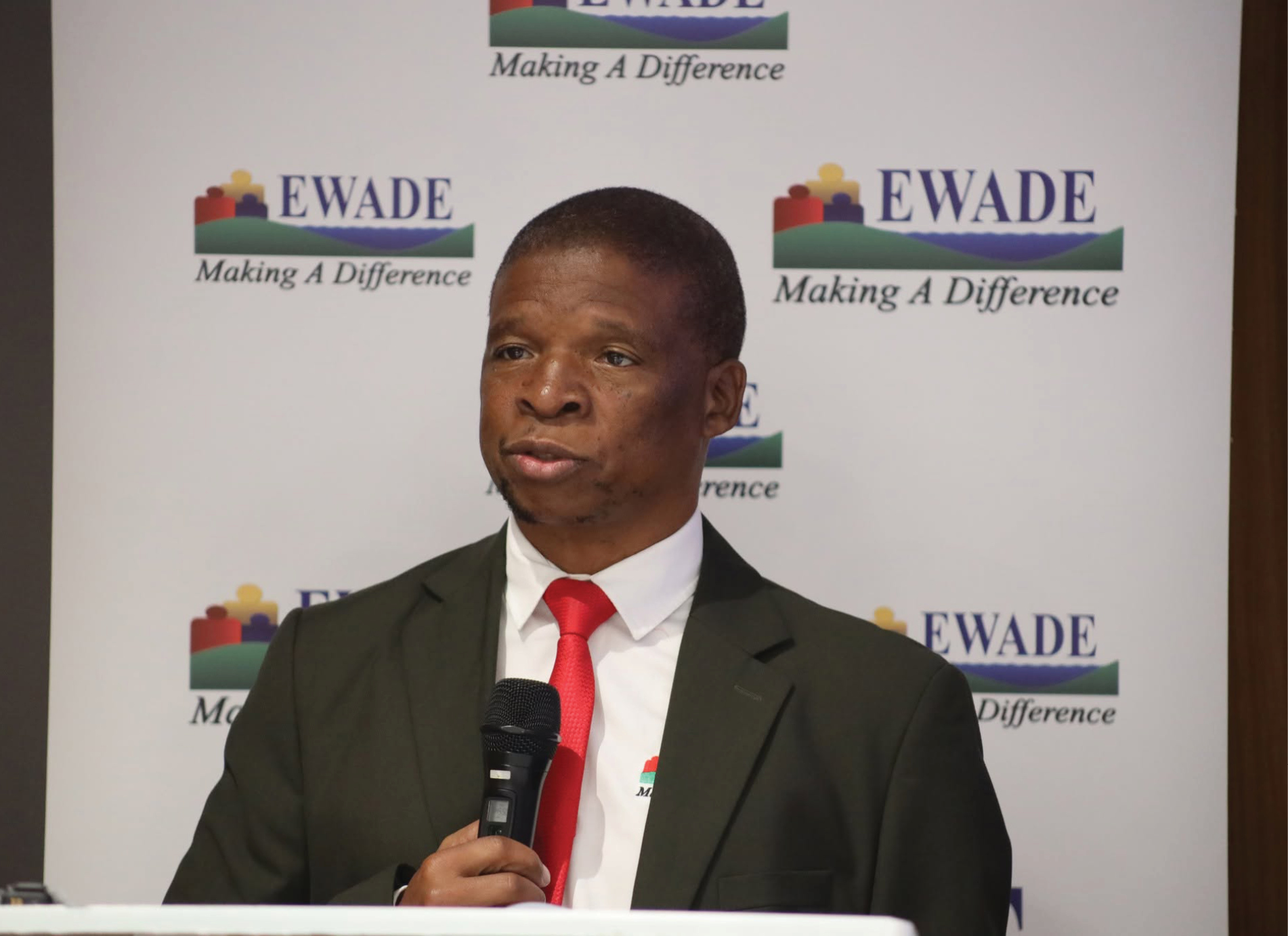
According to Eswatini Water and Agricultural Development Enterprise (EWADE) Chief Executive Officer Dr Samson Sithole, the financing package comprises E2.629 billion from the African Development Bank (AfDB) for the construction of Mpakeni Dam and associated works by Sakhalive Joint Venture.
The other is E2.084 billion from the same institution for the main conveyance system (MCS), being undertaken by Indian contractor GVPR Engineers.
He said the OPEC Fund has committed E360 million towards the secondary distribution system (SDS), in-field distribution and on-farm development for Maloma I and II, being implemented by the Chinese-led ZTCS Joint Venture.
Additionally, EWADE has proposed financing of E987 million from the Arab Bank for Economic Development in Africa (BADEA) for the secondary distribution system serving the St Philips and Mconcwane/Mcathuvane irrigation areas. The proposed borrowing is awaiting parliamentary approval.
Collectively, the four financing components amount to E6.06029 billion. Infield and on-farm development at St Phillip’s and Mconcwane/Mcathuvane will be financed by the private sector.
The financing breakdown provides context to recent public discussions about MNWAP’s projected costs following the tabling of the ministry of finance portfolio committee’s report on the BADEA (Mkhondvo-Ngwavuma Water Augmentation Programme) Loan Bill No. 19 of 2026, which highlighted varying cost estimates for the broader programme based on different infrastructure scopes and development scenarios.
Dr Sithole said MNWAP represents a significant investment in Eswatini’s economic transformation, with the potential to expand agricultural production, strengthen food security, create employment and attract private sector investment.
“MNWAP is about unlocking the country’s agricultural potential and building a stronger productive economy. Reliable irrigation infrastructure will enable large-scale commercial agriculture, create opportunities for farmers and agro-processing enterprises, generate employment and contribute to increased economic activity, rural incomes and export earnings,” he explained.
The CEO emphasised that EWADE recognised its responsibility to ensure that the investment delivers value to the country, with strict financial management and project oversight central to implementation. He expressed commitment to ensuring that the project is completed within approved budgets, without compromising quality or delivery standards.
He also acknowledged that this required rigorous contract management, effective procurement controls, continuous monitoring of project expenditure and early identification of risks that could result in additional costs.
“We will continue working closely with contractors, consultants and our development partners to strengthen accountability and ensure that every investment translates into the intended infrastructure and development outcomes,” he said.
MNWAP is being implemented in phases, with Phase I focusing on the construction of Mpakeni Dam, the main conveyance system and downstream irrigation infrastructure serving approximately 4 600 hectares in Maloma I and II, St Phillip’s and Mconcwane/Mcathuvane.
Phase II will extend irrigation development into greater Lavumisa, covering approximately 18 000 hectares in areas, including Somntongo and Matsanjeni. Its infrastructure scope comprises the construction of Ethemba Dam, tunnel and associated works, the downstream main conveyance, secondary distribution system and infield distribution system.
Together, the two phases are expected to unlock approximately 25 000 hectares for irrigated agriculture, creating opportunities for increased agricultural production, commercial farming and employment, while positively impacting an estimated 100 000 Emaswati and contributing to broader economic development.