


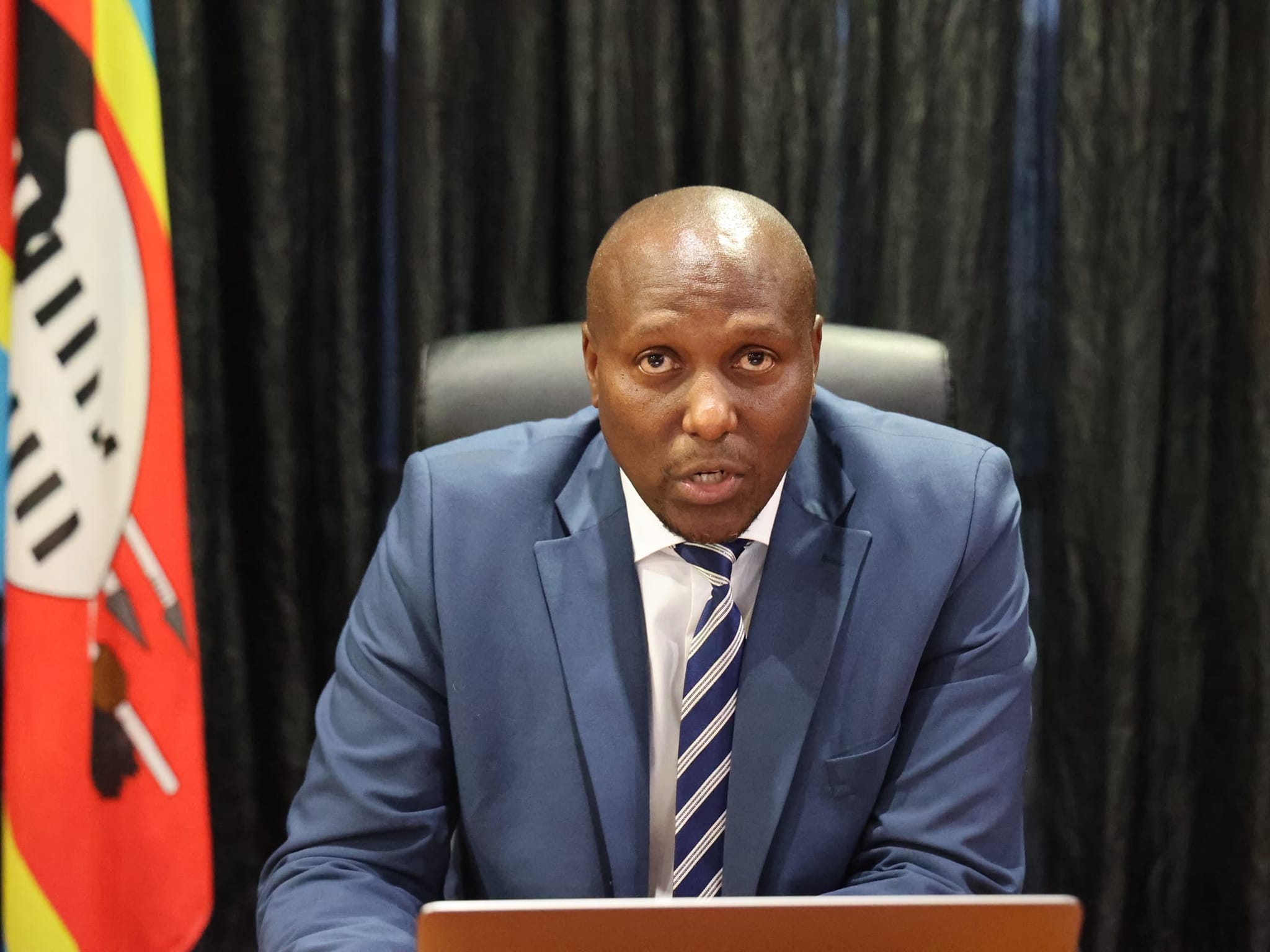
Prime Minister Russell Dlamini has called on Parliament to develop a culture of building the country and being constructive, rather than one characterised by fighting and hurling insults at one another.
Dlamini was speaking yesterday during the adoption of responses to motion No.7 of 2026, which questioned his alleged disruptive leadership style in Parliament.
The prime minister said it was clear that MPs had read and understood his responses. He said some issues raised by them over and seconder of the motion when it was first debated were misplaced because they did not explain his leadership style.
Dlamini said the disruptive leadership style was an established approach that could not be bent to suit individual interpretations, particularly by those hearing about it for the first time.
“It is important for this House to develop a culture of building rather than destroying. It is not constructive to bend things and turn them towards where we want them to be,” he said.
He said the leadership style was not limited to politics, but was also effective in business. He said his administration was trying to do things differently to accelerate development in the country.
Dlamini said the country was facing a ‘polycrisis’, particularly in the health sector, and described disruptive leadership as a necessary approach to addressing such challenges.
He urged MPs to focus on issues that were directly related to the leadership style instead of raising unrelated matters.
The prime minister said he deliberately chose not to respond to insults and comments aimed at undermining others, as doing so would implicate him in the same behaviour.
“There are words from Michelle Obama of the US who said, ‘When they go low, I choose to go high.’ I chose to go high. There are things that were asked that were genuine that I have to respond to,” he said.
He added that the government would bring the relevant reports before Parliament and share them with MPs.
Mayiwane MP Sicelo Dlamini said the prime minister’s leadership style was making him a controversial leader, particularly because of his frequent appearances on podcasts.
He claimed that the prime minister had previously made controversial remarks during podcast appearances, including saying that Emaswati did not think.
Dlamini also criticised the prime minister’s public comments concerning The Luke Commission, saying he had alleged that Emaswati were being given animal injections without presenting facts.
He said while MPs were not condoning anything improper at the facility, the prime minister should not reach conclusions before establishing the facts, particularly when people’s lives and livelihoods could be affected.
“The PM should reassure everyone that things will be okay. I do not like the style if it is being done this way. The PM should keep quiet and allow the ministers to lead, as this touches on the ministries,” he said.
He also questioned the prime minister’s remarks that the Taiwan ambassador would visit Mayiwane to donate rice, saying Parliament was a place where MPs were expected to speak and raise issues.
Dlamini said he was not being influenced by anyone to criticise the prime minister, but was merely speaking his mind while representing the interests of Mayiwane constituency.
“We asked the PM to come and speak about issues in Parliament, but each time he sits in corners and speaks ill about the MPs. My advice would be for him not to burn the bridges, because he will need us,” he said.
He claimed that Cabinet and the Judiciary were already at odds with the prime minister and warned that Parliament could become the next institution to fall out with him.
“Who will help him when he comes back here?” he asked.
Mbabane East MP Welcome Dlamini said it was painful for politicians to “grovel,” adding that doing so exposed them.
He said he had witnessed a lot of grovelling in Parliament the previous day but had never engaged in the practice himself.
Dlamini urged MPs to read political literature so that they could understand political processes and make a meaningful contribution during debates instead of becoming spectators.
He said his experience at the Pan-African Parliament, following his nomination by the MPs, had helped broaden his understanding.
“The response is far divorced from the motion.
“The PM tried to explain, and I am happy that I heard one leader saying she was going to be disruptive but noted that she was aware that she could be taken to court as the style was likely to cause commotion,” he said.
He urged MPs to take note of this, saying the prime minister had already appeared in court several times in connection with his leadership style.
‘LEADERSHIP DEPENDS ON SITUATION’
Minister of Agriculture Mandla Tshawuka says leadership is situational and called on MPs to focus on fulfilling the mandate of Sibaya rather than individuals.
Tshawuka supported the adoption of the responses but cautioned that there was no one-size-fits-all approach to leadership as different situations required different leadership styles.
He stressed that he was not taking sides but urged MPs to remember their responsibilities as parliamentarians and their accountability to the head of State, the nation and Emaswati.
He said MPs should focus on delivering on their mandate rather than dwelling on individuals or their actions.
“Let us focus on the mandate of Sibaya because that is what we will be judged by Emaswati. We need to fulfil it, and I am happy that the prime minister has listed the things that we have done positively. But the truth is that we have not completed our term of office. We need to focus on the remaining things to fulfil so that the country can be happy with the performance of the 12th Parliament,” he said.
…NO ONE WANTS TO SET YOU UP
Deputy Speaker Madala Mhlanga says no one in Parliament has an agenda to set up the prime minister so that he fails.
Mhlanga made the remarks while debating the responses to the motion on the prime minister’s leadership style.
He said Parliament and Emaswati had no reason not to support the country’s leadership, stressing that no one among MPs was seeking to deliberately set up the prime minister for failure.
Mhlanga said the responses focused largely on the government’s performance over the period but did not adequately address the concerns raised by the movers of the motion.
On the issue of disruptive leadership, he said he understood that such an approach could involve a period of rebuilding after something had been disrupted or destroyed.
However, he stressed the need for a clear plan on what should happen after disruption to ensure that progress could be made.
He said there were instances where such a leadership style could affect relationships with people they worked closely with, making it important to have a strategy for rebuilding those relationships and moving forward.