



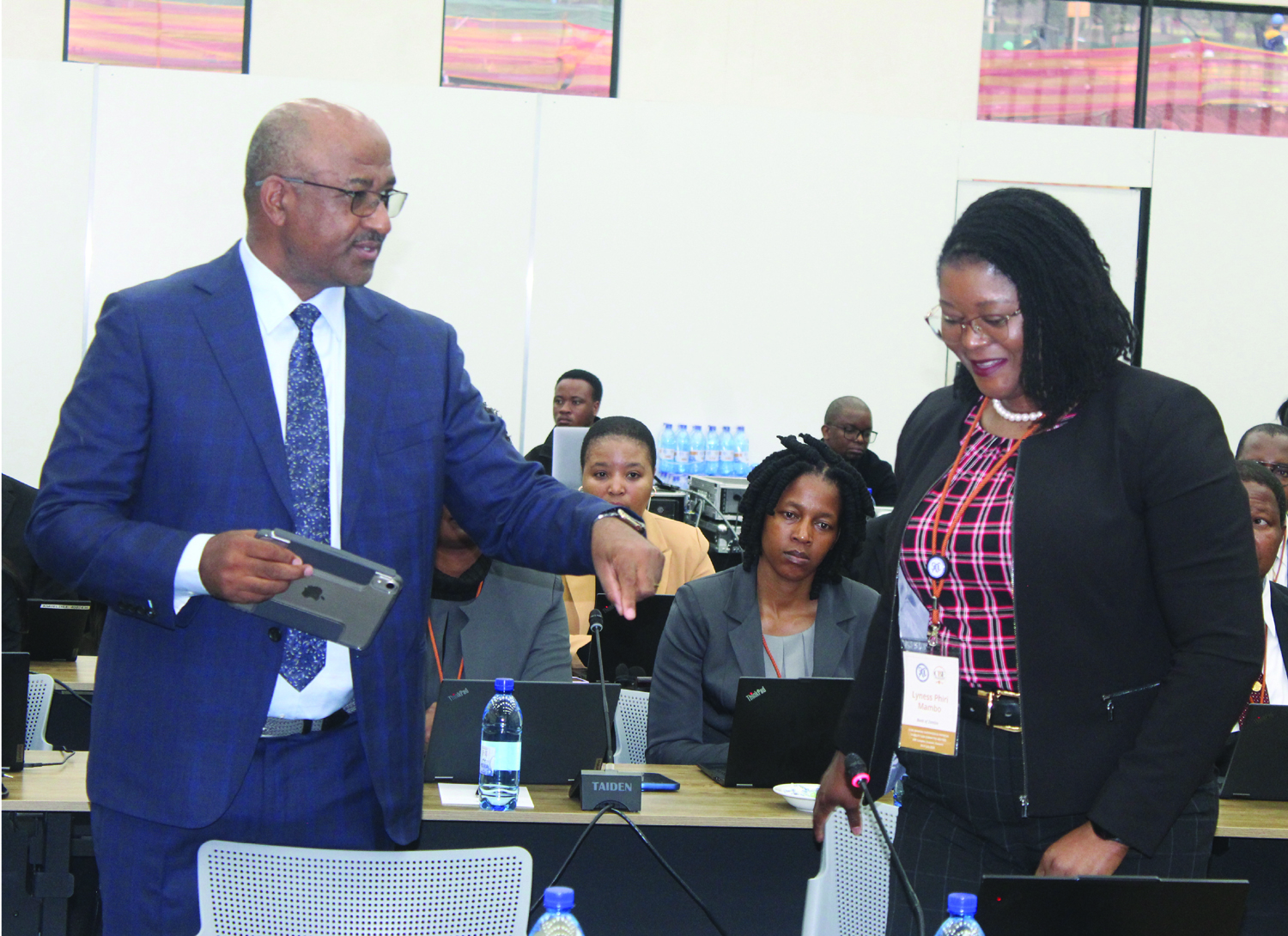
Central Bank of Eswatini (CBE) Governor Phil Mnisi says he is “taking drastic action” to reduce the cost of banking and financial services, promising measures aimed at making them more affordable.
Mnisi said the central bank had already begun implementing initiatives to lower banking costs and improve access to financial services for Emaswati.
He made the remarks during an interview with the Observer Business Desk shortly after officially opening the Committee of Central Bank Governors (CCBG) Subcommittee on Banking Supervision and Financial Stability meeting at the CBE headquarters in Ezulwini. It is attended by SADC countries for the next two days.
“I want to inform the nation that we – and I am taking drastic actions to ensure that the cost of banking and financial services in this country is reduced and is affordable to the population. We have already started that process,” Mnisi said.
The governor said the CBE was putting in place infrastructure and systems designed to support a more affordable financial sector, although he did not disclose the specific measures being introduced.
His comments come amid growing scrutiny of commercial bank charges following a recommendation by Parliament’s Finance Committee calling for a comprehensive review of banking fees in Eswatini.
The committee has urged the Ministry of Finance to engage the CBE to conduct a bank-by-bank comparative analysis of charges applied by local commercial banks.
The review should also compare Eswatini’s banking fees with those charged in other countries within the Southern African Customs Union (SACU) and Common Monetary Area (CMA).

“The Minister of Finance is hereby requested to engage the Governor of the Central Bank, whose role is to monitor and supervise the banking sector, to do a bank-to-bank comparative analysis of the bank charges applied by the local banks. He should also extend the comparative analysis between our banks and those in the SACU region or CMA,” the committee stated in its report.
The committee’s concerns centre on the affordability, consistency and transparency of banking fees.
Legislators argued that some charges appear excessive compared with those in neighbouring markets, while differences in pricing among banks for similar services have raised questions about fairness.
During parliamentary discussions, members highlighted an example where customers were reportedly charged between E79 and E89 to withdraw E4,000 in cash. They argued that such costs placed an unnecessary burden on consumers and required regulatory attention.
Responding to the concerns, the Ministry of Finance clarified that the bank referenced during parliamentary debate had not increased its charges.
Instead, the institution had adjusted its systems so that transaction fees are displayed immediately rather than accumulated and reflected at the end of the month.
The ministry also emphasised that commercial bank charges are regulated by the CBE, and that any changes to approved charges require regulatory approval.
The CBE’s mandate includes regulating and supervising the banking sector to promote stability, efficiency and consumer protection.
The Central Bank also operates a banking ombudsman service that allows customers to seek assistance with unresolved complaints after first exhausting their bank’s internal complaints process.