NEWLY-ELECTED Swaziland National Association of Teachers (SNAT) President Sikelela Dlamini has cautioned the incoming National Executive Committee (NEC) to draw the line between a political party and a trade union.
He emphasised that SNAT is a trade union and not a political party.
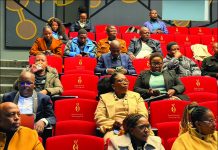
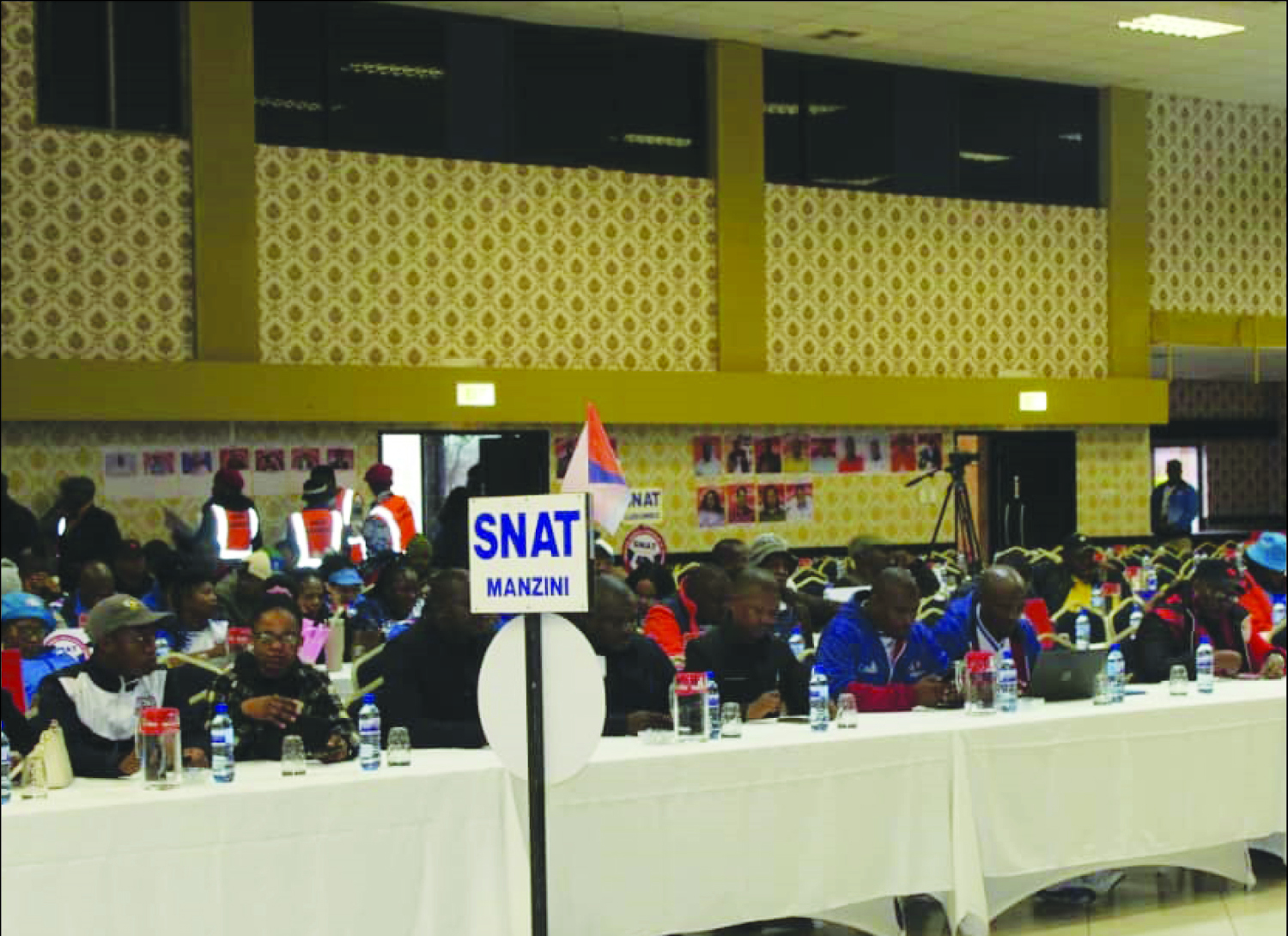
Dlamini shared these sentiments when making his address on Wednesday during the 2026 SNAT 80th–72nd Annual Conference, held at Esibayeni Lodge in Matsapha from September 28-30 under the theme: ‘Empowering Union Members to Deepen, Defend and Advance Workers’ Collective Bargaining’.
In his maiden address as president, Dlamini said he was greatly honoured and humbled by the responsibility bestowed upon him by the SNAT collective.
He said the delegates at the conference had made a clear statement through the election of new leadership.
“I stand before you today mindful of the nature and the scale of our challenges as SNAT. The challenges that we come across are posing an existential threat to our organisation,” he said.
Dlamini expressed gratitude to all SNAT members who participated in the electoral process, which began in February at branch level, before progressing through the regions and culminating in the national conference.
He also urged those who had lost in the elections not to view the outcome as the end of their leadership journey, but to understand that their time would come.
However, he cautioned those who emerged victorious that winning an election was only the beginning, as the responsibility awaiting them was immense.
“It is very important that as we congratulate those who won, to quickly remind them that the task that lies ahead is huge and enormous. Genuine unity is an inescapable need for us if this union is to resonate with the masses, who are the owners or principals of the union,” he said.
Dlamini said he was encouraged by the fact that many SNAT leaders and members had taken the oath and pledged themselves to serving teachers and the broader membership.
He said, as the political head of the organisation, his office would ensure that the SNAT leadership remained guided by the union’s constitutional principles.
Dlamini said the organisation’s constitution was its ‘Bible’ and navigational system, which would guide the NEC throughout its four-year term.
He said his focus would be on Clause 5 of the SNAT Constitution, which outlines the organisation’s foundational principles.
“The principles are many. Actually, they are five in all, but I want to talk about only two. It is important to always highlight that it is one of our principles to say SNAT shall always be guided by the principles of democracy, human rights and social justice,” he said.
He also highlighted the principle that SNAT should remain self-governing and should not be subjected to the control of any political or religious organisation.
“Trade unions are political organisations, but not political parties,” he said.
Dlamini said he was emphasising the distinction because the Principal Secretary from the Southern African Development Community Teachers’ Organisation (SADTO)-KZN Nomarashiya Caluza had also spoken about the issue during the conference and emphasised that trade unions should not become political parties.
“It is very important for us to always highlight that trade union and political parties go to bed together. They have got similar genes and the blood that flows in their veins is similar,” he said.
However, he explained that trade unions could be described as political organisations, but remained distinct from political parties. Dlamini said there were two main reasons why trade unions could be considered political organisations. Firstly, he said, trade union leaders were elected through voting, just like political office bearers. Secondly, trade unions dealt with matters relating to public policy and public administration.
“Trade unions are political organisations, but not political parties, and all political parties are unions, but not trade unions,” he said.
He said it was important for the incoming leadership to understand this distinction as it took charge of the teachers’ union.
Dlamini also reflected on the meaning of the word ‘union’, saying it essentially referred to unity and could apply to any situation where people agreed to come together around a common objective.
He said trade unions and political parties could share certain characteristics and even collaborate on issues of common interest, while maintaining their separate identities.
“We must be able to draw the line between the two, and we must always know that there is a way where the two organisations are going to collaborate as they advance their mandates,” he said.
‘SNAT traversing rugged terrain’
TURNING to the challenges facing teachers, Dlamini said SNAT was currently traversing what he described as a “very rugged terrain,” characterised by mounting challenges within the education and labour sectors.
Among the challenges, he cited the casualisation of employment for teachers, dilapidated teachers’ houses, extremely low salaries for some educators and a lack of adequate materials and equipment in schools.
He also raised concerns about the curriculum being implemented in schools, particularly the Competency-Based Education (CBE).
“Nowadays we have got the Competency Based Education curriculum. We know as educators that we are advancing a curriculum that is devoid of quality. That is why the learners that we produce lack the competitive edge even for them to be able to compete in the outside world, and that is unfortunate,” he said.
Dlamini said the leadership renewal within SNAT was taking place at a time when, in his view, the labour space in the country had been reduced.
He alleged that trade unions were unable to fully exercise some of their rights. He referred to October 2021, when the then minister of housing and urban development made a declaration affecting public gatherings and actions by trade unions.
Dlamini said the matter was subsequently subjected to scrutiny at regional and international level through the Trade Union Congress of Swaziland (TUCOSWA).
He alleged that government had promised that the matter would be addressed internally through a mediation process, but claimed that this had not happened.
“When that kind of a declaration by the minister was subjected to public scrutiny at the regional and global spaces through TUCOSWA, the government of Eswatini promised that the issue was going to be addressed internally through the internal mediation process. But we are able to see that the government is not in any sense trying to attain that kind of a promise that they made,” he alleged.
Dlamini said this had left trade unions with limited space to exercise their rights. He further alleged that even when unions were allowed to march, such action was subject to government approval.
He said this was not the kind of environment in which trade unions should operate, adding that the incoming SNAT leadership would have to confront these challenges while rebuilding unity and strengthening the organisation’s ability to represent teachers.