



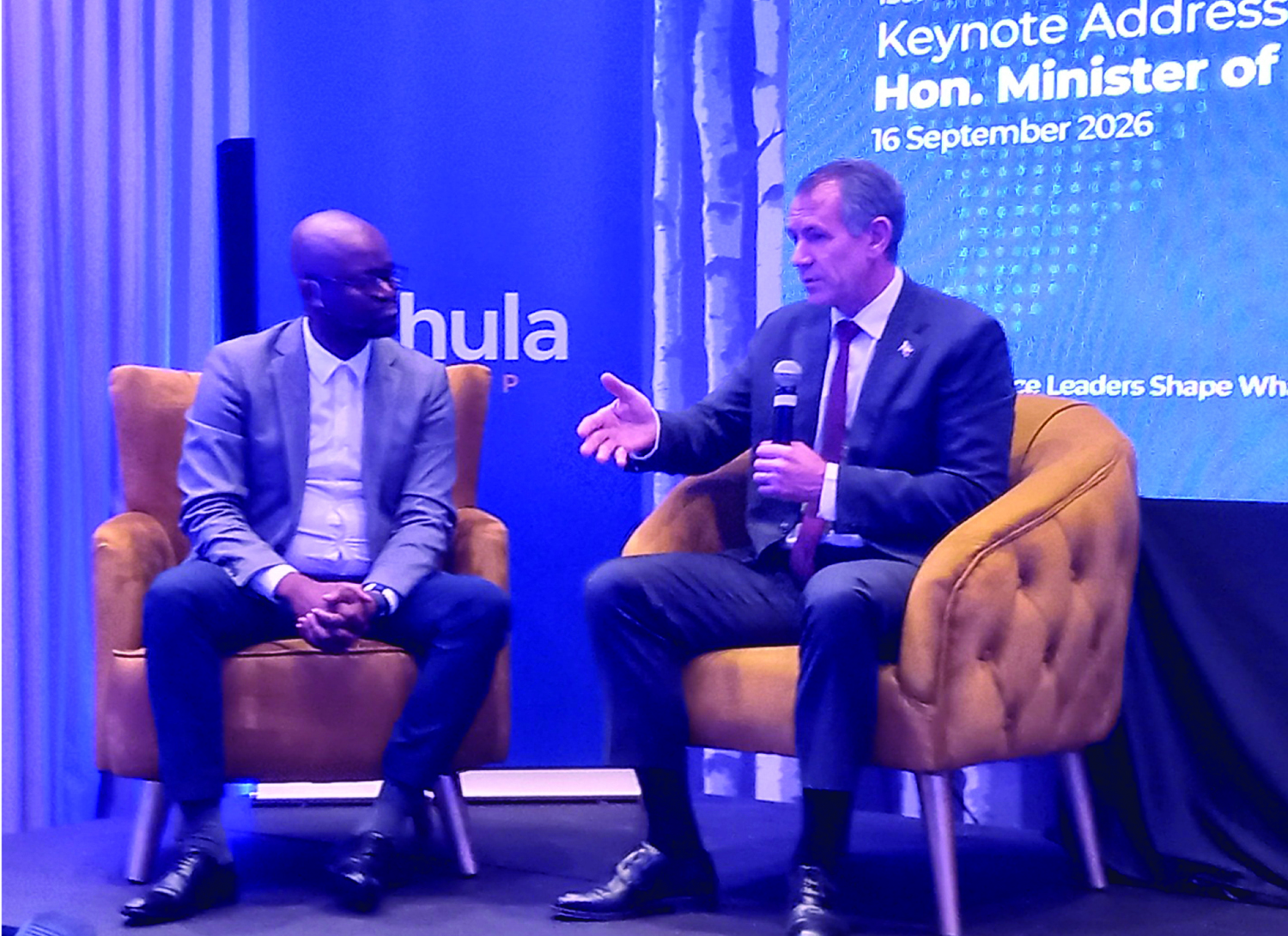
MINISTER of Finance Neal Rijkenberg has sounded an alarm that the kingdom is in a deep unemployment crisis and requires urgent action from government, business and society.
Speaking during a question and answer session at the inaugural Future of Finance Summit hosted by Khula Group at the Hilton Garden Inn yesterday, Rijkenberg delivered a blunt assessment of the country’s labour market, saying joblessness remains one of Eswatini’s biggest economic threats.
“But a critical, critical problem is unemployment,” the minister said. “And I’m not going to sugar coat this. We have a crisis and that is really the way I want to put it.”
His comments come as official labour market data continues to show unemployment at extremely high levels.
The 2023 Labour Force Survey recorded unemployment at 35.4%, rising from 33% in 2021. The same survey showed youth unemployment at 48.7%, highlighting the difficulty young people face entering the labour market.
Rijkenberg said solving unemployment was central to addressing poverty and improving living standards.
“If we solve that crisis, it solves the poverty problems,” he said. “We all need to do what we can to get Emaswati employed.”
The minister said economic growth alone would not be meaningful unless it translated into jobs.
He argued that government, businesses and other stakeholders needed to work together to create opportunities for citizens.
The challenge remains significant. The Central Bank of Eswatini has previously highlighted unemployment, skills mismatches and limited employment opportunities as major structural constraints affecting the economy.
However, recent company survey data from the Central Bank and ministry of economic planning showed some improvement in employment among surveyed companies, with employment levels increasing by 2.7% in 2023, driven by sectors including agriculture, tourism, wholesale and retail.
For Rijkenberg, the solution requires more than government intervention.
“This is not something government can solve alone,” he said. Businesses must expand, invest and create opportunities for citizens seeking work.

Public debt to rise
GOVERNMENT expects public debt to rise temporarily as it finances development projects before declining under its medium-term fiscal plan.
Finance Minister Neal Rijkenberg said Eswatini’s debt-to-GDP ratio could move towards 50% before returning to about 45% over the five-year fiscal framework.
“I’m being totally open and transparent with everybody,” he said. “It’s probably going to go to 50% debt-to-GDP ratio.”
Rijkenberg said government had already identified which projects would receive funding and which would not, as Cabinet worked to maintain fiscal discipline. He said debt levels remained manageable but warned that higher levels could create pressure if economic growth does not improve.
“The moment we get to the 60%-ish, we’re going to be in distress as government,” he said.
The minister linked borrowing to efforts to push the economy into a stronger growth phase, saying growth had improved from the historical average of around 2.7%.
The challenge now is ensuring borrowed funds support productive investments that strengthen the economy and create employment.
The Central Bank of Eswatini and international institutions have repeatedly emphasised the importance of sustainable public finances, private-sector growth and investment to support long-term economic stability.
BETTER LIVES, BIGGER LOANS
MANY Emaswati may be living better than they did years ago, but rising debt obligations are creating new financial pressures, said Minister Rijkenberg.
He argued that the country’s cost of living concerns are partly linked to increased borrowing and changing social expectations.
“If we need to be honest, it is actually – we are better off,” he said. “It’s just that we are probably under worse cashflow pressure because of our loans that we’ve taken out.”
Rijkenberg said households often borrow not only for essential needs but also because of social pressure to maintain certain lifestyles.
“The moment you start doing better, more finance is available to you to load, and we are naturally inclined to take on too much debt,” he said.
Rijkenberg pointed to changes in living standards over the past decade, arguing that many citizens now have improved homes, vehicles and access to goods compared with previous generations.
However, household financial pressure remains a concern.
The Central Bank of Eswatini has previously warned about financial vulnerabilities, including concerns around asset quality in the banking sector and household pressures.
The minister’s comments highlighted a growing economic debate: whether improved consumption reflects genuine wealth creation or increased reliance on credit.
Banks and financial institutions have expanded access to loans, allowing households to purchase homes, vehicles and other assets.
However, increased borrowing can reduce disposable income as households commit more earnings to repayments.