



THE United States deportees that have been in the care of His Majesty’s Correctional Services (HMCS) for close to a year now are in good health.
Human rights lawyer Sibusiso Nhlabatsi said they are also living under acceptable conditions.
The total of 17 deportees arrived from the United States in groups; the first was on July 15, 2025, when five men from Vietnam, Yemen, Cuba, Jamaica and Laos were transferred to the kingdom.
A second group of 10 men from countries including Cambodia, Chad, Cuba, Ethiopia, Haiti, the Philippines and Vietnam arrived on October 6, 2025, followed by four men from Somalia, Tanzania and Sudan on March 11.
Two of the deportees; one from Jamaica and another from Cambodia, were successfully repatriated to their respective home countries.
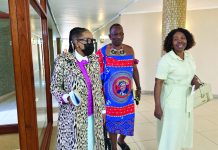
Nhlabatsi further revealed that he has finally been granted access to the foreign nationals being held at HMCS in Matsapha, marking a significant development after months of legal battles over his attempts to meet the deportees.
The lawyer said the deportees appeared to be in good health, although their biggest concern was that they remained confined in a correctional facility despite not being criminals.
When asked whether they had access to Wi-Fi as had been reported in other platforms, Nhlabatsi confirmed, saying the deportees were not criminals that should be imprisoned.
He explained that while the deportees were accommodated under conditions different from those of convicted inmates, it remained inappropriate for them to be housed in a prison facility.
“They are not criminals who need to be incarcerated. Before they left the United States, some of them lived freely in America because they had already completed their prison sentences,” said Nhlabatsi.
The lawyer emphasised that public perception of the deportees had been distorted, arguing that many had long since served their sentences and had been rehabilitated.
“The deportees are not barbaric criminals as had initially been portrayed.
“Some committed offences when they were still young, served their jail terms and received rehabilitation certificates confirming they could be reintegrated into society,” he said.
To substantiate the lawyer’s point that the deportees were not criminals, other countries housed US deportees sent to their countries in hotels. One of such countries is Equatorial Guinea where authorities reportedly detained the deportees in a hotel while processing their cases. Equatorial Guinea received three separate deportation flights this year, including individuals who had previously been granted protection from removal by United States immigration authorities.
Some of the deportees were eventually returned to their countries of origin after asylum was deemed unavailable under the country’s system.
When asked about progress in having the individuals sent to their home countries, Nhlabatsi said repatriating the deportees was not a straightforward process, as international law required authorities to determine whether they would face persecution if returned.
He explained that repatriation also depended on whether an individual was willing to return home, adding that some had fled their countries because of persecution and therefore could not legally be sent back.
According to the lawyer, organisations such as the International Organisation for Migration (IOM) and the United Nations High Commissioner for Refugees (UNHCR) play a critical role in assessing each case. He said a vetting process was necessary to determine which deportees could safely return to their home countries, which could be resettled in third countries, and which had no viable destination.
“For those who cannot be repatriated or resettled elsewhere, the government of Eswatini will ultimately have to find ways of integrating them into society. Unfortunately, there are individuals among the current deportees who fall into that category,” stated Nhlabatsi. He cited one deportee who was released from a US prison in 1991 but declined to return to his country of origin.
Instead, the man remained in the United States under an Immigration and Customs Enforcement (ICE) Order of Supervision, requiring him to report periodically to immigration authorities, comply with travel restrictions and notify officials of any change of address.
Nhlabatsi’s access to the deportees comes months after the Supreme Court upheld their constitutional right to legal representation while being held in Eswatini under the deportation arrangement with the United States.
At the time, HMCS maintained that correctional officers could not facilitate meetings because the deportees allegedly said they did not know Nhlabatsi, while also claiming he had failed to provide the names of those he wished to visit.
Nhlabatsi rejected the assertions, arguing that the authorities were not fully complying with the court order.
The Supreme Court dismissed HMCS’ appeal and ruled that the deportees were entitled to legal representation despite not facing criminal charges in Eswatini, paving the way for the lawyer’s eventual access to the detainees.