



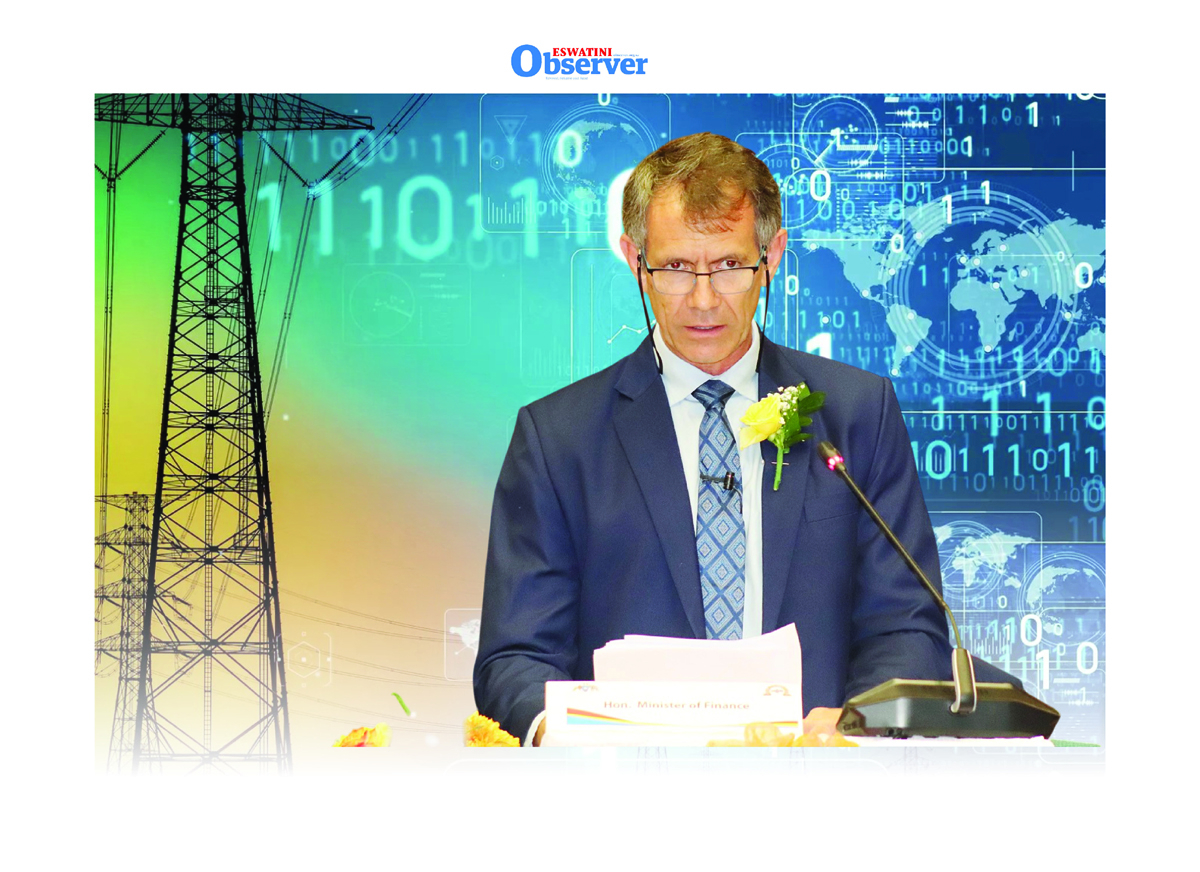
MINISTER of Finance Neal Rijkenberg has revealed that the E200 million electricity tariff hike cushion extended to Eswatini Electricity Company (EEC) was taken from an E800 million loan guarantee scheme.
Rijkenberg said this was under the Public Finance Management.
He revealed this during the recent Finance in Focus, where he outlined government’s ongoing efforts to stabilise the economy and shield households from the impact of rising fuel and electricity costs. Rijkenberg said the loan guarantee scheme had provided government with a financial buffer to assist EEC during a period of increasing operational and supply costs, which had placed pressure on electricity tariffs.
“Fortunately, we had the loan guarantee scheme within the Paris State laws, which had about E800 million in it, and E200 million has now been allocated towards supporting EEC,” he said.
He explained that the facility was designed as a loan guarantee scheme, meaning government would continue working on financial structures to soften the financial burden on the electricity utility while ensuring sustainability and accountability.
According to the minister, the support to EEC helped reduce the magnitude of the tariff increase, although electricity prices remained high due to broader economic pressures and the cost of power supply.
Rijkenberg acknowledged that the simultaneous increase in electricity and fuel prices was a major concern for government, as it would directly affect homesteads and businesses across the country.
“It is really very sad to see the increase in fuel price and the increase in electricity price hit at the same time. The impact on homesteads is going to be very tough,” he said.
He assured the nation that government had taken steps to cushion the impact by engaging regulators and implementing financial support mechanisms, even though the final electricity tariff adjustment remained significant.
ALSO READ | ‘No more Editors Forum meetings’
The minister emphasised that government had to strike a balance between providing support and maintaining sound fiscal principles, particularly the user-pays principle in utilities such as electricity and water.
“One cannot keep taxing people and paying someone else’s electricity. The principle of the user pays is critical because those who use electricity must pay for it,” he explained.
Rijkenberg said government’s role was to regulate and cushion where possible, but not to fully subsidise electricity consumption using taxpayer funds, as this would create long-term financial challenges.
He added that the support extended to EEC through the loan guarantee scheme played a key role in easing the financial pressure on the utility and ensuring continued service delivery.
The finance minister also revealed that government was engaging international concessional funders to secure additional budget support and strengthen the country’s financial position.
He said meetings were ongoing with development partners such as the World Bank, African Development Bank and the OPEC Fund to explore concessional financing opportunities.
“We will be speaking to different concessional funders, including the World Bank, African Development Bank and OPEC Fund, to see what they can do to support us as a country and raise budget support funding,” he said.
Rijkenberg noted that key discussions would take place in Washington, DC, where government officials would meet with international financial institutions to negotiate funding support and discuss economic priorities.
He said these engagements were critical in ensuring that the country continued to access affordable funding to sustain development programmes and manage economic pressures.
On fuel prices, the minister commended the minister of natural resources and energy for strengthening the fuel stabilisation fund, which has played a crucial role in cushioning fuel price increases.
He revealed that the fund had grown significantly from about E300 million to nearly E1 billion through proper investment and disciplined financial management.
According to Rijkenberg, the fuel stabilisation fund is built through contributions from fuel users when prices are low, allowing government to accumulate reserves that can be used to subsidise prices during periods of global price increases.
“Our government is heavily subsidising fuel through the fuel stabilisation fund, which helps reduce the impact of global price shocks on consumers,” he said.