



YOUTH unemployment in the country remains alarmingly high, with 56% of young people out of work, particularly those with lower levels of education and those living in rural areas.
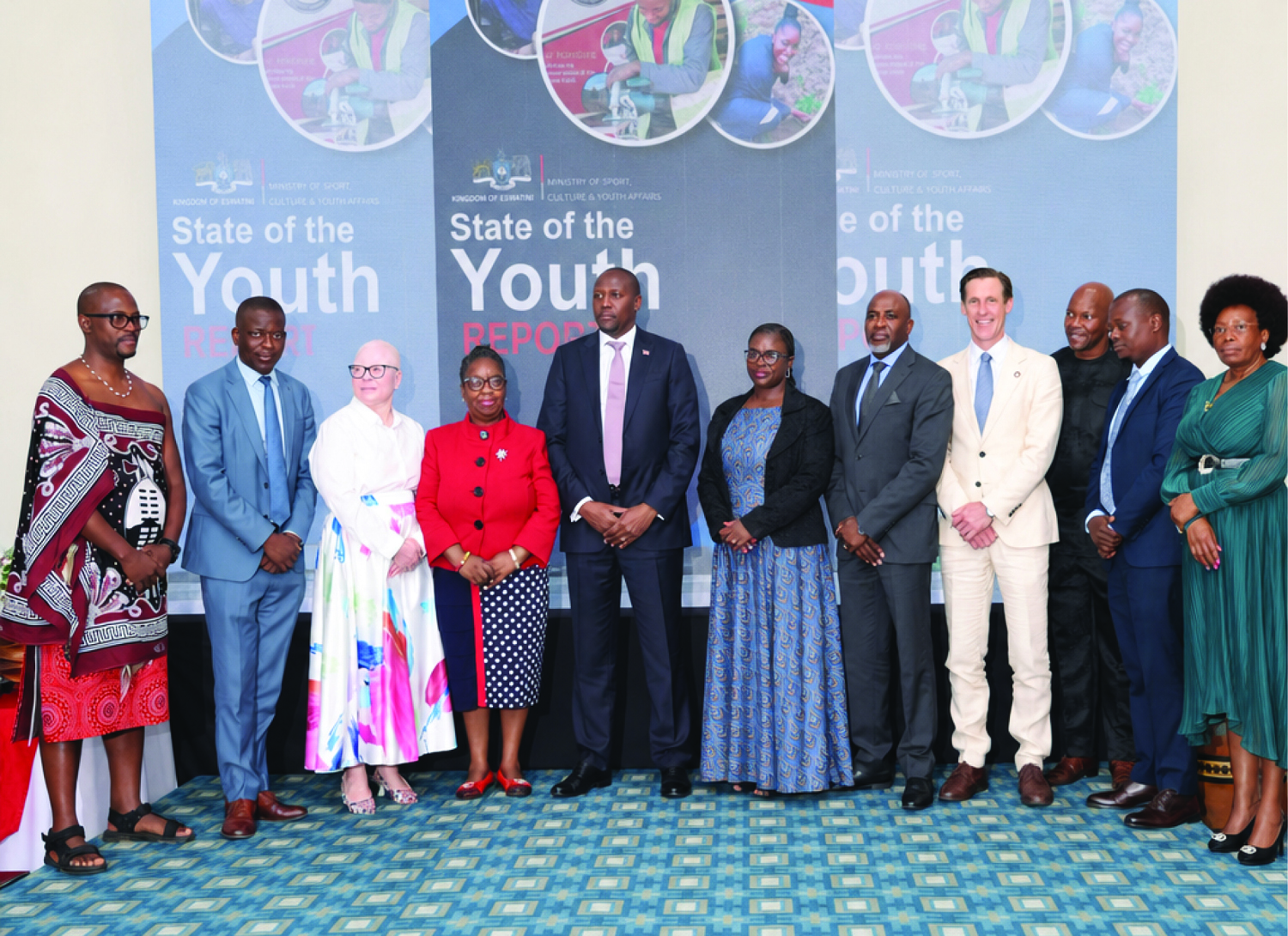
This is according to the Kingdom of Eswatini State of the Youth Report 2026, which was officially launched yesterday at The George Hotel during a high-profile event attended by government leaders, development partners and youth stakeholders.
Among those present were Prime Minister Russell Mmiso Dlamini, Minister of Sports, Culture and Youth Affairs Bongani Nzima, Senator Stukie Motsa and United Nations Resident Coordinator George Wachira, to name a few.
The report, only the second of its kind since the inaugural edition in 2015, provides a comprehensive and evidence-based assessment of the status of young people aged between 15 and 34 in the country.
It examines key areas, including health, education, employment, social inclusion and civic engagement, while also measuring progress made under the National Youth Policy of 2020.
Structured around nine strategic pillars, the report focuses on education and skills development; youth innovation, entrepreneurship and employment; social competency; youth health and wellbeing; food and nutrition security; social capital; good governance and leadership; capacity development and infrastructure; as well as research, monitoring, evaluation and learning.
The findings were compiled through a participatory multi-stakeholder process that combined quantitative data from national surveys with qualitative insights gathered directly from young people.
Key sources included the Multiple Indicator Cluster Survey (2021-2022), the Population-Based HIV Impact Assessment (2021), and the Violence Against Children and Youth Survey (2022).
Under the education and skills development pillar, the report reveals that youth unemployment stands at 56% nationally, with young women disproportionately affected.
According to the findings, 60.1% of unemployed youth are female, compared to 51.9% of males.
The report further notes that approximately 36.7% of unemployed youth are not enrolled in education, employment or tertiary training programmes.
To address the growing challenge, the report recommends a number of interventions, including the promotion of public-private partnerships for skills training, apprenticeships and job placement opportunities.
It also calls for the introduction of tax incentives for companies that recruit and train young people.
Among other recommendations are the establishment of a National Youth Scheme that combines vocational training, digital skills development and community service for young people who are not in employment, education or training (NEET).
Some of the recommendations also include the introduction of youth quotas in government tendering processes; the streamlining of youth funding mechanisms currently described as lengthy and frustrating; and the expansion of artificial intelligence (AI) skills development programmes for young people.
Despite the concerning unemployment figures, the report identifies entrepreneurship as one of the most promising pathways for youth economic empowerment.
The findings show that the micro, small and medium enterprises (MSME) sector continues to grow, with approximately 28% of MSMEs owned by young people under the age of 35.
Government-backed initiatives such as the Youth Enterprise Revolving Fund (YERF) have also delivered measurable results.
According to the report, about 1 200 young entrepreneurs have benefited from the fund, leading to the creation of approximately 10 000 jobs and the disbursement of E33 million in loans.
Meanwhile, speaking during the launch, Wachira said the United Nations remains committed to placing young people at the centre of the kingdom’s development agenda.
He noted that future UN investments would focus on transformative areas such as skills development, food systems, MSMEs, data systems and service delivery mechanisms.
“These initiatives will be implemented in partnership with government, the private sector and other stakeholders. They combine dedicated youth empowerment programmes with broader human capital development interventions aimed at equipping young people with the knowledge, skills and opportunities required to thrive and contribute meaningfully to national development,” he said.
Wachira further highlighted that over the past five years, the UN in the kingdom has consistently prioritised youth empowerment through integrated programmes targeting employment creation, skills development, education and entrepreneurship.
He said these investments have extended across several sectors, including climate-smart agriculture, social protection, health and social services, while also supporting initiatives focused on sexual and reproductive health and rights, education, life skills development and youth participation.