


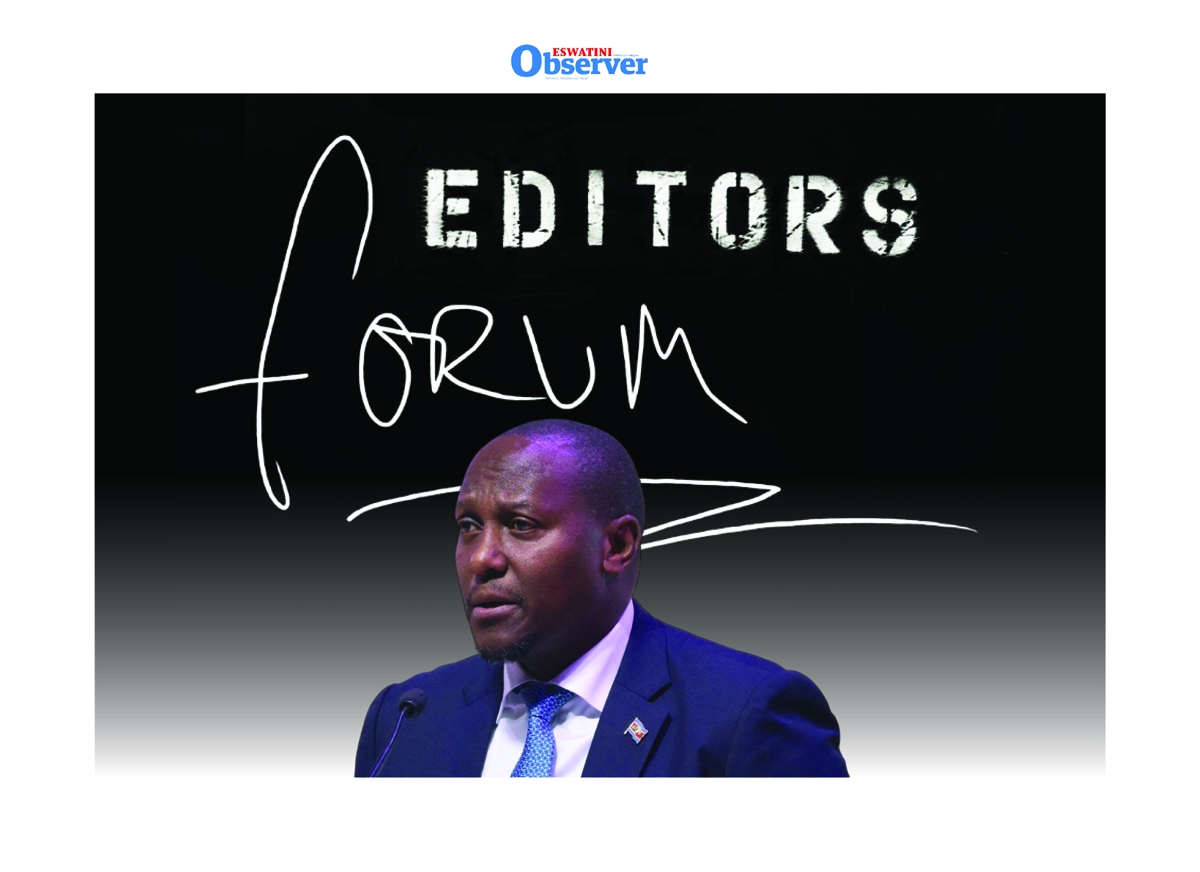
The Editors Forum breakfast meeting with Cabinet will not be revived under the PM’s administration, citing what he described as unacceptable conduct during previous engagement.
Russell Mmiso Dlamini said government had not yet formally briefed the media on the matter, but made it clear that there would be no return of the platform.
“There will never be another Editors Forum breakfast meeting because of the way people behaved,” he said.
The Editors Forum, which brought together senior journalists and government leadership for direct engagement, became the centre of controversy in 2024 following a heated exchange between Dlamini and The Nation Magazine Editor Bheki Makhubu.
During one of the sessions, Makhubu openly confronted the prime minister, questioning his leadership style and at one point asking,
“Who the hell do you think you are,” a remark that sparked national debate and drew criticism from some quarters.
NOW READ | Transport sector meets over looming fares hike
The incident reportedly escalated into a broader confrontation, with Makhubu also describing Dlamini as the worst prime minister in the country’s history.
PM combines situational, disruptive leadership approaches
Prime Minister Russell Mmiso Dlamini’s leadership approach blends situational decision-making with a broader disruptive framework outlined in government’s policy and programme of action.
Speaking during the interview, he said leadership could not be applied uniformly, as different situations require different responses.
“I use situational leadership because every situation calls for a different approach, but our policy clearly states that we are following a disruptive leadership model,” he said.
He explained that disruptive leadership involves challenging entrenched systems and long-standing practices that are often accepted as correct, even when they are not delivering results.
According to Dlamini, the approach is not only about innovation but also about confronting inefficiencies and introducing meaningful change to accelerate development.
He said this was necessary to move the country forward, rather than maintaining existing systems that may be contributing to stagnation.
The PM acknowledged that such an approach naturally attracts resistance, as some individuals prefer familiar processes and are uncomfortable with change.
However, he maintained that Eswatini was drawing lessons from countries that have successfully transformed their economies within short periods.
He said the goal was to adopt what works and adapt it locally to ensure faster and sustainable progress.