


JOHANNESBURG – South Africa’s highly anticipated June 30 anti-illegal immigration protests passed largely without the widespread violence many had feared, as thousands marched in cities across the country under a heavy security presence.
While the day remained mostly peaceful, there were isolated incidents of unrest. Two people were wounded in a shooting in Hillbrow, the South African National Defence Force was deployed to parts of Johannesburg, and police made several arrests linked to looting in Cape Town, Durban and elsewhere.
The demonstrations were sparked by a June 30 deadline set by anti-illegal immigration groups, which had demanded that undocumented foreign nationals leave the country. The call drew large crowds to the streets of Durban, Johannesburg, Pretoria and Cape Town, with smaller marches taking place in several other towns.
Smaller marches also took place in towns including Hermanus, Gqeberha, Kroonstad, Tzaneen, Thohoyandou and Kimberley.
The deadline had been set by anti-immigration citizen groups, chief among them the March and March movement, led by former broadcaster Jacinta Ngobese-Zuma, alongside movements such as Operation Dudula and the Amabutho.
And as the marches wound down, Ngobese-Zuma told supporters in Durban that the campaign was only beginning, vowing protests every Thursday until undocumented immigrants were gone.
“For as long as they haven’t left, we are marching every Thursday,” Ngobese-Zuma said.
Acting Police Minister Firoz Cachalia said officers had moved quickly to stamp out looting wherever it broke out.
“Members deployed across the country have been instructed to act swiftly and decisively against anyone who engages in criminal activities, including looting and attempted looting,” Cachalia’s spokesperson Kamogelo Mogotsi said.
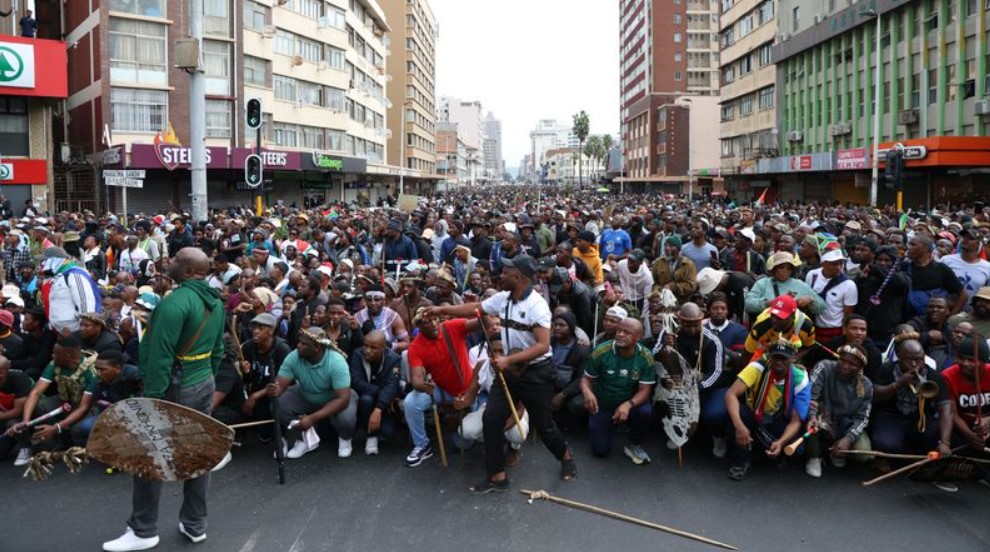
In Johannesburg, the country’s financial hub, most businesses closed during a march of several thousand people, with many workers staying home and public transport limited.
Men and women in blue in bulletproof vests and helmets stood watch as marchers hoisted placards demanding South Africa pull out of the UN Refugee Convention.
They warned of a threat to “the future of our kids”, claiming that the vast majority of children born in Limpopo are born to foreign nationals.
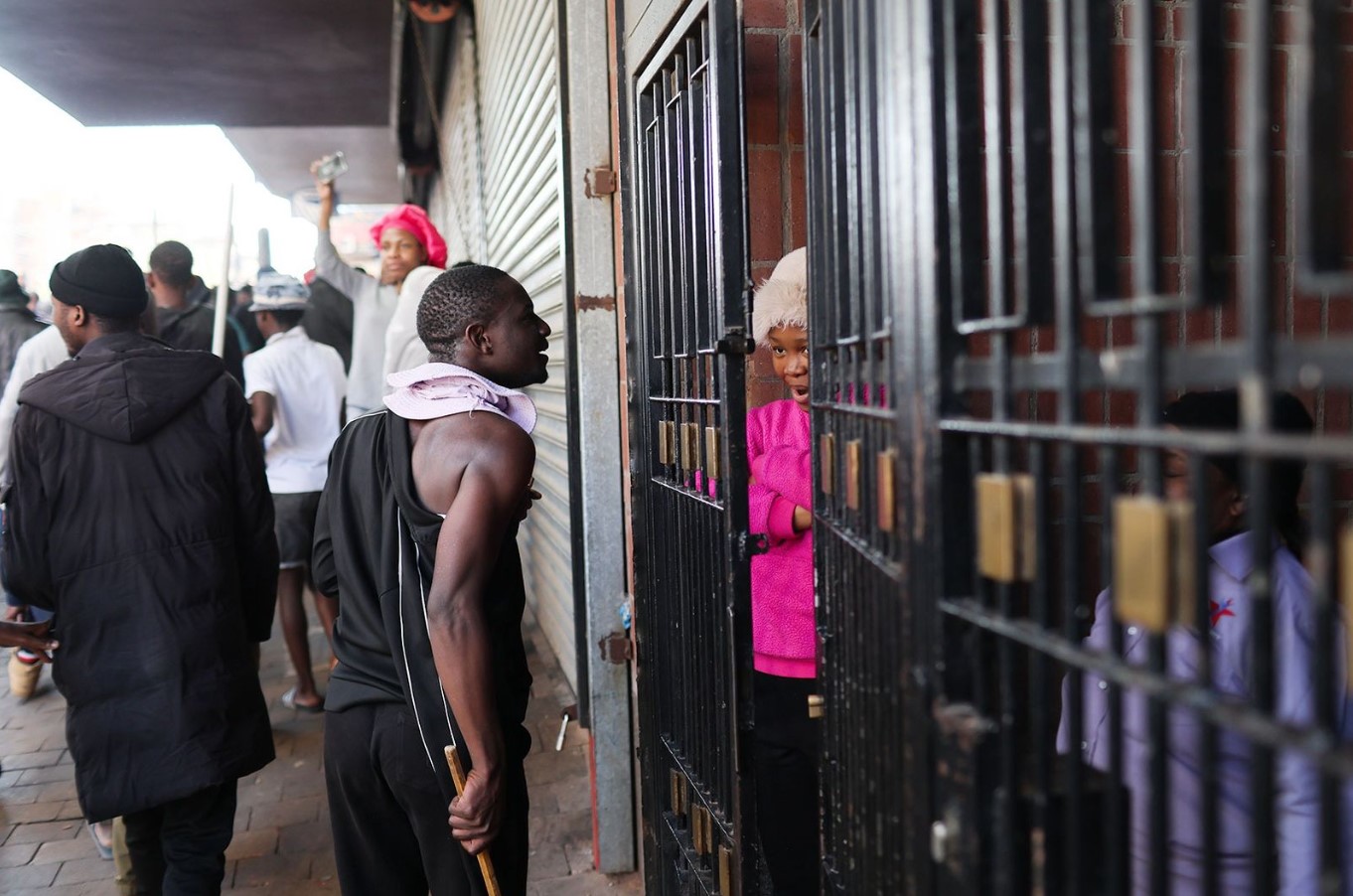
The march moved through Hillbrow and Yeoville, areas known to house many immigrants, with some smaller groups breaking off to throw stones at windows as police and private security looked on.
Protesters lit fires in the city centre as the march wound through the streets.
Gauteng police spokesperson Colonel Dimakatso Nevhuhulwi said three suspects had been arrested after two people, including a 17-year-old, were shot and wounded during the protest.
The men had allegedly opened fire on protesters passing through the street, and the marchers had then set fire to the suspects’ vehicle.
The South African National Defence Force was deployed to Hillbrow as tensions rose. Gauteng Deputy Police Commissioner Major General Fred Kekana said the march was peaceful and under control.
“The people are marching, and of course, it is their right to march,” Kekana said.
“Even if after tomorrow, we are not going to stop operating and ensuring that the community is safe.”
Gauteng Provincial Commissioner Lieutenant General Tommy Mthombeni had warned that anyone inciting violence or breaking the law would be tracked and arrested, with police deploying helicopters, drones and more than 33 000 CCTV cameras.
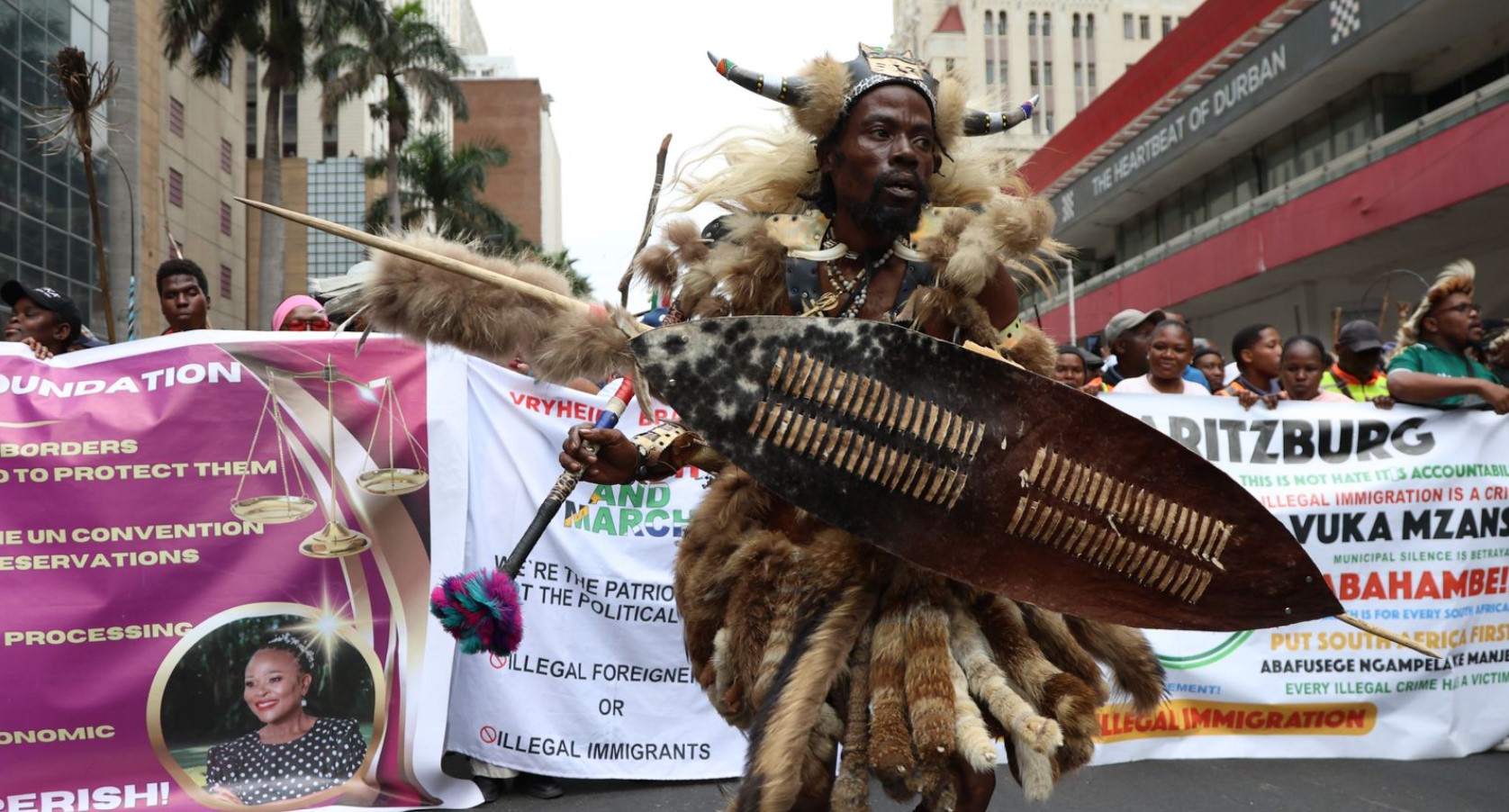
In Durban, more than 15 000 people gathered in the city centre in what became the largest march of the day. Made up mostly of young people bused in from townships around the city, the crowd carried traditional weapons, cowhide shields and knobkieries.
The march began at King Dinuzulu Park, moved through the Durban CBD and ended at the Point Police Station, where organisers handed over a memorandum.
The crowd refused to be addressed by eThekwini Mayor Cyril Xaba and Deputy Police Minister Cassel Mathale. ActionSA KwaZulu-Natal leader Zwakele Mncwango accused the government of failing to secure the country’s borders.
“We have been very consistent on the issue of illegal immigration,” Mncwango said.
“Our country has been invaded, but one must also clarify this point: there’s nothing wrong if people come from other countries legally.”
Mncwango dismissed intelligence reports warning of violence and criticised the money spent on policing the marches. Addressing the crowd, Ngobese-Zuma said South Africans of all backgrounds had united behind the campaign. She rejected accusations that the movement was xenophobic.
“This is not xenophobia and it is not ethnic mobilisation,” she said.
“It is a fight for the social well-being of South Africa in particular and Africa in general.”
She argued that employers were hiring foreign nationals at the expense of South Africans. Not everyone in Durban shared the peaceful intent, and one regiment leader said the marchers had come to fight. However, anti-illegal immigration activist Nkosikhona Ndabandaba said the day had proved critics wrong.
“We were united and defeated the narrative peddled by doomsayers who had wished that our protest would descend into chaos,” Ndabandaba said.
KwaZulu-Natal Transport MEC Siboniso Duma said the province had remained largely peaceful, although there were isolated incidents in Mariannhill and Clermont.
There was sporadic looting, including a break-in at a tuck shop in Hammarsdale and an attempted break-in at a foreign-owned tuck shop in Briardene.
Police also opened an inquest after a foreign national died on Margaret Mncadi Avenue in Durban.
Elsewhere, Cape Town authorities said the shutdown was largely contained despite opportunistic looting, while the Eastern Cape, Limpopo, Mpumalanga and the Northern Cape all reported largely peaceful demonstrations with isolated incidents.
Police said 15 384 people had been arrested nationwide in operations between June 22 and June 28, including 2 884 foreign nationals for immigration offences.
The National Joint Operational and Intelligence Structure said more than 25 000 foreign nationals had been repatriated, while 103 anti-immigrant violence cases and 195 arrests had been recorded since March 1.
Business groups reported that most shopping centres traded normally, although smaller informal traders and foreign-owned businesses were affected. Delivery and e-hailing services were also disrupted as many foreign drivers stayed home.
President Cyril Ramaphosa called for calm, reiterating that only the state has the authority to enforce immigration laws.
Ngobese-Zuma said she was unaware of reports that Ramaphosa had met leaders allied to the campaign after the President reportedly engaged anti-immigration leaders Nkosikhona Ndabandaba and Ngizwe Mchunu ahead of the protests.
IOL