



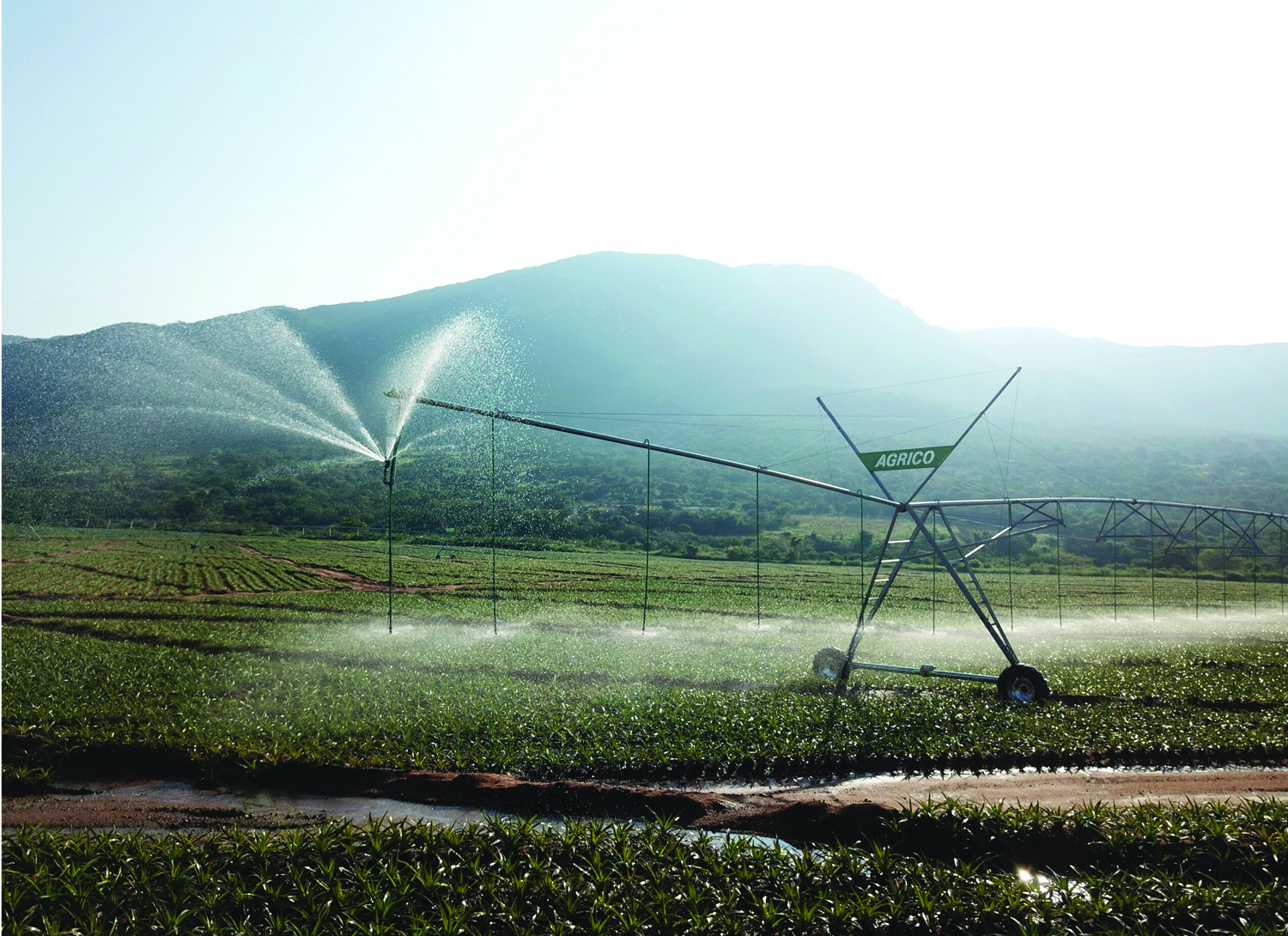
As El Niño threatens to deepen drought risks, government is turning to irrigated commercial farms to strengthen food security and reduce reliance on imports.
Agriculture Minister Mandla Tshawuka said government was engaging irrigated agricultural businesses to consider setting aside portions of their estates for food production as part of contingency measures against drought.
“We believe it is time, even the other players in the agricultural sector that have got irrigation, to start looking at setting aside small portions in those vast estates to be able to cultivate food for this nation,” Tshawuka said during a recent question-and-answer session with the media.
The minister said irrigated businesses such as Royal Eswatini Sugar Corporation, Ubombo Sugar and Tabankulu could play a greater role in strengthening national food security because their access to water provides greater certainty of production.
Tabankulu, he noted, is already producing beans, which he said was contributing to national food sovereignty.
Tshawuka’s call comes as the National Disaster Risk Management Authority (NDRMA) warns of a strengthening El Niño signal this year, although it has cautioned that the climate phenomenon does not automatically translate into drought for the kingdom. Government’s contingency strategy extends beyond commercial agriculture, with irrigation identified as one of the country’s most important defences against drought.
“The other issue is that obviously the biggest contingency plan for drought is irrigation,” Tshawuka said. “And therefore, we are talking about making sure that wherever there are dams, let us irrigate so that we are able to get a crop.”
However, he acknowledged that Eswatini does not have enough dams, making water infrastructure investment a longer-term priority. Government plans to continue constructing medium and large dams to expand irrigation capacity and strengthen agricultural production. Another pillar is increased commercial farming in areas with more reliable rainfall. Tshawuka cited Nyonyane Farm, where National Maize Corporation (NMC) has been allocated 400 hectares for commercial cultivation in the Highveld.
He said the area’s relatively high rainfall could provide a production buffer during drought conditions elsewhere in the country.
“We need to intensify that so that we produce enough to give to those areas which are drought stricken,” he said. Government is also preparing to launch a programme which promotes conservation agriculture in drier areas. The approach involves planting crops in small basins, using manure and mulch to conserve soil moisture.
Tshawuka said a 30-metre by 60-metre plot could potentially produce about a tonne of grain under the system, enough, he said, to feed a household.
The minister said the approach draws on traditional farming practices, while incorporating conservation techniques designed to improve moisture retention during periods of low rainfall.
The measures are aimed at limiting the economic fallout of drought, particularly pressure on food supplies and imports.
However, Tshawuka acknowledged that imports could ultimately become necessary if domestic production falls short.
“But if push comes to shove then we have to import because we have to feed the nation,” he said, while maintaining that government remains optimistic about achieving food sovereignty.