



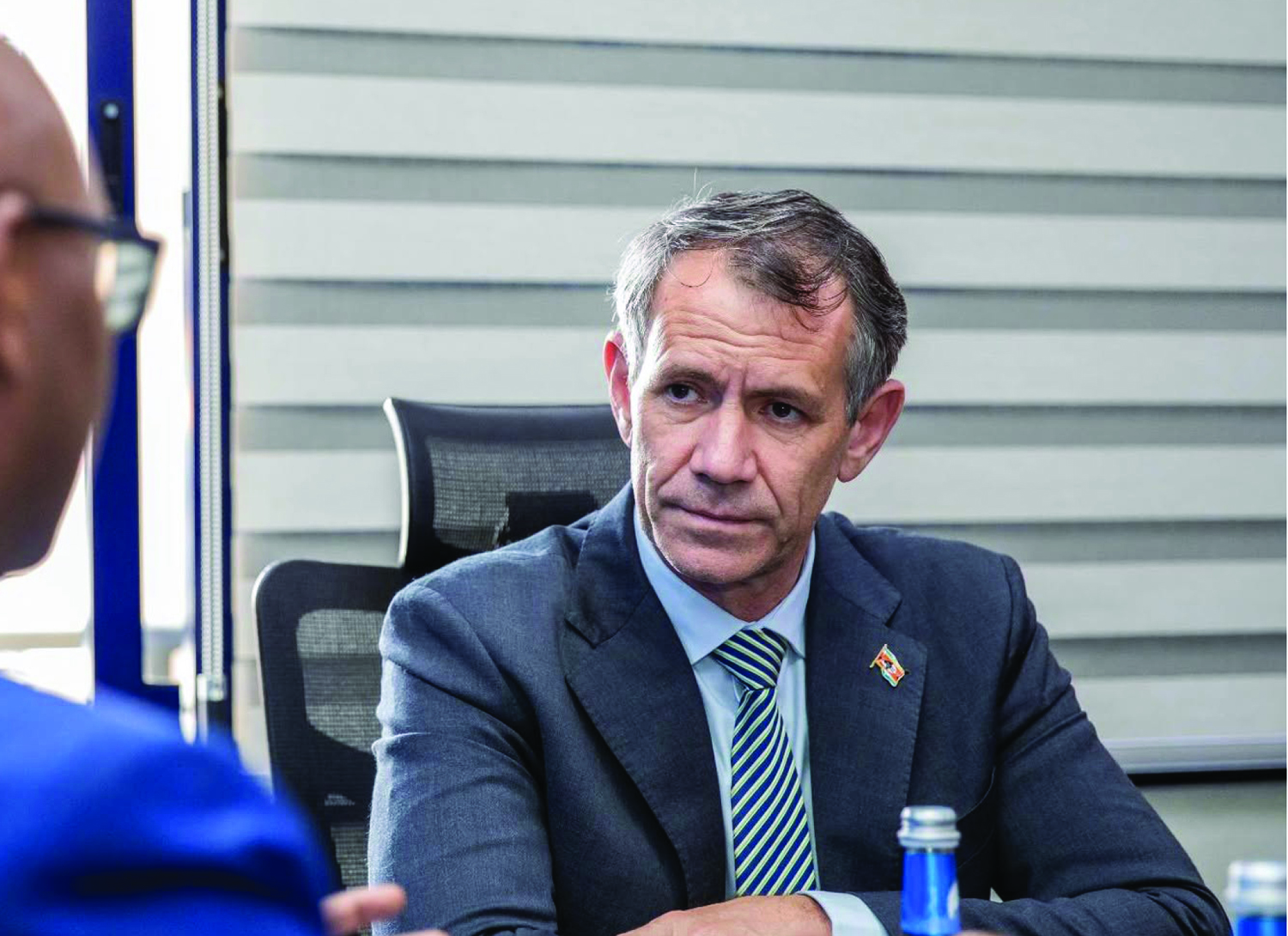
GOVERNMENT is preparing to borrow about E2.4 billion from the Development Bank of Southern Africa (DBSA) to address the shortage of housing for civil servants.
Minister of Finance Neal Rijkenberg said the loan would be tabled in Parliament within the next week or two, as government seeks to increase its housing stock and reduce its reliance on rental accommodation.
In his latest edition of Finance in Focus, the minister said government currently spends significant amounts on rental accommodation for civil servants, making the development of more government-owned houses necessary.
He said the proposed DBSA loan would be used to build housing stock while the investment was expected to repay itself.
“Government has decided to borrow for the housing programme because of the shortage of houses and the cost associated with renting accommodation,” he said.
The proposed loan comes at a time when government is also preparing to take on more borrowing to address cashflow constraints and accumulated arrears.
The finance minister said government was preparing to borrow more than E3 billion through three budget-support loans, which are expected to be tabled in Parliament around mid-October.
These loans would be used to address arrears, pay for Microprojects and ensure that contractors are paid on time.
The E2.4 billion housing loan is separate from the budget-support borrowing and is part of a wider programme of planned government borrowing.
Rijkenberg also disclosed that government would table a World Bank loan package for information and communications technology.
The ICT financing is intended to support the sector, including efforts to strengthen the Eswatini Posts and Telecommunications Corporation (EPTC) and reduce the cost of data in the country.
The minister said the planned borrowing would, however, have an impact on the country’s debt position.
He said Eswatini’s debt was currently around 45% of GDP but was expected to rise to about 50% as government addressed its cashflow pressures and other financing needs.
Rijkenberg said Cabinet had approved a medium-term fiscal framework under which government would allow debt to rise to around 50% before bringing it back to 45% over the coming years.
He said Treasury considered 45% of GDP to be the sustainable level for Eswatini, while debt approaching 60% would move the country into what he described as unsustainable territory.
The minister said government therefore intended to ensure that the additional borrowing was directed towards specific needs while working to reduce the debt burden over time.
“For the housing programme, the investment will create government-owned housing stock while addressing the current shortage of accommodation for civil servants,” he said.
The housing loan therefore forms part of a broader government effort to address infrastructure and financial pressures while increasing assets owned by the State.
ESWATINI SECURES 32 OF 40 AML BENCHMARKS
THE country has improved its standing against international anti-money laundering standards, securing positive ratings on 32 of the 40 benchmarks used to assess measures against money laundering and terrorist financing.
This was shared by Minister of Finance Neal Rijkenberg, who said the country had secured re-ratings on 18 requirements following representations made at a recent meeting in Kigali, Rwanda.
He said Eswatini had previously fallen below the minimum threshold required to avoid the risk of greylisting but had now moved to 32 positive ratings.
“We now have 32 of the 40 which are now being seen as positive,” Rijkenberg said.
He credited a government delegation involving officials from the Financial Intelligence Unit, attorney general’s office and the ministries of finance and justice for presenting Eswatini’s case.
The minister said some of the ratings had been disputed by the Financial Action Task Force (FATF) and other countries, requiring the Eswatini delegation to provide further arguments.
He said the country’s regional partners also supported Eswatini during the process.
The improvement means only eight of the 40 recommendations remain below the required compliant or largely compliant levels, according to recent reporting on the country’s progress.
Eswatini’s progress follows reforms undertaken after its 2022 mutual evaluation, including amendments to its anti-money laundering and counter-financing of terrorism legislation.