

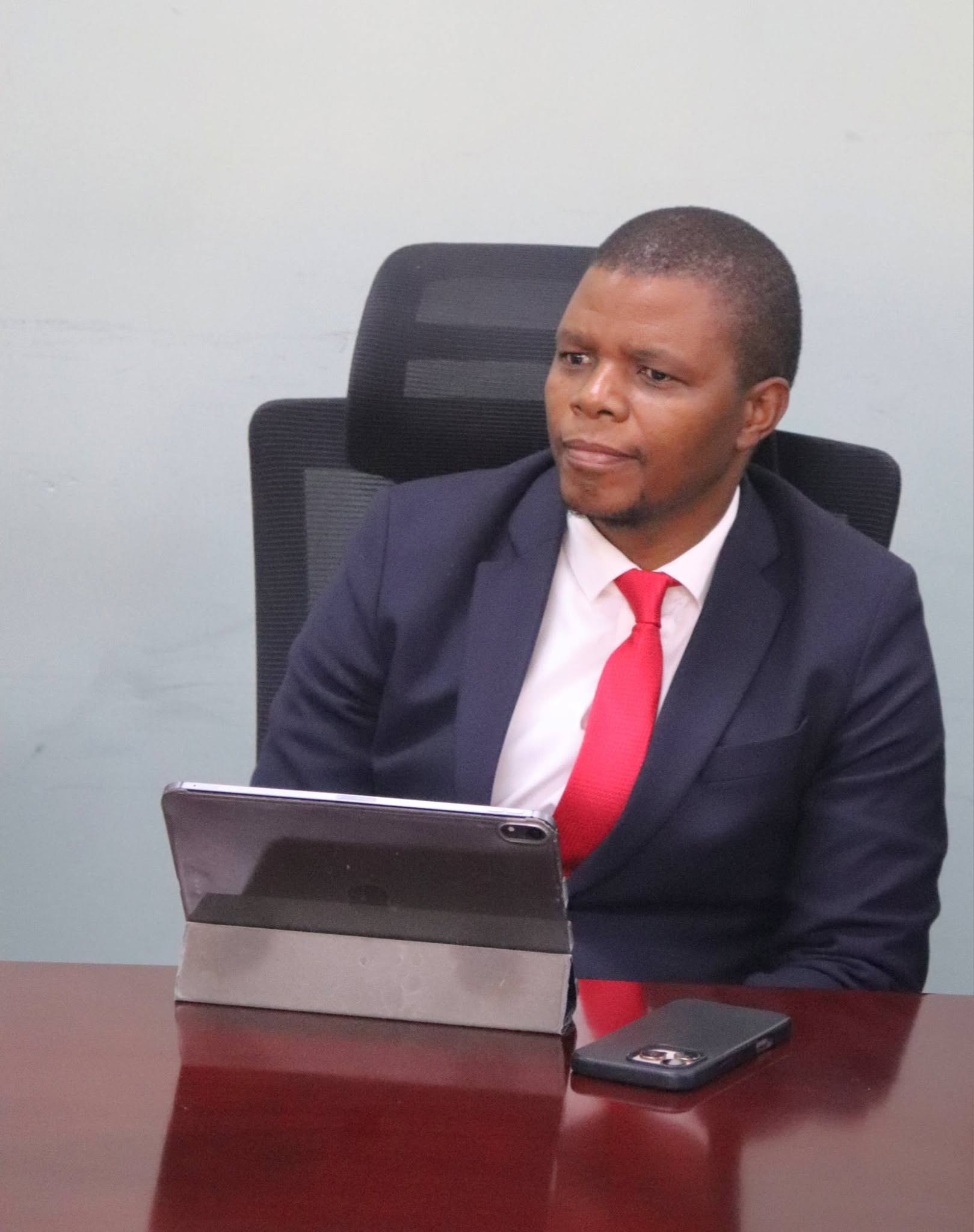
Perhaps Thulani Fakudze has been pinching himself these past weeks; barely three months in the hot seat, he is about to receive the kind of financial intervention his predecessors at Eswatini Posts and Telecommunications Corporation (EPTC), could only have wished for.
Fakudze has scarcely settled into the sixth floor and yet Parliament is about to hand him E455 million to help tackle problems that have weighed on the corporation for decades – including a troubled pension arrangement with mounting liabilities.
For EPTC, this has been hailed as the game changer. However, for the taxpayer, this is another substantial commitment that demands a convincing explanation of what will change this time.
The timing of this game-changing loan fits a familiar pattern. It is the time of the season when government goes cap in hand to international financiers, with loan Bills being brought before Parliament carrying urgent promises of development, relief or transformation – all of which then neglects the fundamental public contribution, or participation – if not just plain robust engagement over these Bills.
EPTC is the new recipient of politicians’ generosity – with no questions asked!
The EPTC loan Bill is probably now awaiting the royal signature, with the upper chamber expected to have rubber stamped the House of Assembly’s quick glance at it before pushing it through. This has left the taxpayer asking whether we are financing lasting solutions or borrowing to postpone problems we have repeatedly failed to resolve.
The E455m government guarantee is quite simply staggering, and a substantial commitment by the State, especially considering the financially distressed corporation’s debt laden history and failed strategic turnaround projects that have been sold to the public before.
There have been concerns that government’s guarantee to the EPTC exposes the public purse if the corporation fails to meet its obligations, which quite honestly, is a real concern.
The pension problem is real. Pensioners deserve their benefits, and employees should not pay for institutional failures they did not create. But protecting pensioners does not relieve government and Parliament of the responsibility to demonstrate that this intervention will produce a financially viable corporation.
At its June appearance before the Public Accounts Committee, EPTC reportedly disclosed that it was spending about E2 million monthly to meet pension obligations. Its operating expenditure exceeded its income. Management also said a turnaround strategy had received Cabinet approval, but lacked implementation funding. Yet, we have been here before; E. Nathi Dlamini’s ONE network collapsed, spectacularly; Petros Dlamini’s transformation failed at the first corner and Themba Khumalo just could not get started with his one-man strategy.
All of these have come at a huge financial cost, and with many promises. The EPTC is like a giant stuck on ice; plenty of effort, occasional movement, but very little sustained progress. The reality facing EPTC is that while an approved strategy is a starting point, its value lies in execution, and execution requires more than money. And as we are about to hand Fakudze and his executives a mouthwatering E455m, we may need to understand what will change this time.
The World Bank’s project documents provide more detail than the impression of an unrestricted bailout would suggest. They envisage transferring pensioner liabilities to a qualified insurer, settling accrued obligations to active members and moving away from the legacy pension arrangement. Of the US$26 million EPTC component, US$16 million is linked to performance conditions. These provisions deserve acknowledgement and rigorous scrutiny in equal measure.
Will the proposed pension settlement extinguish the relevant liabilities, or leave EPTC exposed to further claims? What assumptions underpin the actuarial calculations? Who verifies compliance? What happens when conditions are missed? Most importantly, after pension relief, will the corporation’s ordinary business generate enough income to cover operations, maintain infrastructure and repay the loan?
Removing a burden from the balance sheet does not automatically repair a business model. Of course the point is not to shoot down the effort to help EPTC turn the corner, but the corporation’s repeated need for financial relief demands a public explanation of its operating costs, staffing requirements, wage bill and revenue prospects.
A credible turnaround must show how these elements fit together. It must establish measurable targets, identify who is responsible for delivery and explain the consequences of failure.
And unfortunately, what we are seeing is members of Parliament eager to sign on the dotted line and hand over the problem to the taxpayer, while they walk around hand in pocket whistling to themselves along Parliament corridor, because they have scored a big political point.
I mean, honestly, it was just the other day the same MPs were blocking the former MD’s plan for retrenchment, despite his pleas that the entity was burden by a very heavy wage bill. In fact, even this time there are assurances that there are no current plans for retrenchments – which of course is comfort for employees and the organised labour.
Possibly too, the reason one posits that this is a political gimmick more than a sensible equitable and much needed boost to turn the corporation around, because it fails to deal with the serious challenges holding back the institution.
Equally, Marwick Khumalo’s explanation that MTN shareholding income has helped EPTC meet pension payments illustrates the importance of distinguishing income from investments from the performance of its core operations. The fact is that neither job-security assurances nor dividend receipts answer the question of long-term viability. Admittedly, workers deserve fair treatment, but taxpayers also deserve financial discipline.
Fakudze must demonstrate how he plans to deliver both. My concern about the parliamentary process is, therefore, its depth and public visibility. Reports show that MPs did raise questions about financial statements, cash flows, repayment capacity and the guarantee. The finance minister also said the projects had been under discussion for years. It would be inaccurate to pretend that no questions were asked or no preparation occurred.
But years of discussion within government are not a substitute for meaningful public scrutiny. Parliament should publish the relevant committee findings, explain what submissions were invited and received, and demonstrate how objections changed the final proposal. The public should be able to assess the answers that persuaded its representatives to approve the risk.
The same standard must apply to alternatives. Could a different pension restructuring arrangement have achieved the objective at lower cost? Could the Public Service Pensions Fund (PSPF) offer relevant expertise or an appropriately structured arrangement? What about the Eswatini National Provident Fund (ENPF) – to what extent could they have been challenged to provide a solution? The point here, is that if we are talking serious crisis of national proportions, then of course we ought to think outside the box in finding a solution.
And no, we are not suggesting that civil servants’ retirement savings become a convenient destination for another institution’s unfunded liabilities. The point is more to explore the options available, which would have needed scrutiny from all concerned.
Then there is the E2.4 billion housing proposal, financed through the Development Bank of Southern Africa, which is also destined for that well-used rubber-stamp.
It is only a matter of time, and the country will add another loan portfolio to its GDP ratio – again. It is without question that housing can improve living conditions, support construction businesses and create employment, as MP Khumalo stated while ticking off this process. It follows that MP Khumalo’s calls for local contractors and meaningful domestic participation are reasonable and ought to be supported.
Yet an economic stimulus argument is incomplete without evidence of value for money. Parliament should demand transparent procurement, independently checked costs, clear beneficiary criteria, credible repayment arrangements and provision for maintenance. The money must build useful houses, rather than feed the rats through inflated contracts and waste.
However, what MPs can’t shake off is that their constant grumbling about limited Microprojects activity in their constituencies leads to the accusation of a political incentive to these loans, more than the relative justification for the financial burden we are being lumped with.
We must also resist treating the ability to obtain a loan as proof that we can afford it. The IMF’s 2025 assessment described public debt at around 39% of GDP as moderate, while noting relatively high borrowing costs and supporting a 40% debt ceiling as a fiscal anchor. That does not prove a debt crisis today. It does reinforce the need for caution about cumulative borrowing and government guarantees.
For Fakudze, the proposed intervention offers an opportunity to address a longstanding burden, while also bringing an obligation to demonstrate that the corporation can sustain itself once that burden is lifted.
Those at Phutfumani Building should, therefore, regard this as a moment of reckoning. The public has heard the promises before. This time, it demands visible progress and accountability when delivery falls short.
Heads must simple roll, should we be fed another false down.
Nhleko tackles the elephant in the boardroom
Sibusiso Nhleko, the MTN corporate services and sustainability officer is releasing his book, The elephant in the boardroom: the silent killers of good governance, next week, which promises to open an important conversation about leadership and accountability.
I was immediately interested in the book the moment Nhleko informed me of it, because firstly, he is not one I would have expected to write and secondly, because of the title of the book itself. But if you pause for a second, you realise that it makes perfect sense and perhaps the title should give us an insight into a topic, which should invite reflection on the conduct and the decisions those in leadership make. And here it is immediately easy to conclude that Nhleko’s experiences in the leadership role (not just at MTN Eswatini, where he has held the helm a number of times), but also his position during a very pivotal period at EswatiniMed’s boardroom crisis, which interestingly still lingers somewhere within the upper echelons of the courtroom.
So, perhaps he is drawing on his practical experience and situations he has witnessed first-hand, to provide us with valuable perspective to the question of how leadership failures undermine institutions.
His title alone points to an uncomfortable reality: threats to good governance can be visible to everyone in a boardroom yet remain unchallenged.
Corporate failure often begins long before it becomes public. It takes root when difficult questions go unasked, warning signs are ignored and loyalty to individuals takes precedence over responsibility to the organisation. Silence, complacency and the reluctance to hold colleagues accountable can gradually weaken even well-established institutions.
The conversation Nhleko is bringing forward is, therefore, timely. This country is crying out for leaders willing to examine how they exercise power, respond to scrutiny and act when something is wrong.
This is the point that Nhleko says he is seeking to tackle and one which should be very interesting.
We all can’t wait to read about the elephant in that EswatiniMed boardroom, and what lessons we can glean from it.