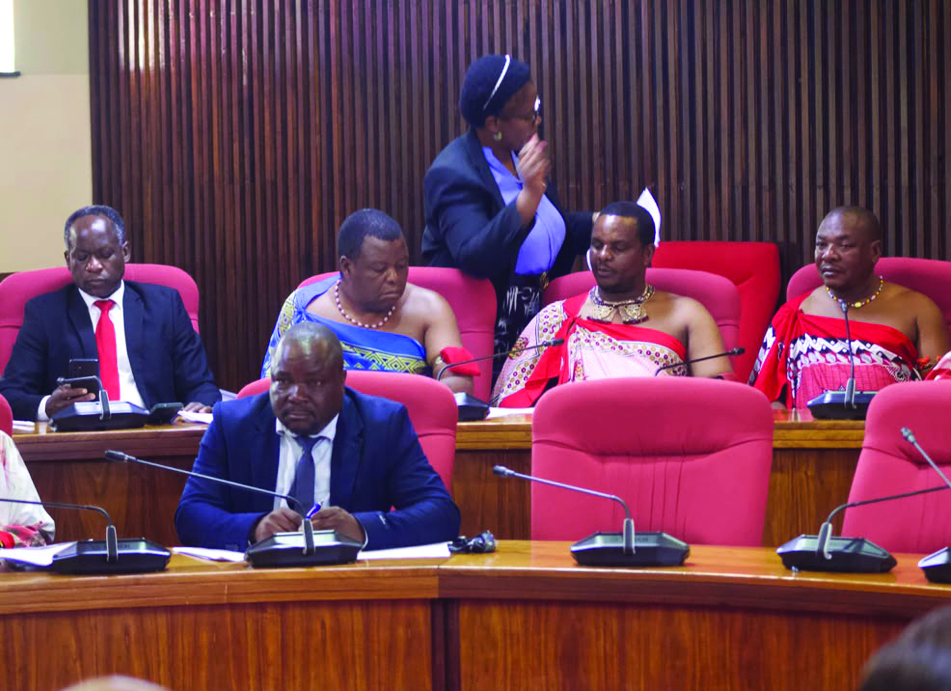
There was a revealing moment in Parliament this past week. Faced with the prime minister’s proposal to curb expenditure on external travel, an MP rose to defend what he evidently considered an endangered national resource – the parliamentary trip.
The travel budget, we were told, was already inadequate. Some MPs had been obliged to pay their own way or miss important trips altogether. The prime minister, apparently, needed reminding of his place.
One might have hoped for a similarly spirited intervention on behalf of people who cannot afford the journey to work.
There are legitimate reasons for MPs to travel. Parliamentary work does not stop at the border and international engagements can serve the country. But their value must be demonstrated.
What is the purpose of the trip? Why is attendance necessary? What does the public gain? When money is scarce, these are ordinary questions of accountability.
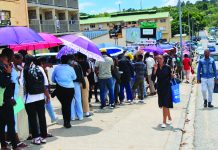
The indignation is what rankles. The apparent belief that asking an MP to stay home requires more justification than asking a struggling commuter to pay more, as commuters brace themselves for the bus fare hike.
At a time when households are making painful choices about transport, food and other necessities, the defence of parliamentary travel betrays a remarkable distance from the people paying for it.
Outside Parliament, an unaffordable journey means a missed day’s work, a postponed appointment or another opportunity lost. Inside, it becomes a grievance to be raised with the prime minister, which demonstrates the politics of self – public office understood through the comforts, privileges and opportunities it affords its occupants.
And the concern extends well beyond travel. Too often, the public is left watching debates in which MPs appear acutely sensitive to their inconvenience and considerably less curious about everyone else’s.
Consider the bus fare increase. There is a serious economic argument to be made about the cost of operating public transport and understandably, operators, too, must survive. But acknowledging those pressures does not discharge Parliament’s responsibility to passengers. Where was the searching examination of what the increase would mean for a low-paid worker making several journeys a day?
What consideration was given to the unemployed person travelling to look for work, or the rural resident who must pay to reach government services unavailable closer to home? What alternatives, protections or phased arrangements were explored?
An increase can be economically justified and still impose real hardship. Representatives should be capable of holding both thoughts in their heads.
The troubling impression is that the vote came more readily than the questions.
Which brings us to the larger failure: how much of what happens in Parliament is informed by meaningful engagement with the people MPs represent, a point we have made every other election year in which we ask about the power of recall?
Before taking positions on matters that affect household budgets, livelihoods and economic opportunity, whom have MPs consulted? What have constituents told them? Where is the account of those conversations? When competing interests arise, how do representatives explain the choices they make?
A constituency is more than a place to return to when an election approaches. It is a continuing obligation.
Consultation requires work. It means making time for people who cannot secure a private meeting, do not belong to a useful network and have nothing to offer beyond their experience of trying to live in this country. It means listening to commuters, informal traders, small business owners, unemployed young people and families whose budgets have no room left for another increase.
It also means returning afterwards to explain what was decided, why it was decided and what will happen next.
Walter Bennett has made this an issue every time he has sought to engage portfolio committees about the engagement or lack thereof on issues that concern the public. He has recently raised issue about the loan bills finding their way to parliament in the last few weeks of parliament business. He has asked the hard questions, but what are the answers – if any?
MPs are entitled to exercise judgment. Representative democracy would achieve very little if every decision required a referendum. But judgment carries greater authority when it has been informed by listening. An electoral mandate is no excuse for treating the electorate as an interruption.
I will leave aside the debate over The Luke Commission’s subvention, for reasons familiar to readers of this column. However, the wider question of whether MPs take the public into their confidence, or simply take decisions and expecting the public to accommodate them still remains.
Then there is the debate around enforcing citizen economic empowerment, which raises that question with particular urgency.
Foreign investment can bring capital, skills, employment and access to markets. Its contribution should be assessed seriously. Yet we should be equally serious about asking why citizens face barriers to participating in their own economy and what government must do to remove them.
If a citizen struggles to establish and sustain a business, the legislative response should begin with questions. Can they obtain finance? Are suitable premises available? What obstacles exist in licensing, procurement, supply chains or business support? Which of those obstacles can public policy address?
A grocery shop on Eswatini Nation Land ought to prompt a practical discussion about local enterprise, access and opportunity. Citizens deserve better than a debate that leaves them wondering whether their representatives have already lost faith in their ability to succeed. There is something profoundly dispiriting about asking people to become economically self-reliant while failing to build the conditions in which they might do so.
Here, too, consultation matters. The small trader trying to survive can explain barriers that remain invisible from a comfortable chair. The young person whose business application has gone nowhere may have something useful to say about the distance between an empowerment policy and an actual opportunity.
Have MPs asked them? Have they listened? Can they show how those experiences have shaped their position?
Without that accountability, parliamentary activity becomes a poor substitute for public service. There may be motions, debates, points of order and committee reports in abundance. Meanwhile, the person paying more to get to work is entitled to ask what any of it has achieved for them.
That is the danger of the politics of self. It hollows out representation while preserving all its ceremonies.
And it leaves the public in an increasingly lonely position: expected to fund the institution, respect its decisions and absorb their consequences, while struggling to be heard within it.
So who will stand between the public and decisions that make their lives harder? Who will insist that their experiences count? Who will defend their opportunity to earn, travel, trade and live with dignity?
If their elected representatives are preoccupied with looking after themselves, who is left to represent everyone else?