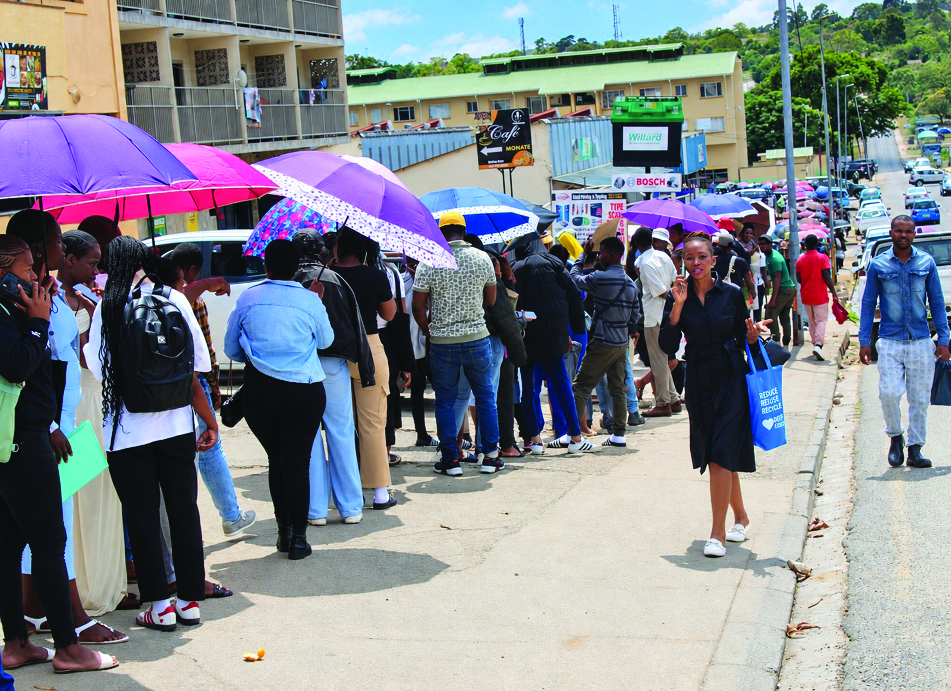
There are days I would pay to sit inside a boardroom and listen. This past week, it would have been the police headquarters, to hear what the bigwigs were saying as thousands of young people queued for hours simply to submit job applications.
Did those scenes trouble them? Did anyone look beyond the logistics of receiving documents and recognise the desperation outside?
I had much the same thought last week over the appointment of the Eswatini National Provident Fund Board. One would have loved to be a fly on the wall during Cabinet’s supposedly robust deliberations. Was there an intense exchange of views, or simply an endorsement of a decision already taken?
Anyway, this week my thoughts turned to the young people lining the streets towards police recruitment centres, clutching documents and hoping for the future they were once promised.
There is something deeply painful about those scenes. You look at the faces and wonder how much hope a person can afford to invest in one more application.
According to the police, more than 17 000 people applied to join the Royal Eswatini Police Service. That figure should trouble everyone responsible for the economic direction of this country.
For me, the queues expose the distance between the future young people were encouraged to prepare for and the opportunities available to them. They went to school. Some obtained further qualifications and prepared for professions in which they expected to build a life.
Yet here they are, competing for a limited number of police jobs, including people who might never have considered wearing the uniform had another door opened.
We have even heard of qualified, unemployed teachers joining the queues. Surely that should force government, if not all of us, to pause. When someone trained to teach must seek an entirely different occupation to survive, what has happened to the opportunities their training was supposed to create? Let us not forget, many teachers are still on contracts, with no hope of ever being hired for that very job they are on.
That is what pains me. These scenes make it difficult to believe that this country has a credible plan for its young people.
They are told to study, qualify and prepare themselves. Having done so, they find themselves spending another day in a queue, pursuing an opportunity whose odds they cannot even calculate.
WHAT MESSAGE SHOULD THEY TAKE FROM THAT?
The scale of the turnout demands a response from government that goes well beyond processing applications.
The police executive should resist any temptation to congratulate itself simply because everyone was invited to apply. An open invitation is only the beginning of fairness. The conditions under which people must pursue it matter just as much.
Applicants reportedly arrived before dawn. Some spent the night near recruitment centres, enduring rain and thunderstorms merely to handover documents. Think about what that means for someone already struggling.
Transport money must be found. Documents must be copied and certified. There may be food to buy or somewhere to sleep. Before an application has even been assessed, the unemployed applicant has incurred another expense. These young people are in a dark pit and can’t seem to find a way out.
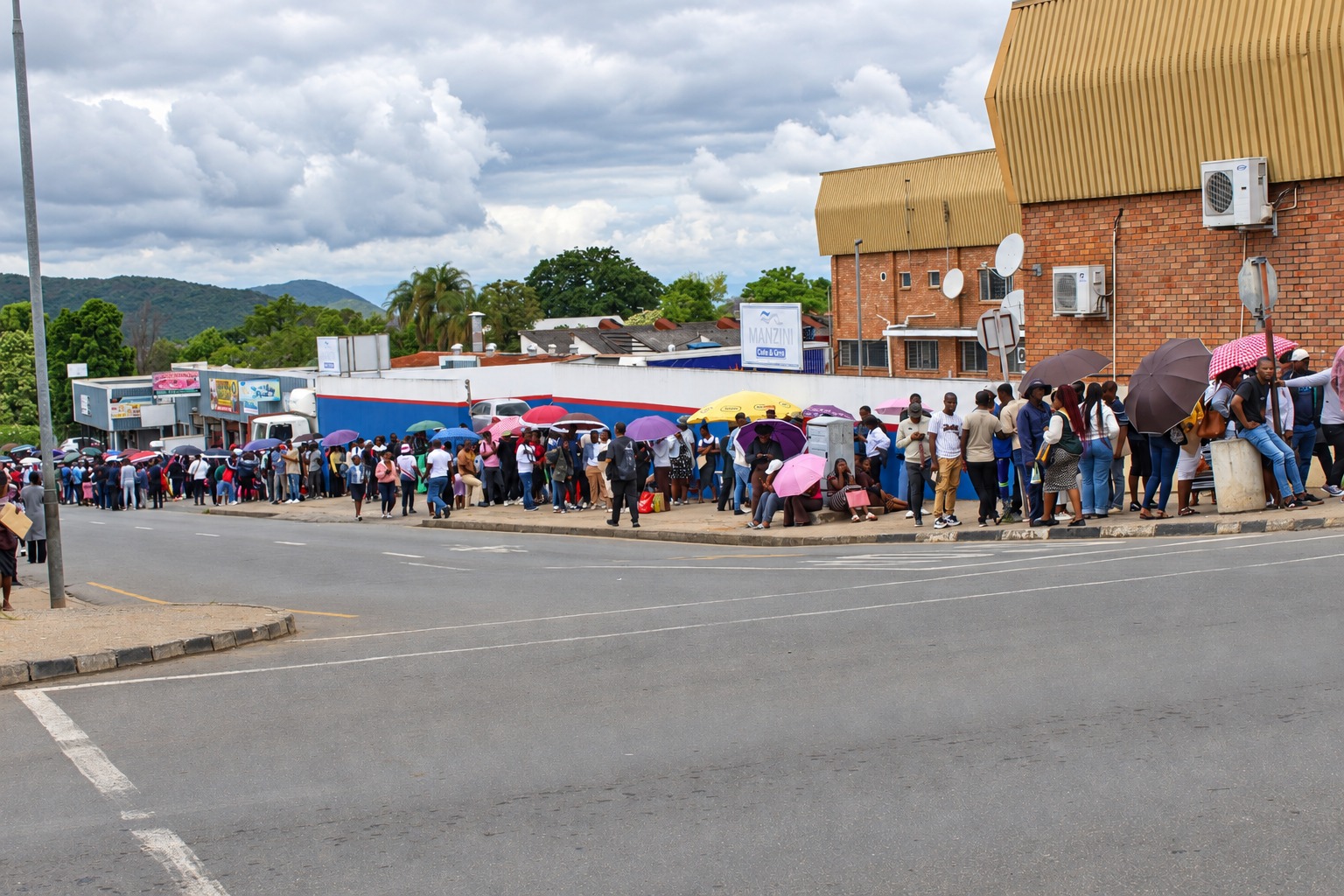
For a household with very little, the cost of trying can be substantial. After all that, submitting the application guarantees nothing. The police have made that clear. There are further stages ahead, with only a limited number of vacancies.
Surely applicants deserve to know how many positions are available, how candidates will be assessed and when they can expect an answer. They should be able to weigh the opportunity before spending money they can barely afford.
The cruelty lies in expecting those with the least to carry so much of the cost and uncertainty. This should concern everyone responsible for recruitment into the police, army and correctional services. We ought to find ways of making applications more accessible and dignified. People’s need for work should compel greater consideration in how we treat them.
A long queue does not prove transparency. Making everyone stand in it does not establish that everyone enjoys the same chance.
I agree with the Commission on Human Rights and Public Administration Integrity’s proposals for electronic applications and additional submission points. These are basic, practical changes. Surely handing over a CV should not require an overnight journey.
Then comes the question that shadows almost every fiercely contested recruitment exercise in this country. Will merit prevail, or will knowing somebody still matter?
Desperation creates a market for anyone selling influence, real or imagined. Someone who has spent years looking for work may become vulnerable to a promise they would otherwise recognise as suspicious. The police cannot simply announce that the process will be transparent and expect everyone to accept it. They must demonstrate how it is protected from interference.
Clear criteria, recorded decisions and a credible way to report suspected misconduct would give applicants something firmer than assurances. The person who borrowed transport money deserves confidence that somebody else cannot bypass the process through a telephone call from a powerful relative. The safeguards must be strong enough to justify that confidence.
But even a perfectly managed recruitment exercise would leave the larger question unanswered. What happens to those who do not make it?
It is a case of the unending cycle; they return to the same households, the unanswered applications and the struggle to find something to do. Some will secure employment through this exercise. Thousands will still need opportunities.
That is where Cabinet’s attention should be fixed. The police service cannot absorb the ambitions of an entire generation. Government cannot keep relying on occasional recruitment into the uniformed services to relieve the pressure of unemployment.
Where are the opportunities for young people to use their qualifications? Where are the businesses able to employ them? What prevents those businesses from expanding and what is government doing to remove those obstacles? The answers must be visible in people’s livelihoods. There is also the question of the police service we are building.
Policing requires judgment, restraint, integrity and a willingness to serve people at some of the most difficult moments of their lives. Selection must establish whether applicants understand and accept those responsibilities.
Wanting a salary is understandable. Police officers, too, have families to feed. But the need for employment cannot, on its own, establish suitability for a profession carrying such extraordinary powers.
We should also be careful about assuming that everyone driven by financial circumstances will make a poor officer. A person who discovers policing while looking for work may become an excellent professional. Equally, a childhood ambition to wear the uniform offers little reassurance without the temperament to exercise authority responsibly.
That places a heavy responsibility on recruitment, training and supervision.
If suitability is poorly assessed, the consequences will eventually reach the public. Weak judgment and indifference to service becomes dangerous when accompanied by the power to arrest, detain and use force.
We cannot afford to discover those shortcomings only after the uniform has been issued. I have argued before that a country cannot keep narrowing its young people’s choices and expect the consequences to remain confined to their homes. Prolonged exclusion eats away at confidence, dignity and trust in the future.
There is only so much encouragement a person can draw from being told to remain patient. More than 17 000 applications should force those in power to confront the lives behind the figure. Every unsuccessful applicant must still wake up the following morning and find a way forward.
The recruitment exercise will end. Their need for work will remain, alongside the frustration of having tried again and got nowhere. That is why I would have liked to hear the conversation inside police headquarters. Did anyone recognise the warning outside?
More importantly, has that warning reached Cabinet, and what does it intend to do about the young people left in the queue? And how then, are we designing the future for these young people – other than the lip service from legislators, who found their voice also this week. It is such a pity then, that I can’t be in their Cabinet meeting, to hear what they make of this reality check.