


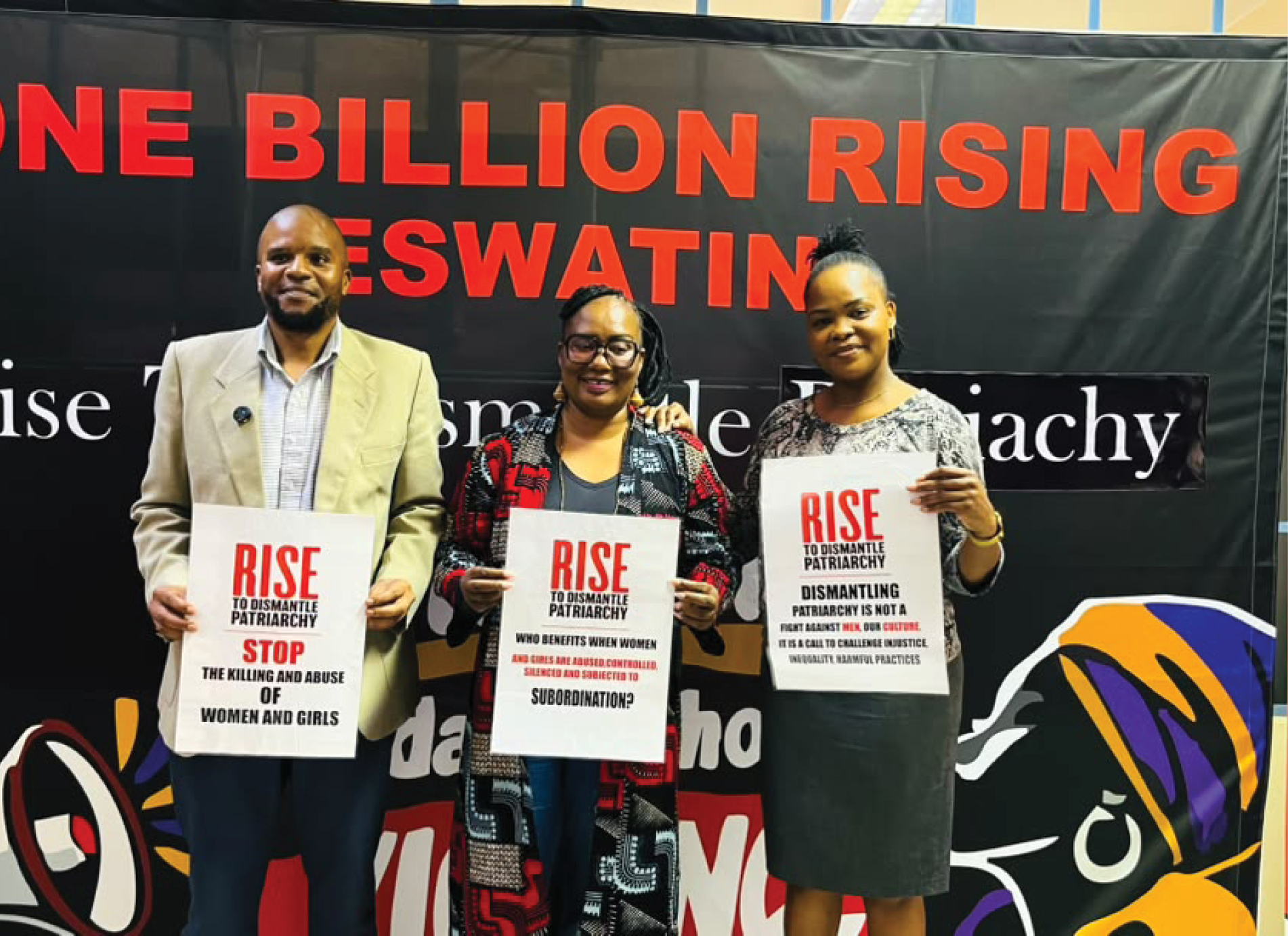
ONE Billion Rising Eswatini has challenged the nation to confront patriarchy and the unequal power relations that continue to fuel gender-based violence (GBV), as it unveiled its 2027 campaign theme, ‘Rising to Dismantle Patriarchy’.
The campaign, which will run under the call Imagine a Day Without Violence, seeks to move the fight against GBV beyond awareness campaigns to confronting the deep-rooted beliefs, social norms and practices that perpetuate violence against women and girls.
Speaking during a media briefing held at FLAS in Manzini yesterday, One Billion Rising Africa Regional Coordinator Colani Hlatjwako said despite years of activism, community engagements, legislation and awareness campaigns, violence against women and girls continued to persist at alarming levels.
Hlatjwako said this raised questions about what the country was not confronting and why violence continued to thrive even in places where women and children were expected to feel safest.
She explained that the 2027 theme was chosen to encourage locals to examine the structures that promote gender inequality, silence survivors and normalise the subordination of women.
“Dismantling patriarchy is not a fight against men, our culture or identity as Emaswati. It is a call to challenge injustice, inequality and harmful practices wherever they exist,” she said.
Hlatjwako described patriarchy as a system of power that gives men greater authority and control over women, thereby limiting their rights, opportunities, freedom and participation in decision-making.
She said its effects were visible in everyday experiences, including widows being denied inheritance rights, girls being married off, teenage pregnancies, exploitation of young girls by older men and the challenges women face in accessing and controlling land.
The regional coordinator further pointed to reproductive coercion, marital rape, abandonment of family responsibilities by men and the denial of women’s right to work and earn an income as some of the manifestations of patriarchy.
She said the most devastating consequences included rape, abuse and the killing of women and girls.
Hlatjwako challenged the nation to question cultural practices and traditions that reinforced unequal power relations while strengthening positive values that promoted dignity, compassion, respect and shared responsibility.
She emphasised that meaningful change required society to unlearn harmful beliefs and teach boys and girls that equality is a fundamental principle rather than a privilege.
15 years of rising against violence
The unveiling of the 2027 theme also coincides with the 15th anniversary of the One Billion Rising movement, which will be celebrated next year through activities aimed at mobilising communities against violence towards women and girls.
Hlatjwako said over the years, One Billion Rising Eswatini had worked with more than 40 civil society organisations, government institutions, the corporate sector, trade unions, traditional leaders, Parliament and the Church.
She said these partnerships had helped take the campaign to grassroots communities, create platforms for dialogue, amplify voices and strengthen collective efforts towards ending GBV.
As part of the 2027 programme, the organisation plans to host community-centred festivals between February and March, including the Kasi Stage Festival in Mbikwakhe, Matsapha, the Nhlangano Festival and cultural festivals on ending violence in Sigwe and Maphalaleni.
The programme will also feature community circles, outreach engagements and school activations aimed at deepening understanding of patriarchy and promoting gender equality.
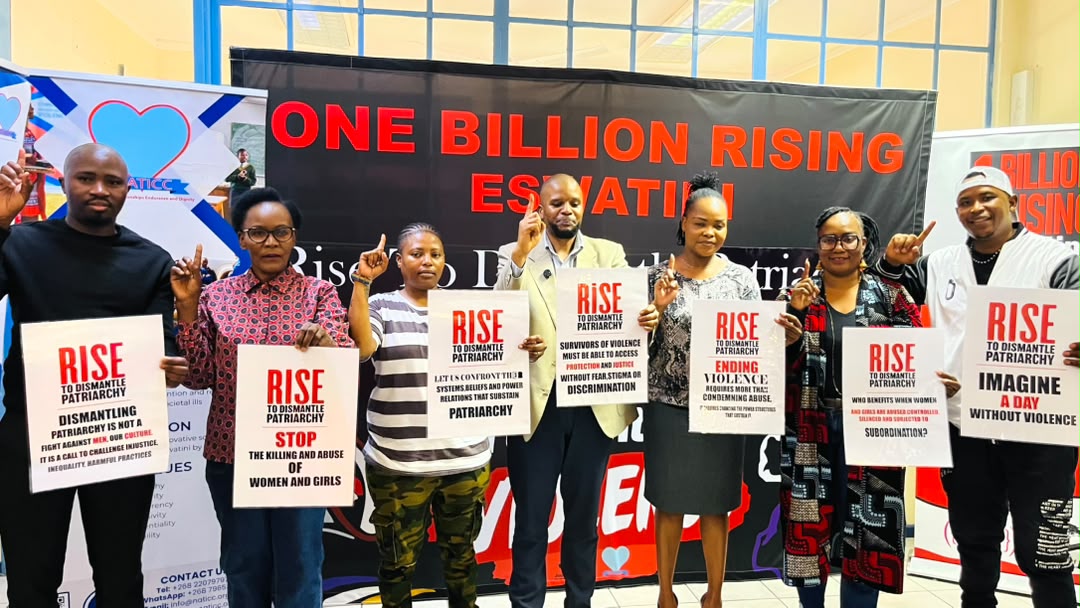
She said the activities would use music, dance, art and culture to mobilise communities and encourage people to become active participants in transforming the structures that sustain inequality and violence.
Hlatjwako said the organisation would formally introduce its partners and sponsors by December.
NATICC to lead Shiselweni festival
MEANWHILE, the Nhlangano AIDS Training Information and Counselling Centre (NATICC) has formalised its partnership with One Billion Rising, with the organisation set to spearhead the campaign’s festival in the Shiselweni region.
NATICC Director Sisekelo Ndzima said the partnership brought together the organisation’s longstanding community presence in Shiselweni and the global reach of the One Billion Rising movement.
He said the collaboration was aimed at establishing a coordinated, community-centred response to GBV, moving beyond isolated activities towards sustained efforts to prevent violence and support survivors.
Ndzima said NATICC would lead the planning, mobilisation and coordination of the festival in Shiselweni, bringing together traditional leaders, schools, churches, youth groups, government departments, civil society organisations and other stakeholders.
He explained that the festival would provide a platform for communities to openly discuss violence, stand in solidarity with survivors and collectively call for justice, accountability and change.
“This partnership is a statement of intent. Together with One Billion Rising, we are saying gender-based violence has no place in our homes, schools or our communities in Shiselweni,” he said.
Ndzima said the partnership would focus on prevention, strengthening referral pathways for survivors, community mobilisation, advocacy and collaboration with various stakeholders.
He called upon community leaders, government, development partners, churches, schools, youth organisations and the media to support the initiative, stressing that ending GBV was not the responsibility of one organisation.
One Billion Rising Africa Regional Coordinator Colani Hlatjwako also welcomed NATICC’s continued partnership of 14 years, noting that it would take a leading role in coordinating and supporting One Billion Rising activities in Shiselweni. She further acknowledged Women Unlimited for joining the 2027 campaign early and committing to support some of the planned activities.
The campaign will also continue working with Festival Director Thamsanqa ‘KRTC’ Sibandze, who has provided artistic leadership to the One Billion Rising Eswatini festivals since 2024.
Hlatjwako urged locals to move beyond condemning violence and instead create conditions where violence was neither tolerated nor normalised.
“Imagine a day when women and girls can walk freely without fear. A day when girls can grow up with choices, opportunities and control over their futures. A day when widows are protected, women’s voices are respected, men embrace equal responsibility and our homes are places of safety, love and dignity,” she said.