



As public scrutiny continues over the Eswatini Electricity Company’s (EEC) application for an electricity tariff increase, questions have been raised about its proposed expenditure, particularly on capital projects, information technology systems and employee overtime.
The concerns come amid calls for the utility to demonstrate greater efficiency in managing its operating costs while ensuring that customers receive reliable electricity services.
EEC has provided further clarification on the proposed expenditure, explaining the operational needs behind the investments and the measures it is implementing to contain costs.
1. Why is EEC proposing capital expenditure over the two-year tariff period?
The E183.4 million represents the projected capital investment for EEC’s support services over the two-year tariff period, comprising E27.5 million in 2027/28 and E155.9 million in 2028/29.
The investments are intended to strengthen the company’s operational support infrastructure, improve business systems, improve cybersecurity, enhance information management and ensure continuity of critical business operations.
As a national electricity utility, EEC relies on dependable technology and support infrastructure to manage its electricity network, customer accounts, prepaid vending, billing, procurement, financial management and other essential business functions.
The proposed investment seeks to address ageing technology, fragmented information systems (IT) and cybersecurity vulnerabilities that could affect the quality and reliability of services delivered to customers.
The proposed capital investments include:
-
Enterprise systems modernisation: Upgrading and integrating key business systems to improve information sharing, automate processes and reduce manual interventions.
-
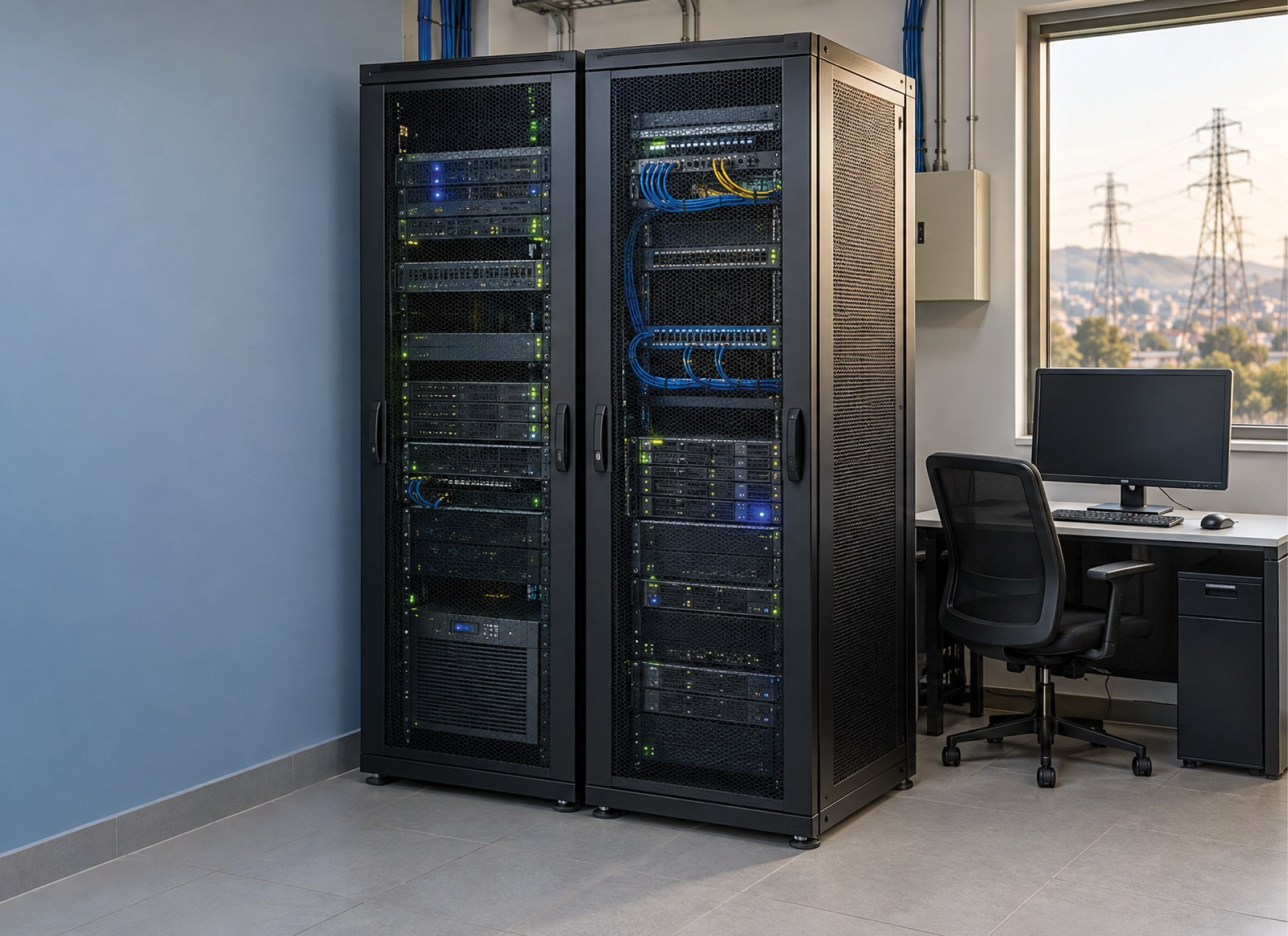
Server infrastructure: Replacing ageing servers supporting critical systems such as Ellipse, customer relationship management (CRM) and geographic information systems (GIS).
-
Cybersecurity enhancements: Strengthening data protection, network security, threat detection and disaster recovery capabilities.
-
Disaster recovery infrastructure: Establishing a disaster recovery facility to ensure critical business systems and information can be restored in the event of major system failures.
-
Energy trading and outage management: Improving systems that support electricity procurement and trading, as well as the management and restoration of power outages.
-
Other support infrastructure: Investing in vehicle replacements, rehabilitation of buildings, staff accommodation and associated facilities required to support business operations.
These investments are considered important as EEC continues to expand its customer base, manage increasingly complex electricity networks and strengthen operational efficiency.
It is also important to clarify that capital expenditure is not recovered immediately through electricity tariffs as a once-off cost. Qualifying assets are capitalised, with their costs recognised over their useful lives through depreciation, subject to regulatory treatment.
Only eligible EEC-funded assets are included in the regulated asset base for purposes of calculating the allowable return. Assets funded through government grants and through customer contributions for new connections are excluded from the application, so customers do not pay for these assets through the tariff.
EEC says it remains committed to ensuring that capital investments are prudent, necessary and deliver measurable operational value. The proposed expenditure is submitted to the Eswatini Energy Regulatory Authority (ESERA) for independent scrutiny and approval.
2. What accounts for the proposed investment in computer hardware and software systems?
The investment is necessary because several of EEC’s existing business systems were implemented at different times, using different technologies and suppliers. Consequently, some systems do not integrate effectively, resulting in reliance on manual processes, fragmented information and operational inefficiencies. The proposed investment will address these challenges through several key initiatives.
-
Enterprise systems upgrade and integration – E40 million. This allocation will cover upgrades and improvements to various business systems, including the electronic procurement system, small-scale embedded generation (SSEG) net billing, data integration and business intelligence. It will also support the development of a customer mobile application (APP) and upgrades to prepaid electricity, CRM and storage systems. The objective is to improve integration between business systems, reduce manual processes and provide a more seamless experience for customers and employees.
-
Server rationalisation – E30 million. This investment will replace ageing production servers, some of which are approximately 10 years old. The servers support critical platforms such as Ellipse, CRM, GIS and power quality systems. Replacing them will improve system reliability, reduce the risk of unexpected failures and strengthen the availability of essential business applications.
-
Cybersecurity improvements – E14.5 million. The allocation will strengthen EEC’s protection against cyber threats through improved backup systems, endpoint protection, network security, vulnerability assessments and other security enhancements. As more business and customer services become digitally enabled, accessing the systems from the comfort of your home/office, protecting customer information and ensuring the security of EEC’s systems have become increasingly important.
-
Disaster recovery infrastructure – E11.1 million. The proposed disaster recovery hot site will provide an alternative facility from which critical systems can be restored in the event of a major system failure or disaster. This is important for maintaining business continuity and ensuring that essential services, including electricity operations, billing and prepaid vending, can recover quickly from disruptions.
3. Are support costs increasing while investment in the distribution network is declining?
No. The figures quoted compare two different things.
The increase from E265.5 million to E336.2 million relates to the operating costs of EEC’s support divisions, while the E57.2 million and E9.2 million relate only to EEC-funded additions to distribution assets in the application, which is capital expenditure. The E57.2 million also includes E26.4 million for the replacement of operational vehicles.
Investment in the distribution network is not declining. Network assets funded through government grants for rural electrification and through customer contributions for new connections are excluded from the application, as explained above, but this work continues on the network.
In addition, EEC-funded investment in the transmission network, which supplies the distribution network, increases from E48.7 million in 2027/28 to E213.7 million in 2028/29 for substations and lines.
Over the two years, EEC-funded investment in generation, transmission and distribution in the application amounts to E356.2 million, compared with E183.4 million for support services.
Operations also remain the largest part of EEC’s operating costs. Generation, transmission and distribution operating costs amount to E816.3 million in 2027/28 and E846.1 million in 2028/29, compared with E316.8 million and E336.2 million for the support divisions, which is about 28% of total operating costs.
Operations account for about three quarters of EEC’s personnel costs, as most of our employees work in generation, transmission and distribution.
Support division costs are not charged separately to customers. They are allocated to generation, transmission and distribution, with about 74% carried by distribution. They also include costs that relate to the whole company rather than to administration alone, such as ESERA licence fees, VAT that cannot be recovered, software licences for systems used across the company and training for employees in all divisions.
The 19.3% increase is measured from 2026/27. When compared with actual support division costs of E304.1 million in 2024/25, the 2027/28 amount is 4.2% higher and the 2028/29 amount is 10.5% higher, an average increase of about 2.5% a year over four years.
4. Why does EEC incur substantial overtime expenditure?
EEC is a 24-hour electricity utility responsible for generating, transmitting, distributing and supplying electricity throughout the country.
Its operations cannot be restricted to normal office working hours because customers need electricity 24/7/365.
Overtime is driven by the need to ensure continuity of electricity supply to customers since EEC is a 24/7 days a week essential service.
Overtime expenditure is therefore largely associated with ensuring continuity of electricity supply, responding to unexpected network faults, carrying out essential maintenance and maintaining critical operational services.
The main operational factors contributing to overtime expenditure include:
-
Electricity generation and power station maintenance. Maintenance of generating units, annual overhauls and valve maintenance are often scheduled during weekends or periods of low water discharge to minimise the impact on electricity generation and supply.
-
Transmission network maintenance. Transmission infrastructure requires specialised technical attention. Certain maintenance activities and substation repairs must be undertaken during off-peak periods, when electricity demand is lower, to avoid widespread interruptions. Major customers, such as mines and factories, also require careful coordination of maintenance schedules to minimise disruption to their operations.
-
Distribution network faults and restoration. A significant portion of overtime is associated with responding to power outages, storm damage, vandalism and other unexpected faults on the electricity distribution network. When faults occur, technical teams are required to work beyond normal hours to restore electricity to affected communities as quickly and safely as possible.
The expansion of the electricity network and growth in the customer base also increase operational demands on existing technical teams.
5. What measures is EEC implementing to control overtime expenditure?
EEC acknowledges the importance of managing overtime responsibly and ensuring that customers are not unnecessarily burdened by avoidable expenditure.
The main intervention undertaken by EEC to limit overtime is to limit work after hours to two hours only, unless it is an emergency that cannot be avoided, which has resulted in savings of E10.4 million between June and September.
This action is expected to yield better savings during the next two years.
However, the unintended consequence could be some delayed outage restoration, a challenge that will need customer cooperation as this initiative seeks to reduce future tariff increases.
6. How does the proposed overtime budget compare with previous expenditure?
EEC’s tariff application reflects a deliberate reduction in projected overtime expenditure compared with previous financial periods.
The proposed overtime expenditure of E53.7 million for 2027/28 represents an approximately 38% reduction compared with the 2026/27 estimate of E86.7 million.
EEC says it is therefore not seeking to maintain historical overtime expenditure levels. Instead, it has incorporated cost-containment measures and efficiency improvements into its projections while recognising that certain essential operational activities cannot be eliminated.
This will require cooperation, collaboration and understanding of the need vs service delivery between customers, other stakeholders and EEC to lower costs.
The proposed overtime allowance is also subject to ESERA’s assessment and approval in accordance with the applicable regulatory methodology.