


Last week, the Eswatini Electricity Company (EEC) and the Eswatini Energy Regulatory Authority (ESERA) began the process some of us have long started to find to be an exercise in futility.
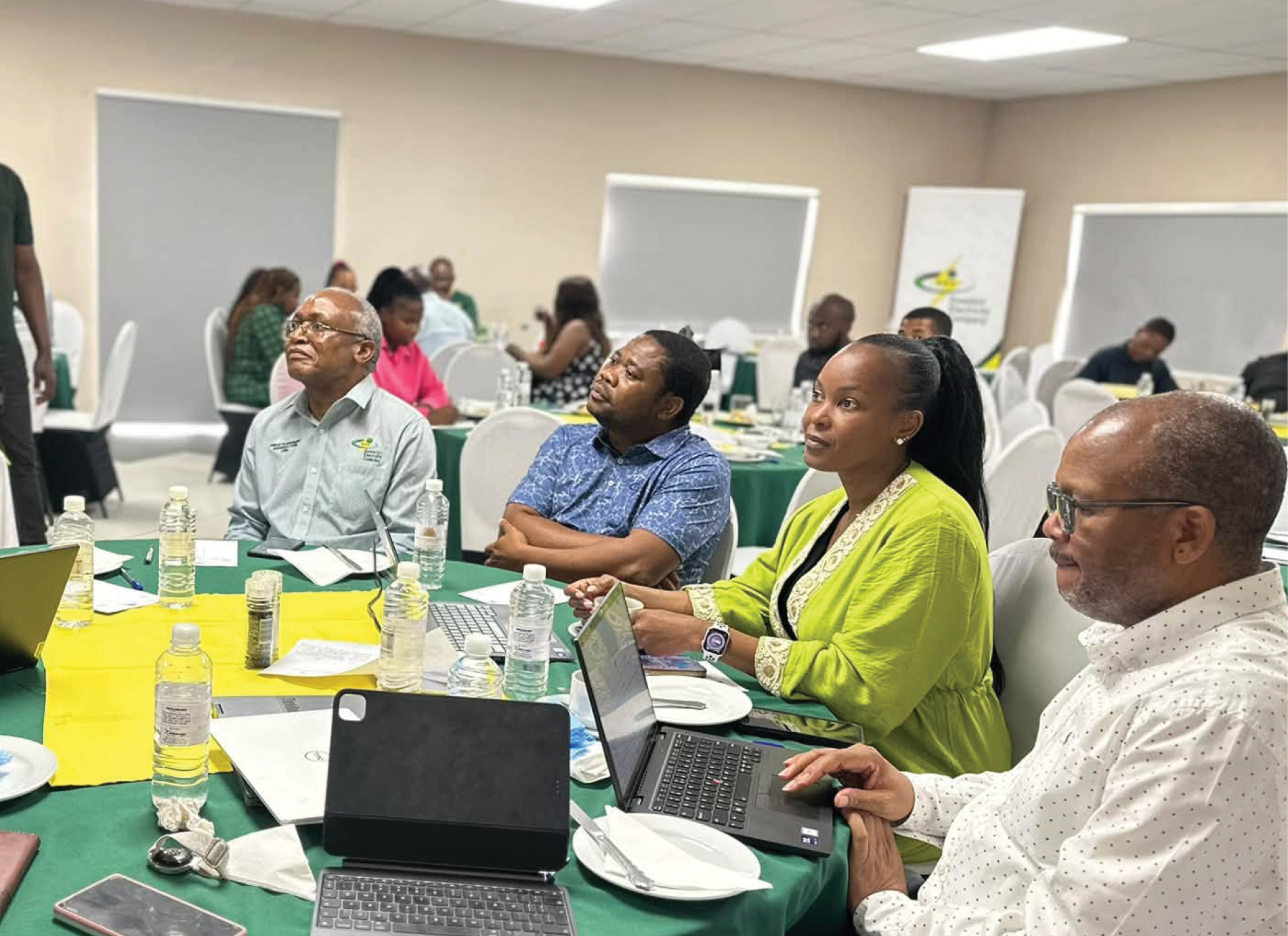
On Tuesday, they sat at opposite ends of a table and invited the public to discuss the price of electricity. EEC had done its sums and submitted its tariff application. ESERA has a nicely complicated methodology that their analysts use to determine the price. The public, meanwhile, is now being given the microphone.
We know the routine; EEC explains what it costs to keep the lights on. Consumers explain what it costs to keep theirs on. The regulator listens, does its calculations and publishes a handsome report.
Last time, after ESERA had gone through all that trouble, the government intervened and changed what households would pay. Plenty of people were glad it did. They are also entitled to turn up this time and ask which part of the proceedings actually settles the tariff.
That is what makes the hearings feel like a foregone conclusion. Nobody in the room needs to know the exact figure that will appear on the bill in April next year.
We already know that the regulator’s decision can be overtaken by one made elsewhere. ESERA must hear the evidence and explain how it reached a figure. If the government can then revise what consumers actually pay, who gets to question the government about the figure it settles on? By that point, the people who were invited to give their views have gone home.
Perhaps this explains the poor turnout at the start of the consultations this year, because apart from the air of hopelessness creeping into this exercise, there are those who are literally running out of energy (pun intended).
We are all desperate and crying out for help, because we all know that electricity is already expensive and we can hardly afford it. Anything more then we are doomed. But we know the answer already.
EEC is asking for an increase of at least 18.38% from April 2027 and a further 14% from April 2028.
You can see why the utility has put those numbers on the table. It has to pay for the electricity it supplies, and much of the money to do that comes from what we pay for our units.
The old Eswatini-is-our-neighbour rate from Eskom feels like a distant memory.
Independent suppliers can offer cheaper power, but they cannot supply enough of it. Whatever figure comes out of the hearings, the electricity still has to come from somewhere.
A consumer can also come to the hearing with figures. A person running a spaza shop can tell you what it costs to keep the fridge running. Someone who buys power a few units at a time knows exactly how much is left on the meter when payday is still a week away. EEC’s figures tell the regulator how much revenue the utility needs – and the cost of doing so, including their wage bill.
The consumer’s figures ought to tell it how much of that revenue households can realistically provide. One of these calculations has a clear route into the tariff. Perhaps the outcome of the consultation sessions should also be about how ESERA comes up with the other.
It should be possible to read the regulator’s eventual decision and see which objections changed its reasoning. Did testimony about affordability affect the figure, or the timing of the increase? If ESERA concluded that neither could move, what costs prevented it from doing so?
Those are questions a report can answer. A paragraph saying that consumers expressed concern about affordability tells us about as much as we knew before anyone picked up the microphone.
Then there is the question of who hears those concerns when the government intervenes. This year it promised E200 million to cushion the increase. The minister of natural resources and his colleagues in Cabinet had good reason to act.
Perhaps the intervention should come from the regulator, more than government. Perhaps it should be considered before the announcement. Perhaps the entire exercise should be between the utility, ESERA and government, so that they do their own thing and just give us what they determine. After all, they know better than the average consumer out there.
Perhaps it ought to be a big concern we are over-relying on an external supplier and the country still doesn’t have enough to generate or no capital project for the long-term.
A household that cannot afford to top up its meter needs relief before the lights go out. But the intervention did nothing to bring down the price EEC pays for imported power.
It changed who was expected to carry part of the bill.
A decision about who carries the bill is precisely the sort of thing the people paying it might reasonably expect to discuss in public.
Now EEC is back asking for an increase approaching twice the one that prompted that intervention.
What does anyone imagine will have happened to household incomes by April? The difficulty is obvious enough that you wonder whether the public is being asked to supply information or simply to say, for the record, what everyone at the table already knows.
The E200 million was supposed to buy some breathing room. It is worth asking what we did with it – and why it was not paid immediately, if at all it was to be intended as a relief. There is an argument that the delay in paying this only pushes the cost further onto the consumer, or in other words, delays the inevitable. This has been the case for this country for decades; decisions being delayed and postponed at a critical cost to the consumer.
For much of the past 20 years, Eswatini has talked about relying less on Eskom while continuing to rely on Eskom. We have postponed tariff decisions and made promises about generating more of our own electricity. Mpaka coal mine is still a farfetched dream and an anthem we are given every given opportunity.
Yet, each postponement got somebody through a difficult year. EEC now has to get through a year in which several of those decisions are coming due at once. The people at the hearing can explain what an increase will do to their budgets. They can hardly be expected to account for two decades of energy policy as well. This is not rocket science.
Those at this table, taking our concerns one by one, know where the problem lies – and the impact for the consumer. They also know that nothing much will change, unless we change ourselves.
Which is why at this point, my guess is that they already know where the numbers should lie – reasonably. My guess is we will end up with an increase of at least 15% – because that will pay the bills for EEC and delay any major projects they may want to embark on. My other gut-feel is that government will once more be expected to intervene and we will drill an even bigger hole in the EEC budget, thus helping collapse a once-proficient company on the brink.
A two-year freeze would be easy to applaud, right up to the point at which EEC struggled to pay for the power it had promised to deliver. But there, one is being wishful.
Perhaps the genius solution these days is to look for a loan somewhere and the Finance Minister Neal Rijkenberg has many friends in high places. Given how we are in a frenzy of taking loans for this that or the other, perhaps the minister should be asked to ring the IMF or the World Bank – or anyone of our good friends to provide a realistic cushion. For me, the only way this makes sense is if the burden of the projects EEC can’t delay anymore should be exported and passed on to EEC as a grant. I am certain that could ease the burden for a high tariff and cushion the repayment of that loan.
If that helps the company build more generating capacity at home, there might eventually be a case for a single-digit increase. In any case, government looks desperate to get any kind of loan and is borrowing for civil servants’ housing!
In the meantime, ESERA has the unenviable task of sitting us around the table and giving us a microphone when we all know that the Titanic is now closer to the iceberg. The public is already frightened of what lies ahead and is praying for a miracle, if not frantically looking for solutions, with solar being the alternative because any else is really hard to even consider.
Sadly, this is looking like a familiar routine of make believe – except that we now know the answer. By all means, pass the microphone around. Then ask the people who actually decides what we pay to sit at the same table and tell us what they heard.