



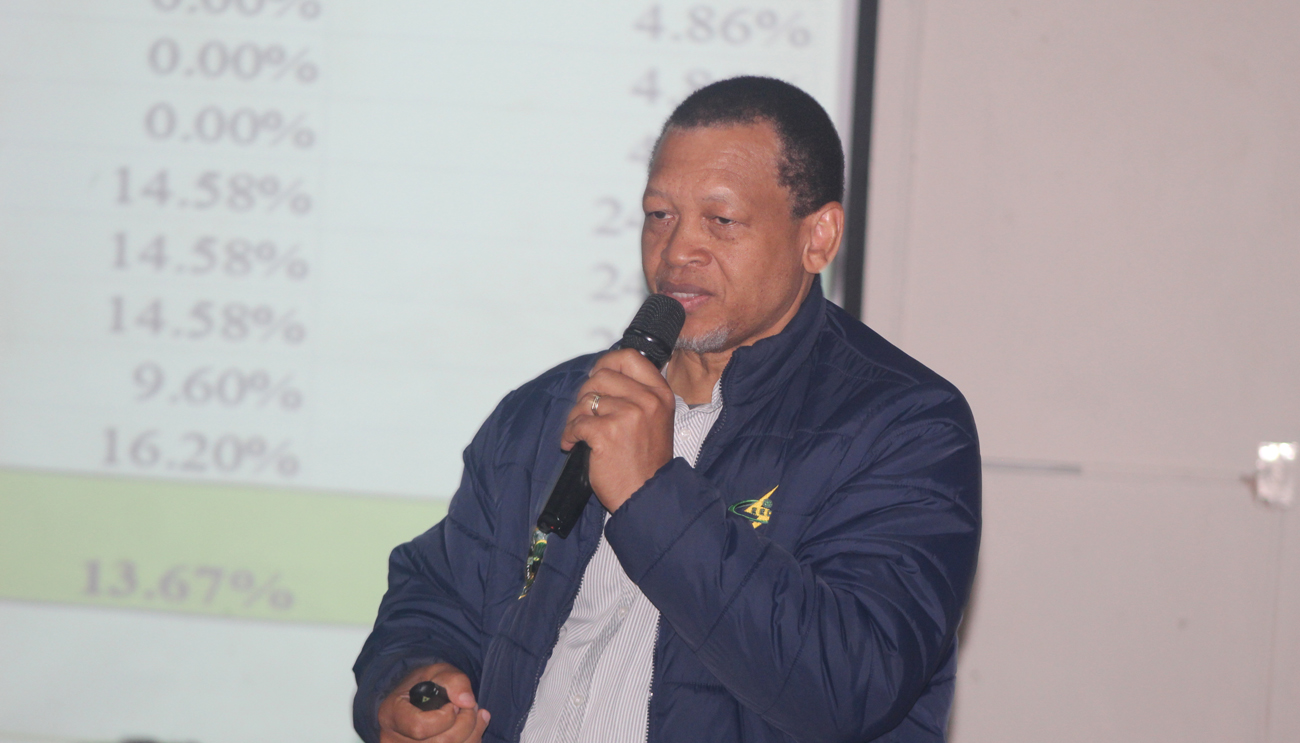
The Federation of Eswatini Business Community (FESBC) representative Elijah Dlamini said there was no justification for the Eswatini Electricity Company (EEC) planning to increase tariffs because the nation had rejected them before.
Dlamini said irrespective of all the submissions, no matter how sound they were, the increase was not justified.
He noted that the business community was still expected to pay all statutory fees: trading licences annually, value added tax (VAT), additional tax, and electricity.
“Electricity is an additional operational cost in our businesses. Water and tenders; you need to have at least E500 to E1 000 just to buy a tender for most of the businesses. We have to get the police clearance and many more business-related costs. This makes it very difficult for the business sector. The costs that businesses are expected to bear are just too much for one,” he said.
Dlamini suggested that EEC should develop a localisation policy on their procurement, prioritising local businesses and only inviting foreign businesses under exceptional circumstances. He submitted that for Swati-registered or Emaswati-owned businesses to be considered first given the amount of money EEC spends on procurement of products and services.
ALSO READ | Montigny suffers over E3m losses
Meanwhile, EEC Managing Director Ernest Mkhonta stated that if input costs increase far beyond revenue, it becomes difficult to provide services. He noted that the electricity industry had been democratised but that the country was still importing a lot of electricity because it was not generating enough locally.
ALSO READ | Why expanding domestic power can stabilise electricity tariffs, strengthen energy security
Mkhonta revealed that EEC spends 70% of its procurement expenditure on local businesses and 30% abroad. He also noted that 30 MW of solar systems were generating electricity across the country, but some had not been maintained due to catastrophes affecting the owners.
“For example, in winter, when we supply a service that is lower than what we get from South Africa, EEC pays E1 more than what we are selling to you as a business and E5 more as a domestic consumer than we are recovering from you. This was the reason we applied a method to cut down on imports so that we could reduce the amount of money spent on buying electricity, but we need the electricity for your operation every second. The cost of providing that electricity is increasing,” said Mkhonta.